Behavior and training
Start with what happened.
Plain-language guides for training, communication, introductions, and the habits that make a shared home feel complicated.
- plain-language guides
- 43
- question groups
- 12

Name the moment
What happened?
Search the behavior you saw or choose the situation that sounds closest. You will only see the guides that fit.
Open all 43 behavior guidesCommon questions
Three places owners often get stuck.
Read the reason behind the behavior, follow a positive plan, and keep the individual animal in view.

Start here
Why does my dog bark so much
The common types and causes of dog barking, positive ways to reduce it, and clear signs it is time to bring in a professional trainer, with sources.
Practical guideUpdated Jul 16, 2026
Read the guide
Why is my cat meowing so much
The reasons cats meow, from attention and hunger to stress and medical issues, plus the signs that warrant a vet visit, with expert sources.
Practical guideUpdated Jul 16, 2026
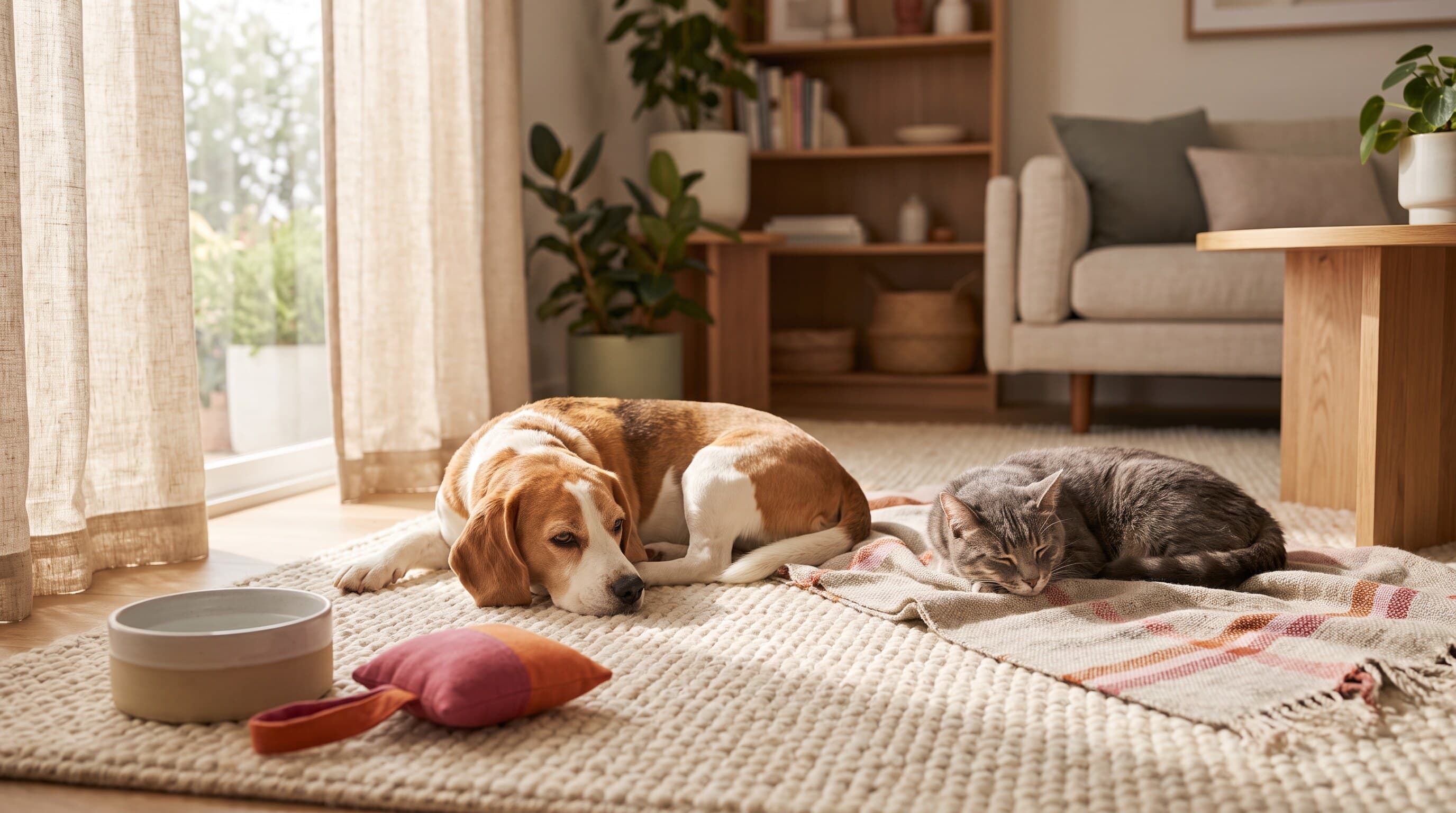
How to introduce a dog and a cat
A step-by-step, positive plan for introducing a dog and a cat: separate spaces, scent swapping, barrier meetings, body language, and management.
Practical guideUpdated Jul 16, 2026
The complete behavior library
Every behavior guide, by situation.
The full list, grouped by what is happening at home. The finder above is the quick route when you already know the situation.
01
Puppy first steps
Build calm routines before unwanted habits have months to settle in.
02
Dog training and hard moments
Positive plans for noise, pulling, chewing, barking, and digging.
03
Dog cues and connection
Decode everyday habits without turning normal behavior into a diagnosis.
04
Cat communication
Purring, hissing, kneading, meowing, and distance are all information.
05
Cat routines at home
Introductions, litter habits, and scratching plans for a calmer shared space.
06
Dogs and cats together
A slow, managed introduction plan for two species sharing one home.
07
Rabbit and guinea pig behavior
Read sounds and posture, set up social company, shape litter habits, and handle guinea pigs with full support.
08
Hamster life after dark
Work with the evening schedule, plan individual housing, and build handling from a voluntary approach.
09
Chinchilla social life and daily rhythm
Plan compatible company, protect daytime sleep, and build handling around voluntary, fully supported movement.
10
Budgie flock life and daily rhythm
Plan companionship, step-by-step taming, consistent sleep, and the calm daily routine a small flock parrot expects.
A useful next step
Solve the plan first. Shop for what supports it.
After the guide explains the behavior, the Pet Gear Finder routes you to researched walking, settling, enrichment, or litter collections that support the plan.
This page is for informational purposes only and is not veterinary advice. Always consult your veterinarian about your pet's diet and health.