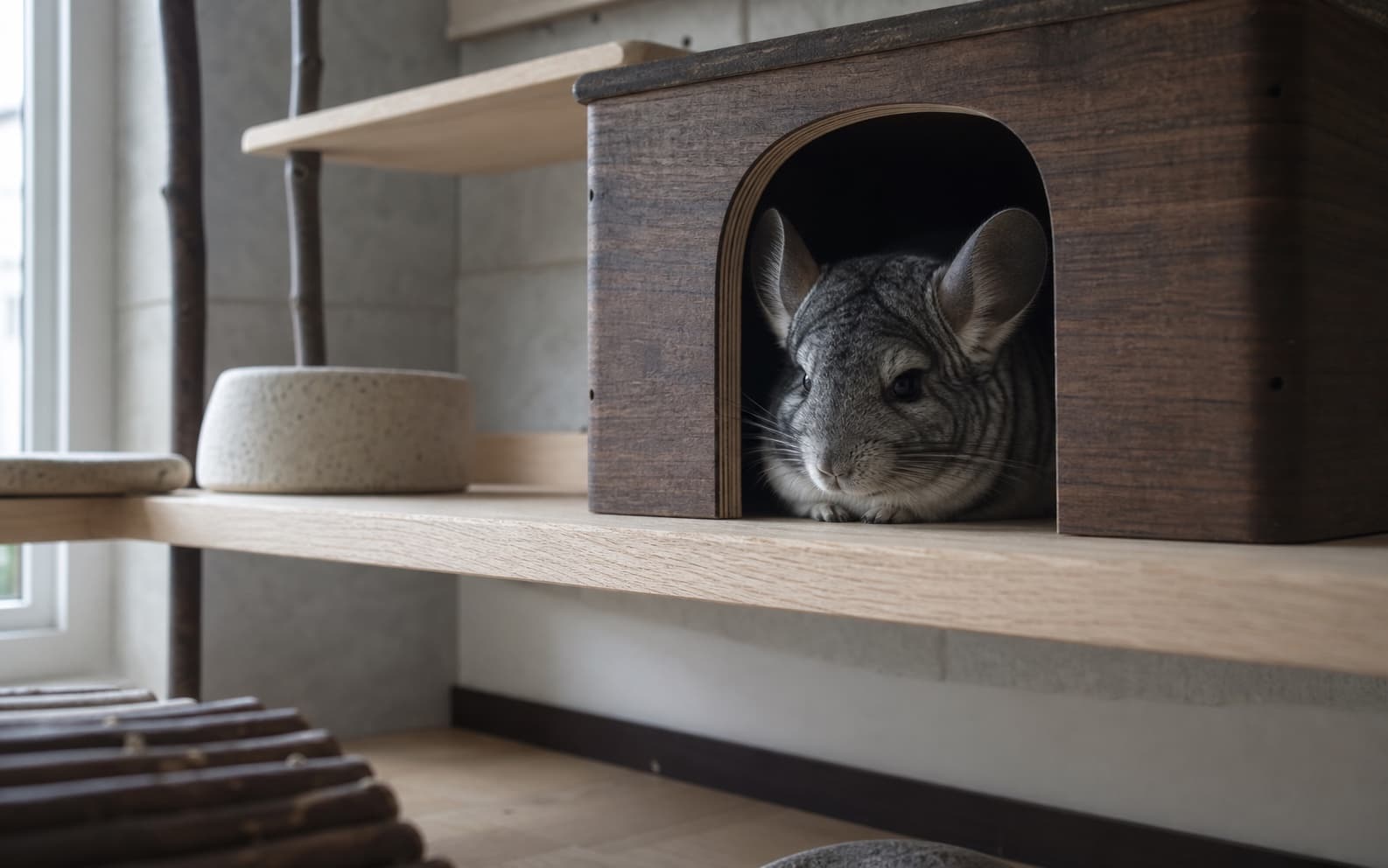
Chinchillas often rest through much of the day and become more active around dawn, dusk, and into the evening. Individual routines vary, but the useful pattern is clear: protect daytime sleep and schedule observation, handling, and exercise when the chinchilla is already awake.
The RSPCA behavior guide describes chinchillas as most active around dawn and dusk and recommends allowing them to sleep undisturbed during the day.
Give daytime sleep real protection
Place the enclosure in a room that can remain quiet during the day. Provide dark enclosed hides where each chinchilla can rest without being exposed to foot traffic or bright direct light. Keep the enclosure away from television speakers, slamming doors, and work areas with constant vibration.
Normal household movement can continue, but repeated waking, tapping on the enclosure, or removing a hide for interaction works against the animal's rhythm.
Let the room signal evening
Use a regular household light cycle with daylight and a natural transition into evening. Avoid leaving bright lights on through the night or making sudden changes to the schedule. Chinchillas should still have dark sheltered places available whenever the room is lit.
Evening is a practical time to refresh hay, check water, offer a dust bath, open a secure exercise area, and begin calm voluntary contact.
Expect activity in several bursts
A chinchilla may move, eat, rest, and move again rather than staying active for one uninterrupted block. Watch for the animal's own pattern across several days. That baseline is more useful than comparing one household to another.
Noise from chewing, shelves, hay, or a water bottle can carry at night. A bedroom may be a poor enclosure location for a light sleeper even when the room temperature is suitable.
Use the active period for the daily check
Observe movement, balance, appetite, droppings, breathing, posture, and interest in the surroundings when the chinchilla would usually be awake. A chinchilla hidden at midday may simply be resting. A chinchilla that remains withdrawn through its usual active period, eats less, produces fewer droppings, or moves differently needs veterinary advice.
The Blue Cross chinchilla care guide recommends regular daily exercise in a secure environment and notes that chinchillas are most active in the evening and at night.
The goal is not to force a chinchilla onto a human schedule. It is to place care tasks inside the rhythm the animal already uses.