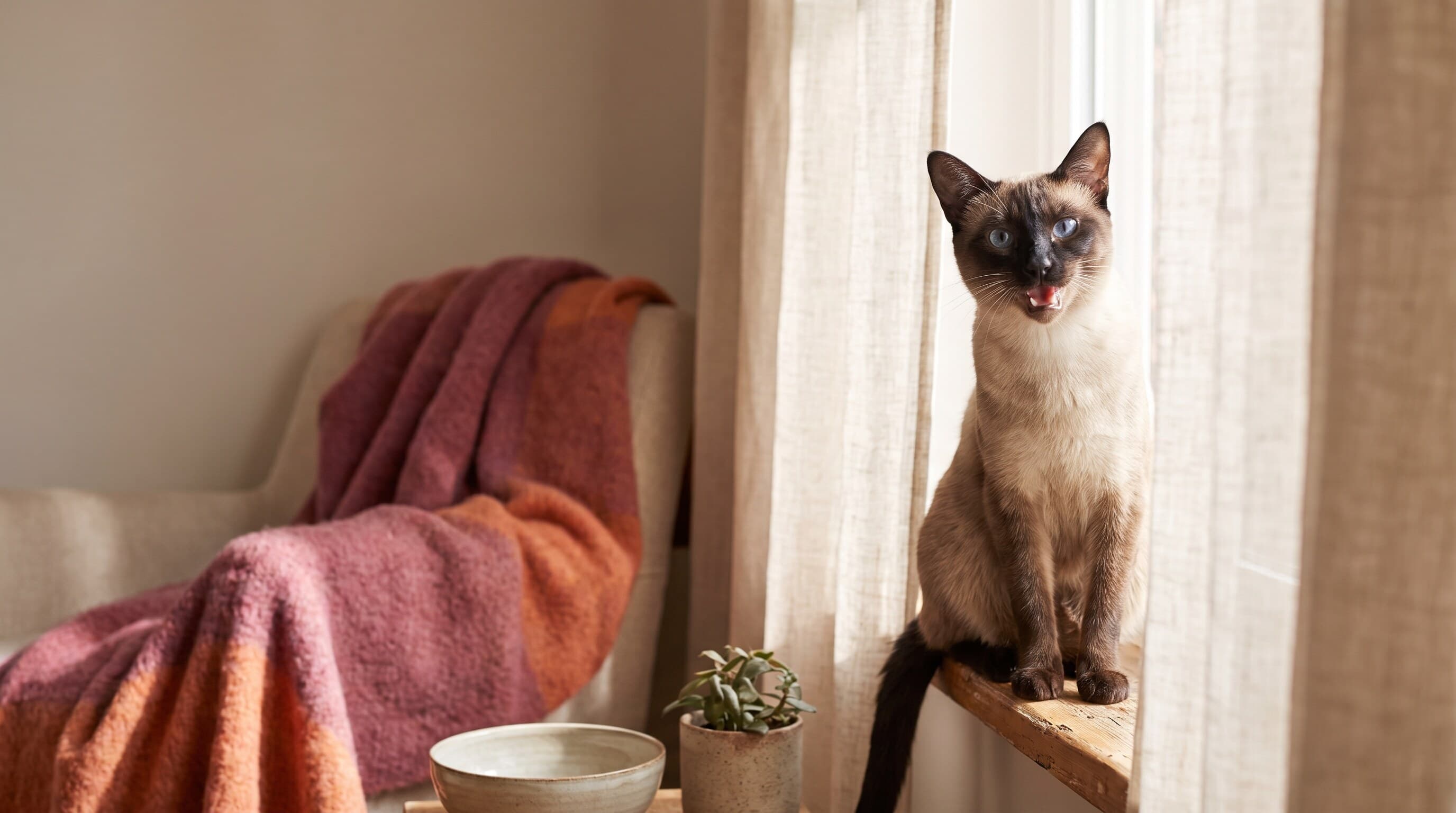
A hiss can be startling, but it is one of the most useful things your cat can tell you. Far from being an act of meanness or aggression, hissing is a clear, honest warning that your cat feels threatened, frightened, or uncomfortable and needs more space. Understanding that message, and responding by giving your cat room rather than pushing back, is the single best way to prevent a bite or scratch and give the cat room to move away.
Hissing is communication, not aggression
When a cat hisses, they are trying to avoid a fight, not start one. According to International Cat Care, a hiss is part of a fearful, defensive display, often paired with a body leaning back, ears rotated back and flattened, and a crouched posture. In other words, a hissing cat is usually saying please stop and back away, not I am about to attack. The behavior is thought to have evolved partly because it mimics the warning sound of a snake, making it an effective way to make a threat pause and retreat.
Reading the whole body helps you interpret the hiss. The ASPCA describes how fearful cats may crouch low, flatten their ears, tuck their tail, and hiss or spit as defensive signals, while trying to make themselves look small and escape. The Cornell Feline Health Center's overview of feline aggression similarly notes that cats showing fear-based responses flatten their ears, hiss, bare their teeth, or crouch with the tail tucked. When you see these signs together, the kindest and safest response is to give the cat distance.
Common triggers
Hissing almost always has a reason. Common ones include:
- Fear and feeling cornered. A cat who cannot escape a person, a dog, or a situation may hiss to create space.
- A new or changed environment. Moving house, new furniture, unfamiliar visitors, or a new pet can all unsettle a cat and prompt hissing.
- Cat-to-cat tension. Conflict between cats in the home, or the sight of an unfamiliar cat outside a window, is a frequent trigger.
- Overstimulation or rough handling. Too much petting, being picked up when they do not want it, or being disturbed while resting can push a cat past their comfort limit.
- Pain or feeling unwell. A cat who hurts may hiss when touched in a sore spot or handled, even if they are usually gentle.
iCatCare notes in its guidance on problem behaviour in cats that chronic pain, such as arthritis, can make a cat behave defensively and show more fear-related responses, which is one reason a new pattern of hissing should never be brushed off as simple grumpiness.
How to de-escalate calmly
When your cat hisses, the goal is to lower the tension, not to win a standoff. The most effective response is also the simplest: give your cat space and time.
- Stop and back away. Immediately end whatever prompted the hiss, whether that is petting, approaching, or picking your cat up, and calmly increase the distance between you.
- Let your cat retreat. Make sure they have an easy escape route and a safe, quiet place to go, such as a high perch or a covered bed. Do not corner or follow them.
- Stay calm and quiet. Avoid staring, looming, or reaching toward a hissing cat. Move slowly and speak softly, or simply give them room and let them settle.
- Remove the trigger. If another cat, a dog, or a visitor set it off, create separation. For tension between household cats, reintroduce them gradually and provide plenty of resources so no one has to compete.
- Rebuild positive associations later. Once your cat is relaxed, reconnect on their terms with gentle play or a treat, never by forcing contact.
When hissing signals a health problem
Occasional hissing in a clearly stressful moment is normal feline communication. But a change in the pattern deserves attention. If a normally easygoing cat starts hissing frequently, hisses when touched or picked up, or seems to hiss in response to being handled in a specific area, pain may be the reason, and a cat cannot tell you where it hurts any other way. Cornell and iCatCare both note that underlying medical issues, including pain, can drive defensive behavior. Contact your veterinarian if hissing is new, escalating, or paired with other changes such as hiding, reduced appetite, litter box changes, or reluctance to move or jump. This article is educational and not a diagnosis; a vet exam is the right step whenever your cat's behavior shifts noticeably. Persistent aggression that you cannot resolve is best addressed with your vet or a qualified veterinary behaviorist.
For more on decoding your cat, see our companion guides to why does my cat ignore me and why do cats purr.