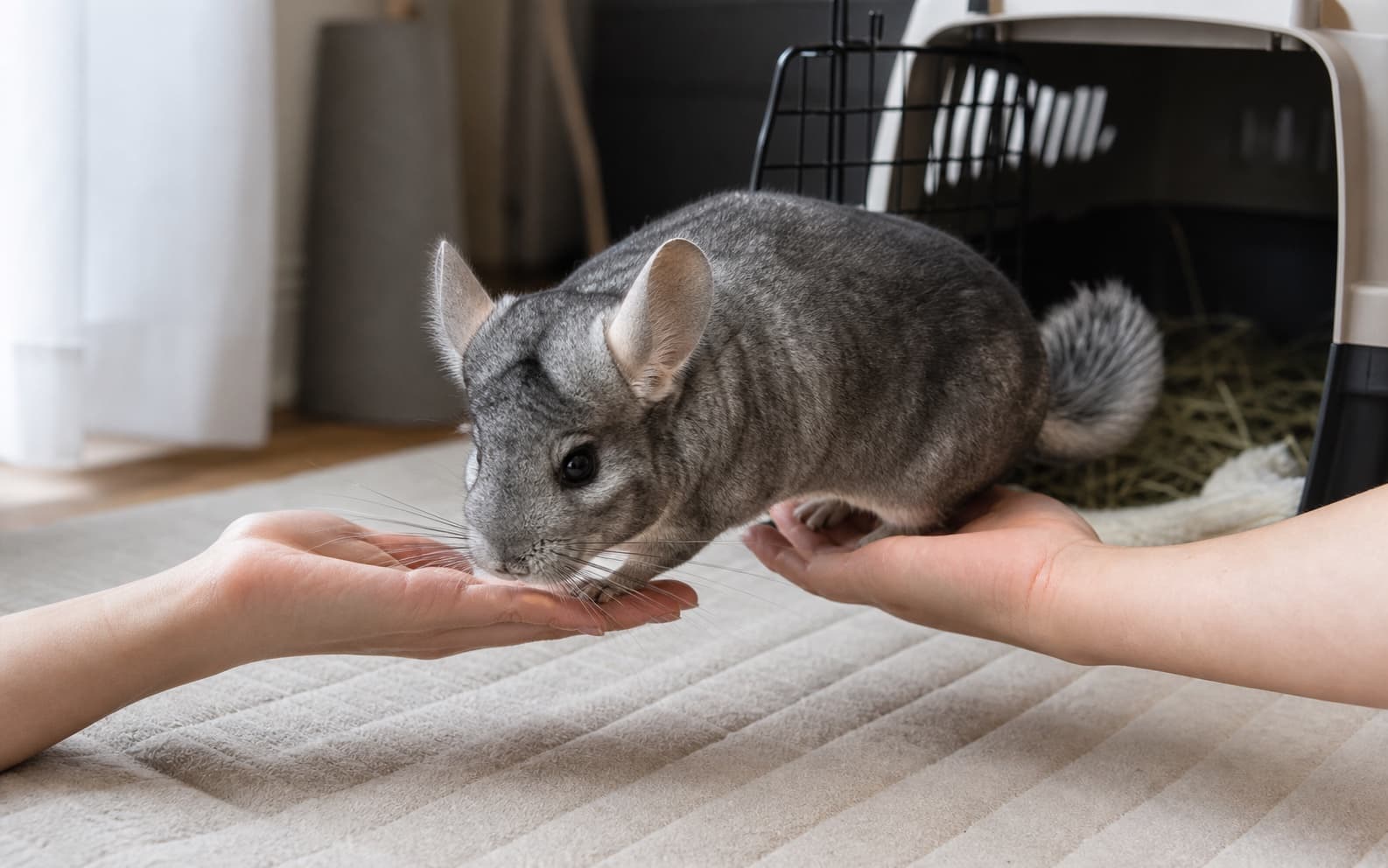
Good chinchilla handling begins with movement the animal chooses. A familiar carrier, open hands, full-body support, and a low secure surface make routine transfers safer and reduce the need for chasing or gripping.
The RSPCA chinchilla behavior guide notes that chinchillas often prefer exploration to being picked up. Blue Cross handling guidance recommends approaching quietly and supporting the body securely.
Start with the room and the carrier
Close doors and windows, block gaps, remove other pets, and work close to the floor. Place an open carrier or secure transport box inside the exercise area with familiar hay and scent. Let the chinchilla explore it during ordinary evenings before the carrier is needed.
Moving voluntarily into a carrier is often more useful than teaching a long hold. It supports enclosure cleaning, room transfers, and veterinary trips with less pursuit.
Offer an open hand
Sit still and place a hand low on a solid surface. Let the chinchilla approach, sniff, step on, and leave. Avoid reaching down suddenly from above, cornering the animal, or closing fingers around it before it is comfortable with contact.
Repeat the same calm movement over several evenings. Progress can be brief: front paws on the hand, a full step across, or a pause beside the carrier entrance.
Support the whole body
When lifting becomes necessary, use one hand to support the chest and front of the body and the other to support the hindquarters. Hold the chinchilla close to your body without squeezing. Keep the route short and the destination ready.
Never lift by the ears, limbs, or tail. Chinchilla fur can release under force, so grabbing at the coat is also unsafe. If the animal struggles, lower it to the secure surface or carrier rather than tightening the grip.
Let stopping cues matter
Turning away, repeated attempts to leave, sudden struggling, alarm calls, or defensive behavior mean the session needs to end. Return to an easier step the next evening. Handling skill grows through predictability, not endurance.
Children need direct adult supervision and may be better seated on the floor while the chinchilla moves through a secure area. The adult remains responsible for every lift and transfer.
Practice the useful transfers
Build three routines: enclosure to carrier, carrier to secure exercise area, and hands to a nearby solid shelf. Use the same cues and destination each time. Short successful repetitions make emergency grabbing less likely later.
Pain, breathing changes, weakness, poor balance, injury, or a sudden change in tolerance needs veterinary advice. Handling should never be used to test or treat a health concern at home.
The best handling routine is the one that makes daily care and transport calm while respecting a chinchilla's preference for moving under its own control.