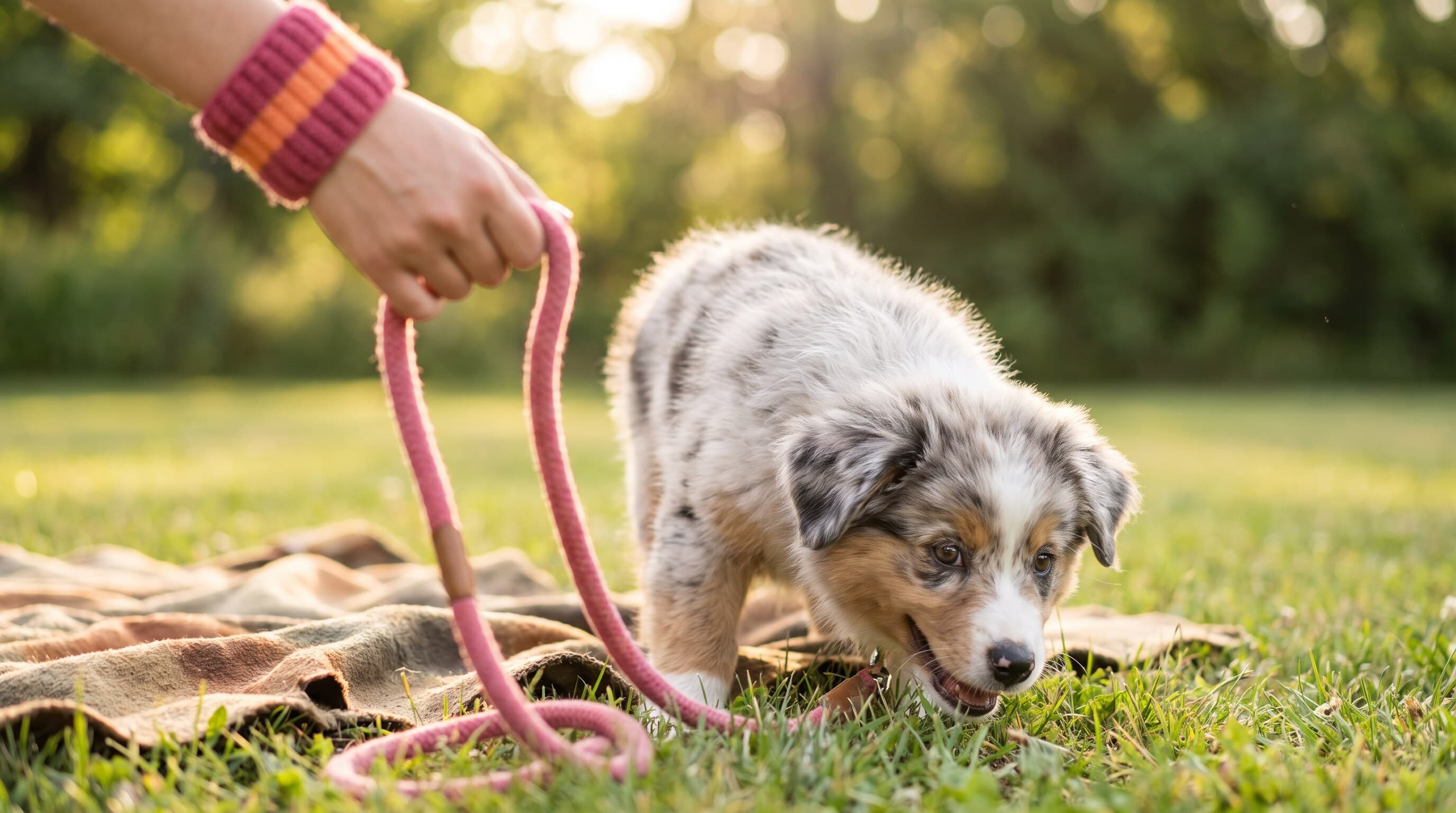
Socialization is one of the most important investments you will ever make in your puppy, and the window to do it well is surprisingly short. According to the American Kennel Club, socialization means gently exposing a puppy to a wide variety of people, animals, places, sounds, and experiences so they grow into a confident, well-adjusted adult dog. Puppies who miss this window are far more likely to become fearful or reactive, so the effort you put in now pays off for your dog's whole life. The key is to make every new experience positive and never overwhelming.
The critical socialization window
There is a specific developmental period when a puppy's brain is primed to accept new things as normal. The American Veterinary Society of Animal Behavior, in its position statement on puppy socialization, identifies the primary socialization period as roughly 3 to 14 weeks of age, with the window beginning to close around 3 months. Experiences during this time shape how a dog reacts to the world for years to come. Because so much of this window falls before a puppy is fully vaccinated, AVSAB takes the strong position that puppies should begin socializing before their vaccine series is complete, since the behavioral risks of under-socialization are, in their words, a greater threat to a dog's life and welfare than the manageable risk of infectious disease during careful early outings.
Balancing socialization with vaccination
The apparent tension between socializing early and protecting a partly vaccinated puppy is real, but it is manageable with a little care. VCA Animal Hospitals, in its guidance on socialization and fear prevention, recommends starting socialization well before the vaccine series is finished and using common-sense precautions to keep the disease risk low. The practical middle path looks like this:
- Choose lower-risk environments. Favor clean, controlled settings and the homes of friends with healthy, vaccinated, friendly dogs over places with unknown dog traffic such as public dog parks or busy pet-store floors until vaccinations are complete.
- Bring the world to your puppy. Carry your puppy in your arms or a sling to experience traffic, crowds, umbrellas, and city sounds without their paws on high-traffic ground.
- Host at home. Invite a variety of calm people over so your puppy meets different ages, sizes, and appearances in a safe space.
- Ask your veterinarian. Your vet can advise on the right precautions for your area and your puppy's vaccine status.
Safe, positive exposure
Quality matters more than quantity. The AKC frames good socialization as a series of small, positive introductions rather than a flood of overwhelming ones. Aim to expose your puppy to new sights, sounds, surfaces, people, and gentle handling, and pair each one with something pleasant like praise, play, or a treat, so the puppy learns that novelty predicts good things.
- Take baby steps. Introduce one new thing at a time and watch your puppy's body language. A loose, curious puppy is coping well; a puppy who is cowering, tucking their tail, or trying to flee is over threshold and needs distance and a break.
- Let the puppy choose. Never drag a puppy toward something scary. Let them approach at their own pace and reward brave choices.
- Cover lots of categories. Different people, friendly dogs, car rides, household noises, vet-style handling of paws and ears, and varied surfaces all build a resilient dog. A few of the best dog training treats make excellent rewards for these sessions.
The value of puppy classes
Well-run puppy classes are one of the best socialization tools available. AVSAB and VCA both endorse them, noting that a good class offers supervised play with other vaccinated puppies, exposure to new people and environments, and a head start on basic training, all in a setting designed to keep risk low. VCA points out that many veterinary behaviorists recommend starting classes as early as 7 to 8 weeks, as long as puppies have had at least their first round of vaccinations and a recent deworming. Look for a class that uses reward-based, positive methods and keeps play groups matched by size and temperament.
When to seek help
Most puppies blossom with consistent, positive socialization. But if your puppy shows intense or persistent fear, growls or snaps out of fear, or does not seem to be growing more confident despite your careful efforts, reach out early rather than waiting. Fear is much easier to help in a young puppy than a grown dog. Talk to your veterinarian, who can rule out pain or illness and refer you to a qualified positive-reinforcement trainer or a veterinary behaviorist. For more on getting started with a new puppy, see our new puppy checklist for the first week.