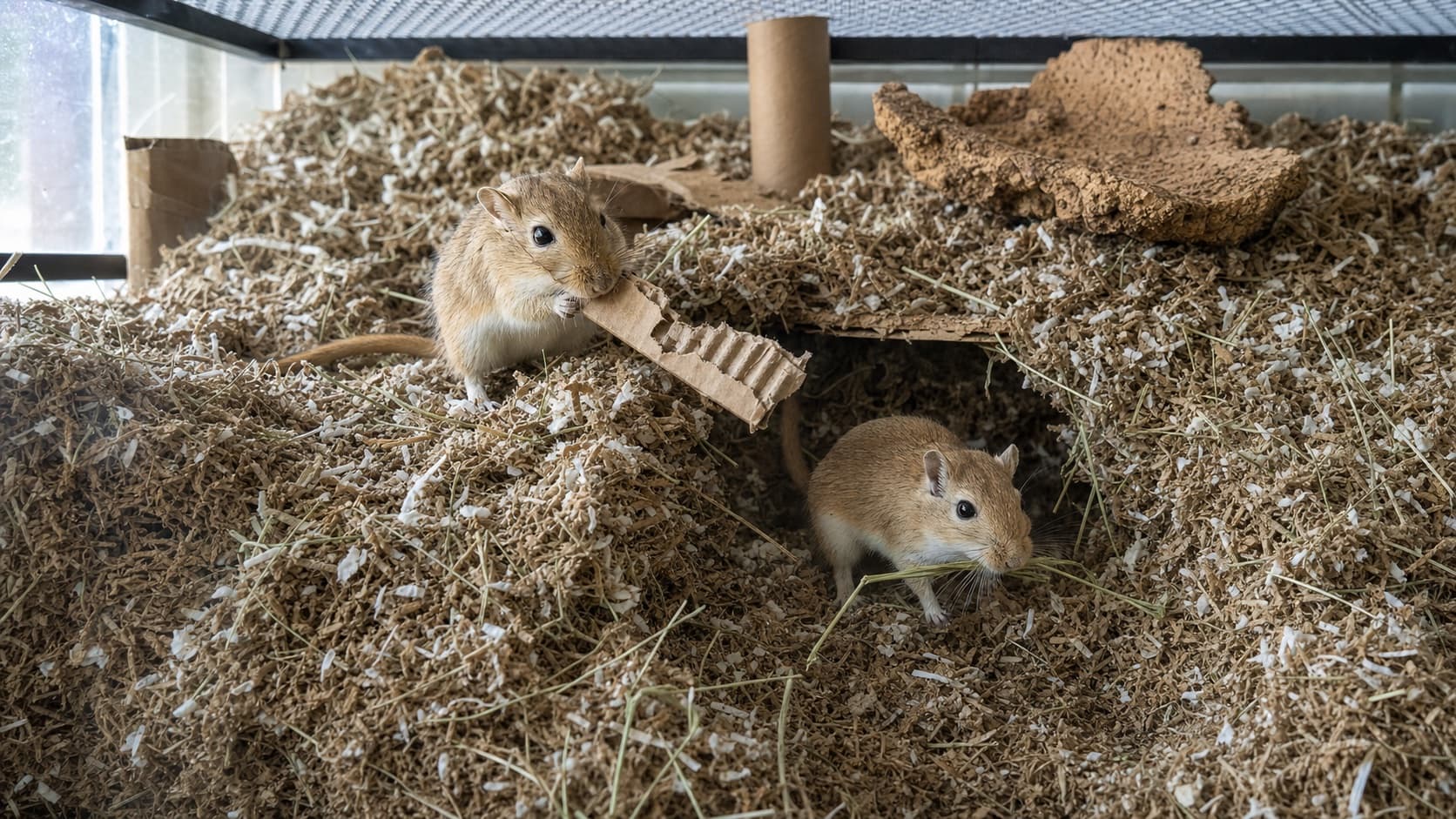
Gerbil bedding is the architecture of the home. A deep mix of paper bedding, hay, plain nesting paper, and cardboard can hold chambers and tunnels while absorbing moisture and giving the pair constant building work.
The Blue Cross gerbil care guide recommends a thick layer of dust-extracted bedding, hay, shredded paper for nesting, and cardboard for structure. The RSPCA environment guide highlights shreddable paper, hay, ink-free cardboard, and solid-walled housing that can contain digging material.
Build with materials that interlock
Start with a generous base of dust-extracted paper bedding. Mix in long strands of hay so the substrate holds together, then add plain cardboard tubes, boxes, and dividers at several depths. Offer plain shredded paper near the surface and let the pair carry it to the nest.
Compress the first layers lightly by hand, then add more material above them. The gerbils will reopen, widen, close, and redirect the structure.
Use the enclosure depth
Fill enough of the lower gerbilarium for the pair to disappear, turn, store food, sleep, and connect more than one tunnel. Keep a separate stable surface for the wheel, water bottle, sand bath, and other equipment.
Watch the tunnels against the glass without assuming the visible route is the whole system. Many chambers will sit farther inside the bedding.
Choose safe nesting structure
Plain shredded paper gives the pair a soft, separable nest material. Ink-free cardboard and hay add structure and chewing. A shared ceramic, cardboard, or untreated wood nest area can begin the chamber, but the gerbils may decide where the finished nest belongs.
Keep fluffy fiber, cotton wool, stringy nesting material, and scented bedding out of the enclosure. RSPCA warns that materials separating into thin strands can entangle an animal. Blue Cross also warns against fluffy bedding that can wrap around legs or cause problems if eaten.
RSPCA advises against sawdust because of respiratory concerns. Choose clearly labeled, dust-extracted small-animal bedding and inspect each package for scent, moisture, mold, sharp fragments, or excessive dust.
Preserve useful familiar scent
Spot-clean wet areas and remove spoiled fresh food without dismantling the whole burrow. During a fuller clean, Blue Cross recommends saving some clean, dry used bedding and mixing it back into the fresh setup. Familiar scent helps the rebuilt home remain recognizable.
Plan the clean around an open carrier:
- Move the bonded pair together into the prepared carrier.
- Remove and inspect equipment.
- Set aside clean, dry familiar bedding.
- Discard damp or spoiled material.
- Clean and fully dry the enclosure and equipment.
- Rebuild stable supports and deep substrate.
- Return the familiar bedding through several areas.
- Restore food, water, sand, and chew materials before the pair returns.
Cleaning frequency depends on enclosure size, number of animals, and what the daily checks find. A dry, well-sized gerbilarium often needs focused spot care more frequently than a complete rebuild.
Read the finished structure
A functional burrow system has multiple openings, a shared nest, stable equipment, dry bedding, and routes the pair can use without repeated collapse. Some collapse and rebuilding is ordinary. Repeated cave-in beneath a platform or around the water station means the support layout needs to change.