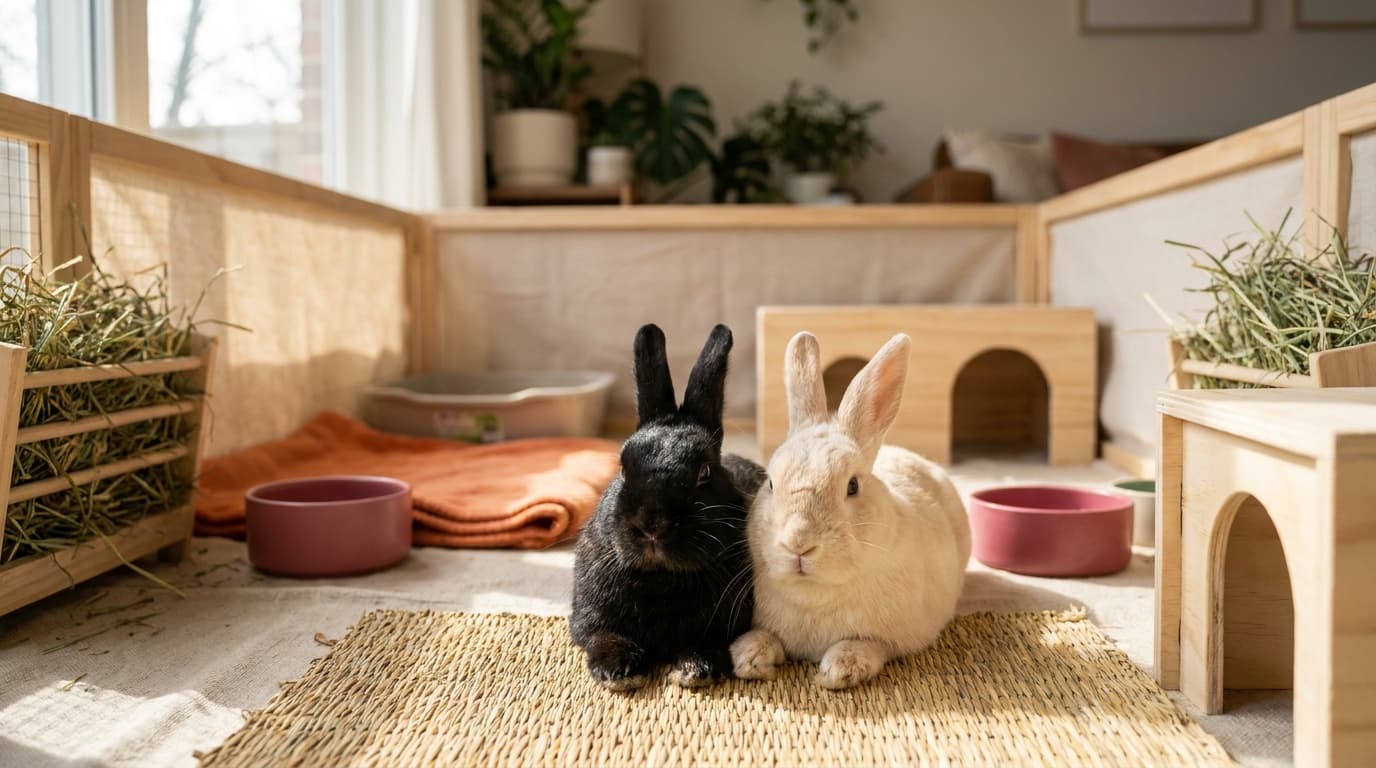
Rabbits are social animals and generally need compatible rabbit company. Human attention can be useful and enjoyable, but it does not reproduce the constant communication, resting, grooming, movement, and shared routine of a bonded rabbit pair.
The RSPCA rabbit environment guidance recommends at least one friendly, compatible rabbit companion. Its rabbit introduction guide treats bonding as a gradual process with separate side-by-side housing, neutral introductions, supervision, and enough resources for both animals.
Preserve an established bond
Adopted bonded pairs should move, travel, board, and attend veterinary appointments together whenever the veterinarian or rescue advises it. A new home is already a major change; separating a compatible pair adds another disruption.
Build the living area for both rabbits. Provide enough open floor space, more than one feeding point, multiple water options, roomy litter areas, and shelters with open exits. Each rabbit should be able to rest beside the other or move away without being trapped.
Prepare before introducing unfamiliar rabbits
Do not place an unfamiliar rabbit directly into the resident rabbit's enclosure. Ask a rabbit-experienced veterinarian or rescue to confirm that both animals are ready for introductions and to advise on reproductive status, health screening, and timing.
Set up separate, secure enclosures near one another. Each side needs its own hay, water, litter, and shelter. The barrier must prevent biting while allowing the rabbits to see and smell one another. Watch eating, droppings, resting position, and behavior near the shared boundary.
Use a neutral introduction area
Initial face-to-face sessions belong in a secure area that neither rabbit uses as established territory. Keep the floor nonslip and the space easy to observe. Follow a plan from the rescue, veterinarian, or qualified rabbit behavior professional rather than improvising when behavior escalates.
Sitting or lying near each other, normal eating, mutual grooming, and calm movement can indicate progress. Persistent chasing, circling, biting, boxing, or one rabbit repeatedly blocking the other calls for separation and experienced help. Use a barrier or towel if advised; do not place bare hands between fighting rabbits.
Move the pair only after the bond is stable
Clean and rearrange the shared home before the pair enters it so neither animal returns to an unchanged territory. Continue providing duplicate resources and open-exit shelters. Supervise the first period in the shared space and watch both rabbits' eating, droppings, posture, and access to food and cover.
Contact a rabbit-experienced veterinarian or qualified behavior professional when introductions produce injury, persistent aggression, reduced eating, fewer droppings, or a major change in either rabbit's normal behavior.