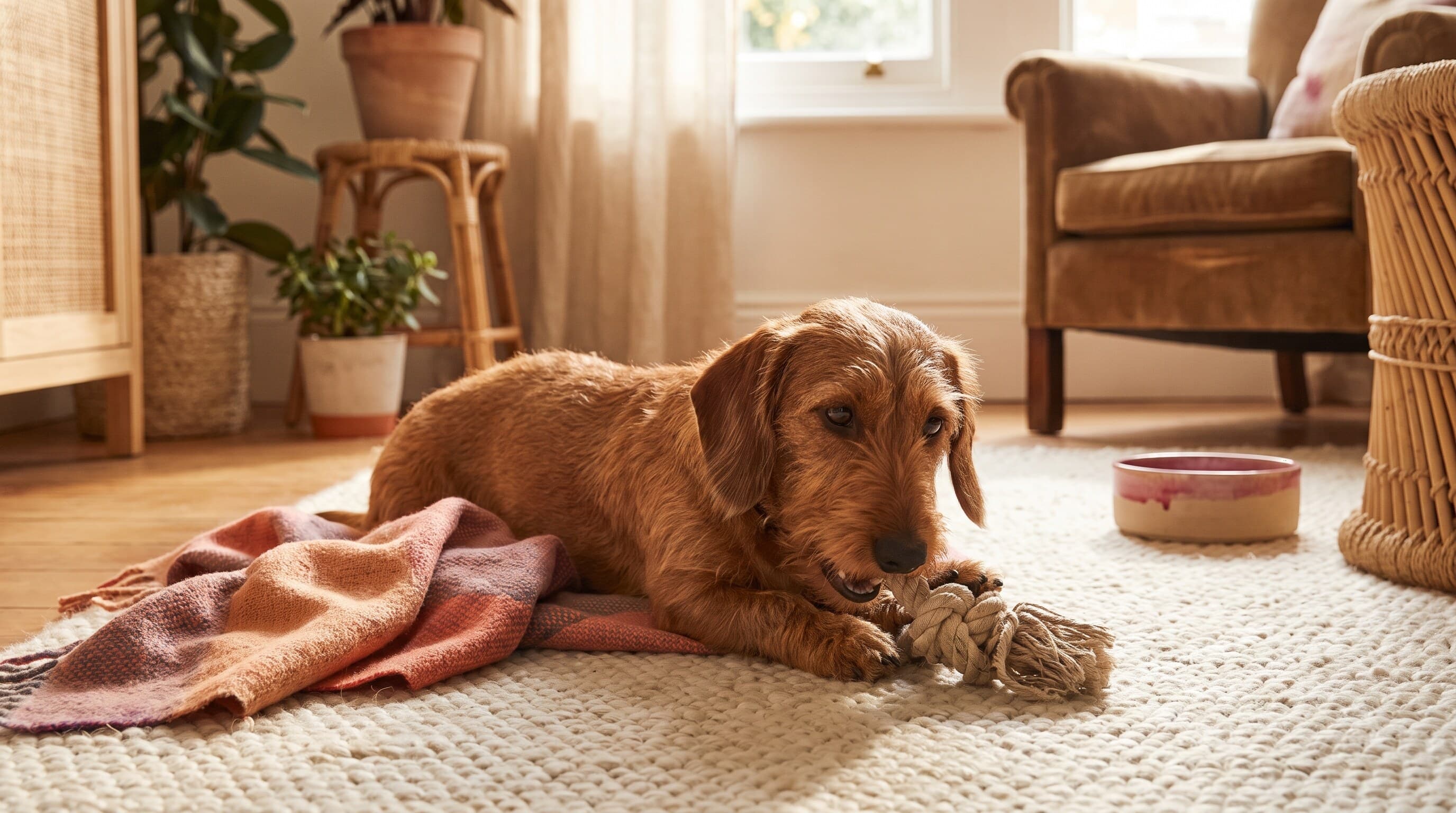
Destructive chewing is one of the most common complaints from dog owners, and the reassuring news is that chewing itself is normal, natural, and even necessary behavior. According to the American Kennel Club, dogs of all ages chew to explore the world, to soothe themselves, to relieve boredom, and to keep their jaws and teeth healthy. The goal is not to stamp out chewing but to teach your dog what is acceptable to chew and to manage the environment so the wrong targets are out of reach. Handled with patience and positive reinforcement, most destructive chewing becomes very manageable.
Why dogs chew in the first place
Understanding the motive is the whole game, because the fix depends on the cause. Puppies chew heavily while they are teething, roughly from three to seven months of age, when sore gums drive them to gnaw on anything within reach. Adult dogs chew for different reasons. The ASPCA lists the usual suspects as normal exploratory behavior, boredom or lack of exercise, anxiety, and attention seeking. Some dogs chew simply because it feels good and they have never been taught a better outlet.
There is one important exception to sort out early. The AKC notes that chewing focused on exits, such as door frames, window sills, and crate bars, especially when it only happens while a dog is home alone, can be a sign of separation anxiety rather than ordinary boredom. A separate AKC guide on chewing furniture and baseboards explains that anxiety-driven destruction usually comes bundled with other distress signals like pacing, drooling, or howling. That pattern calls for a different plan, which we cover below.
Redirect to appropriate chews
The core of the solution is substitution: make the right chews irresistible and the wrong ones unavailable. Keep a rotation of safe, durable chew items on hand, and the moment your dog targets something off limits, calmly trade it for an approved chew and praise the swap. The ASPCA recommends offering a variety of textures so your dog stays interested, and rotating the selection every few days so old toys feel new again.
- Offer the right size and toughness. A chew should be sturdy enough that it does not splinter or get swallowed in chunks, and sized so it cannot be gulped. If you are not sure what suits your dog's jaw strength, our roundup of the best dog chew toys walks through options for light, moderate, and heavy chewers.
- Make chews rewarding. Stuffable rubber toys packed with a little food, or treat puzzles, give your dog a productive job. The ASPCA specifically suggests food-stuffed toys as a way to redirect chewing energy into something constructive.
- Reward the right choice. Positive reinforcement means catching your dog chewing the correct item and marking it with warm praise or a small treat, so the approved chew earns good things and the behavior repeats.
For a durable, long-lasting chew to keep in that rotation, the Benebone Fishbone is a popular pick shaped to be easy for a dog to grip and gnaw.
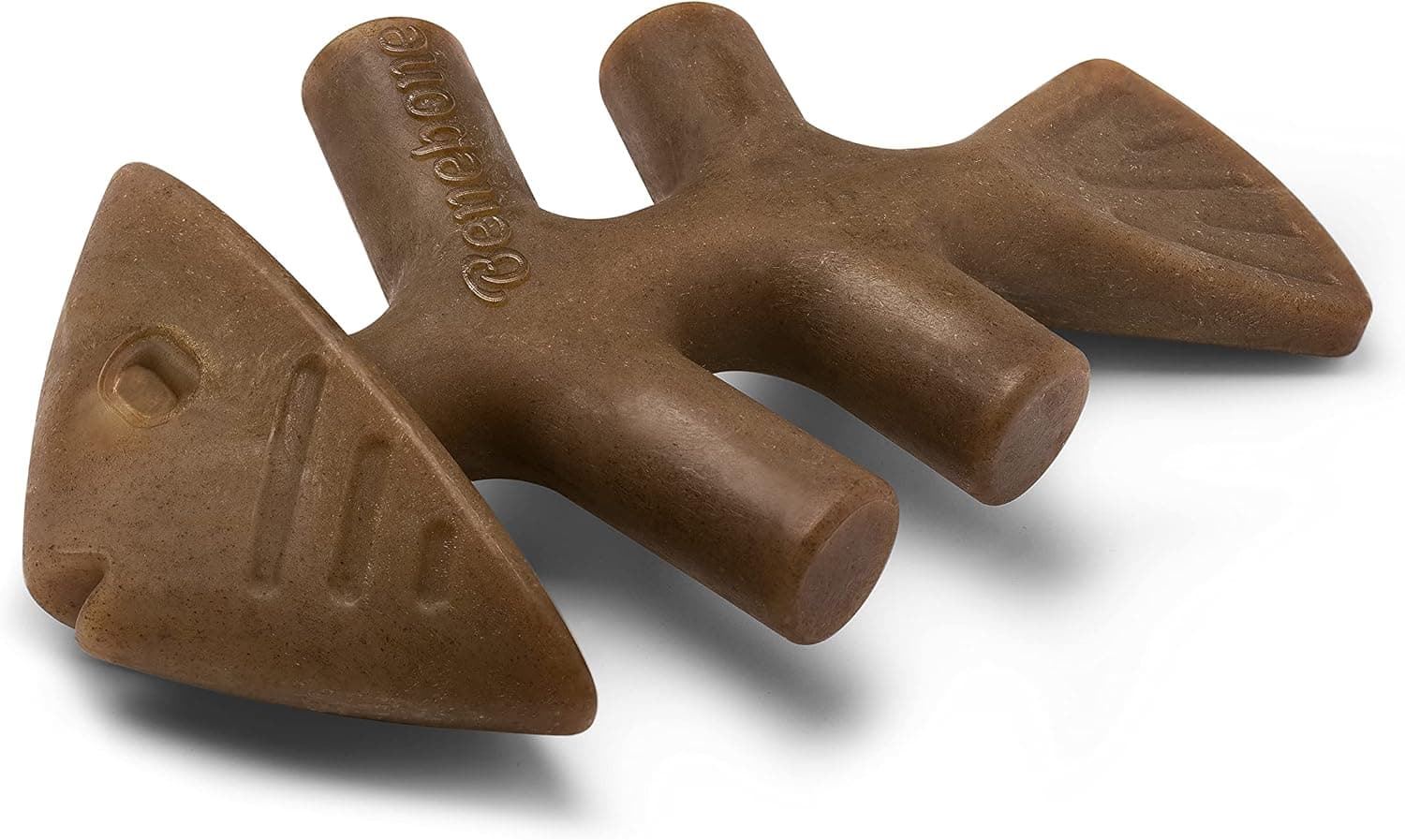
BENEBONE
Fishbone Durable Dog Chew Toy
- Size
- Medium
- Flavor
- Real Jack Salmon
- Origin
- Made and sourced in the USA
- Intended for
- Aggressive chewers
A durable nylon chew shaped like a fishbone and flavored with real Jack Salmon. It is manufactured and sourced in the United States and marketed for dogs that go through chew toys quickly.
See more detailSee less detail
Strengths
- Highest star rating among chew toys in this roundup
- Made and sourced in the USA
- Real fish flavor rather than an artificial scent spray
Weaknesses
- Higher price per toy than multi-packs of basic rubber chews
- Nylon material is very firm, not suitable for dogs with dental sensitivity
Best for
Aggressive chewers who need a long-lasting, real-flavored nylon chew
What owners say
Manage the environment
While your dog is still learning, the smartest move is to make mistakes impossible. Dog proofing is not a failure of training, it is the setup that lets training succeed. Put shoes, remotes, children's toys, and cords out of reach, and use closed doors, baby gates, or a comfortable crate or pen to limit access to rooms full of temptation when you cannot supervise. The ASPCA notes that active supervision, so you can interrupt and redirect the instant your dog aims at the wrong thing, is one of the most effective tools you have. Over time, as your dog builds a solid habit of chewing the right items, you can gradually expand their freedom.
Exercise and enrichment do the heavy lifting
A great deal of destructive chewing is really a symptom of a dog with unspent energy and a bored brain. The AKC and ASPCA both emphasize that adequate physical exercise and mental stimulation dramatically reduce problem chewing, because a tired, satisfied dog has far less reason to invent his own entertainment. Daily walks, play sessions, training games, sniff-based activities, and interactive toys all help. Food puzzles and training with a few of the best dog training treats engage the mind as well as the body. If you would like more ideas for constructive outlets, our guide to the best dog toys covers puzzle and enrichment options.
When to get professional help
Most ordinary chewing responds well to redirection, management, and more exercise. But some situations deserve extra support. If the chewing centers on doors and windows only when your dog is alone, if it comes with signs of panic such as heavy drooling, nonstop vocalizing, or self-injury, or if your dog is swallowing pieces of what he destroys, reach out for help. Start with your veterinarian to rule out medical causes and to discuss whether the pattern looks like separation anxiety, which the AKC notes is a treatable condition best addressed with a structured behavior plan. For persistent cases, ask for a referral to a qualified positive-reinforcement trainer or a veterinary behaviorist.
For related early-training foundations, see our guides to stopping puppy biting and crate training a puppy, both of which lean on the same reward-based approach.