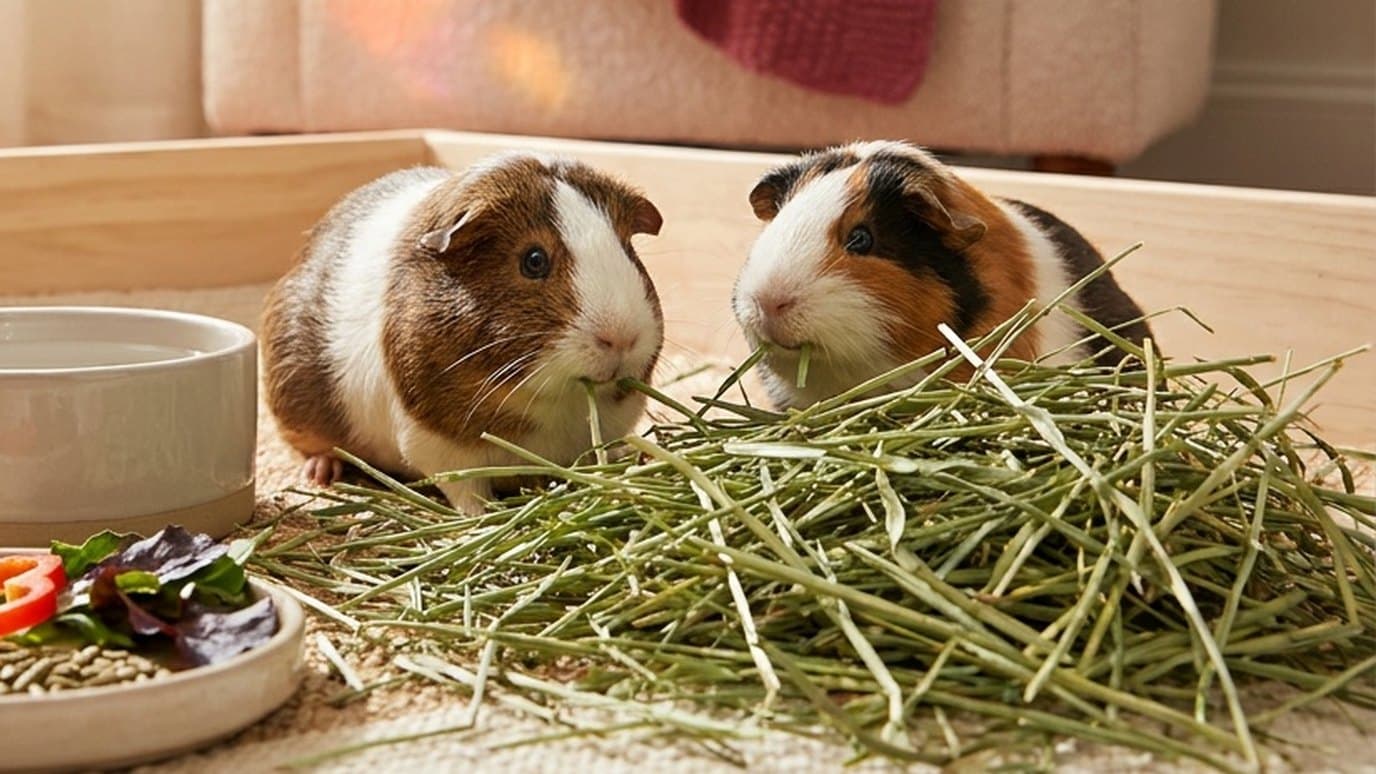
Guinea pigs are chatty, but a lot of what they say is not a sound at all. How they move, where they sit, and how they behave with their cage mate tell you whether they are relaxed, frightened, bored, playful, or unwell. This guide covers the body language owners ask about most. For squeaks, purrs, rumbles, and teeth chattering, see our companion guide to guinea pig sounds.
At a glance
Swipe or use arrow keys to compare every column.
| What you see | What it usually means | What to do |
|---|---|---|
| Popcorning: sudden jumps and twists | Excitement and happiness | Enjoy it |
| Lying close, eating side by side | A comfortable, bonded pair | Nothing, this is the goal |
| Grooming each other | A good bond | Nothing |
| Freezing still | Fear, waiting to see if danger passes | Stay quiet and still until they relax |
| Bolting to a hide | Fear | Give them hides and time |
| Hiding most of the day | Stress, fear, or illness | Check the setup, and call your vet if it is new |
| Occasional mounting | Normal social behavior | Watch that it stays occasional |
| Chasing, cornering, teeth chattering | Tension between cage mates | Separate if it becomes fighting |
| Chewing bars, circling the pen | Boredom or distress | More space, hides, and things to do |
| Eating droppings | Normal digestion | Nothing |
| Hunched, not eating, smaller droppings | Possible illness | Call your veterinarian the same day |
Signs of a happy guinea pig
Popcorning. Popcorning is the sudden jump straight up, often with a twist, that looks like a kernel popping. It is one of the clearest signs of a happy guinea pig. VCA Animal Hospitals describes young guinea pigs popcorning with squeals of delight, and the Merck Veterinary Manual calls repeated bouncing a sign of excitement. Adults popcorn too, just less often. The PDSA notes one exception: jumping that does not stop is worth a call to your veterinarian.
Exploring, tunnelling, and playing. The RSPCA's guinea pig behaviour guide lists playing with other guinea pigs or people and tunnelling as signs of a guinea pig that is doing well. A guinea pig that comes out to investigate new hay or a new hide is comfortable in its space.
Staying close to a friend. Guinea pigs are social, and the PDSA's guide to introductions lists the signs of a pair that gets along: following each other at a slow pace, lying next to each other, feeding close together, and grooming each other.
Affection with you
Why does my guinea pig lick me? Bonded guinea pigs groom each other, and a lick on your hand is closely related to that grooming. VCA describes guinea pigs as affectionate, highly interactive animals when they are handled often and gently. If you also hear a low, bubbling purr while you stroke them, that is a relaxed guinea pig.
Do guinea pigs bite? Rarely. VCA notes that guinea pigs rarely bite or scratch, and that a timid or nervous guinea pig is more likely to try to jump or run when picked up. If yours nips, treat it as a sign of a nervous guinea pig and slow down: shorter sessions, sitting on the floor, and plenty of treats help build trust. Our guide to handling a guinea pig covers how to pick one up with full support.
Fear and worry
Freezing or bolting. When a guinea pig senses danger, VCA says it will either freeze or make an explosive run for cover. Freezing is a prey animal's way of staying unnoticed. If your guinea pig goes still at a noise, stay quiet and give it a moment. It will usually start moving and eating again once it decides the danger has passed.
Hiding. Some hiding is normal. The Merck Veterinary Manual notes that guinea pigs often will not explore their surroundings if they feel unsafe, which is why every pen needs a hide for each animal. But the RSPCA lists hiding most of the time as a sign of distress or fear. If a guinea pig that used to come out now stays hidden, look at noise, other pets, and space, and check with your veterinarian if nothing has changed.
Reading a pair or a group
Guinea pigs living together sort out their relationship with a little posturing. The PDSA describes occasional mounting as perfectly normal. The signs that tell you the relationship is not working are different:
- one guinea pig mainly chasing the other around the pen,
- backing the other into a corner,
- opening their mouths at each other or teeth chattering,
- one mounting the other all the time, or bald patches appearing,
- actual fighting or attempts to injure each other.
The PDSA advises separating guinea pigs that fight or try to hurt each other. Merck lists rumbling among normal guinea pig sounds, so a rumble on its own is not a problem. Watch what comes with it.
Boredom and stress
The RSPCA lists several behaviors that point to a guinea pig that is bored, stressed, or confined:
- chewing the cage bars,
- repeatedly circling the enclosure,
- over-grooming,
- drinking a lot or repeatedly chewing the water bottle,
- aggression.
These usually improve with more floor space, more places to hide, a companion, and more to do, like hay to forage through and tunnels to run. If they do not, the RSPCA suggests asking your vet or a clinical animal behaviourist for advice.
Why guinea pigs eat their poop
It looks strange, but it is normal. The PDSA explains that eating some of their own droppings is an essential part of guinea pig digestion, helping them absorb nutrients from their food. It is not a sign of hunger or a bad diet.
Signs that need a veterinarian
Woodgreen Pets Charity warns that guinea pigs can be very good at hiding health problems until they are really suffering, so small changes matter. Woodgreen notes that a guinea pig not rushing out for fresh food, or droppings that look smaller than usual, can be the first clue. The RSPCA adds sitting hunched and being reluctant to move.
VCA's guide to guinea pig health problems lists not eating, sneezing, discharge from the eyes or nose, and trouble breathing as signs to have checked, and says a guinea pig breathing with its mouth open needs immediate veterinary care.
Planning a pair or a new setup? Our guide to guinea pig companionship covers who to pair and how.