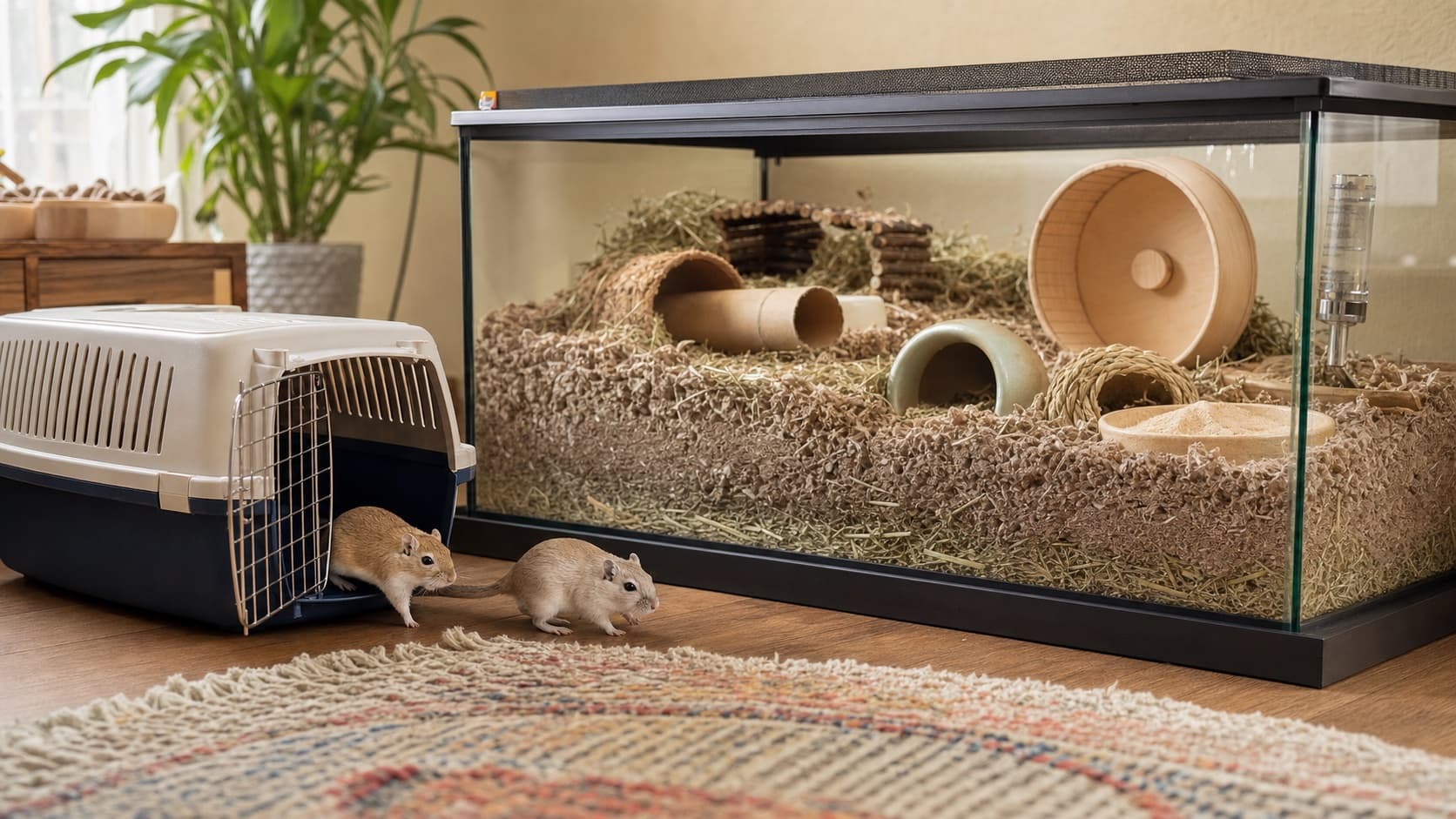
The first week with gerbils begins before the carrier opens. A bonded pair needs a complete home with enough floor space, deep material for real tunnels, a secure ventilated lid, familiar food, fresh water, cover, and a quiet place in the household. Finish that environment first, then let the gerbils choose how quickly to explore it.
The Blue Cross gerbil care guide describes gerbils as social animals that need company of their own kind. It recommends a gerbilarium or large tank with a secure wire lid, deep bedding, enrichment, food, water, a nest area, a sand bath, chewable materials, and a carrier.
Bring home a bonded pair
Choose a bonded same-sex pair or compatible group with a known history. Ask the rescue or responsible breeder for written details about sex, approximate age, ordinary food, current bedding, group history, and veterinary records.
Keep bonded gerbils together during transport and arrival. Adult introductions need a careful split-tank process and experienced guidance, so the first week is easier when the social relationship is already established.
Finish the gerbilarium first
Blue Cross gives a minimum floor surface of 100 cm long by 40 cm wide by 40 cm tall for two to four gerbils. Woodgreen's current housing guide uses a roomier 100 cm by 50 cm by 50 cm minimum for a pair. The home also needs depth for burrowing. A large glass tank or gerbilarium with a tightly fitted mesh lid contains substrate while allowing ventilation.
Prepare:
- A deep mix of dust-extracted paper bedding and hay that can hold tunnels.
- Plain cardboard tubes, boxes, and dividers that add burrow structure.
- One shared nest area with plain shredded paper.
- A stable solid-surface wheel with room for a level running posture.
- A heavy dish or scatter-feeding area for the usual gerbil food.
- A working water bottle protected from chewing and checked every day.
- A stable dish of gerbil-safe sand.
- Cardboard and untreated, species-appropriate chew materials.
- A hard-sided carrier that can remain familiar.
Place heavy items on a stable platform or the enclosure floor so burrowing cannot undermine them. Check every edge, lid clip, ventilation opening, bottle fitting, and wheel support.
Let the carrier become the doorway
Place the open carrier beside a secure enclosure opening and give the gerbils a protected route inside. Keep the room calm and allow each animal to leave voluntarily. Their first work may be disappearing underground, moving bedding, chewing cardboard, checking the perimeter, eating, drinking, and sleeping together.
Keep the original layout steady for the first days. The gerbils need time to connect scent, shelter, food, water, and the shared nest into one familiar territory.
Build contact at floor level
Spend short periods sitting near the enclosure while the pair is awake. Let a still hand rest inside as something to investigate. A small box, tunnel, or open carrier can become the easiest transfer tool.
When a gerbil chooses to step onto your hands, cup both hands into a low platform and support the whole body. Keep the transfer directly above a padded, enclosed area. The PDSA handling guide recommends a cupped two-hand hold and emphasizes careful handling because gerbils are fast and delicate.
The tail stays completely free. Use the carrier or a container transfer when hands are not yet comfortable for the animal.
Start a useful daily check
Notice each gerbil's ordinary pattern while the pair is active:
- Both animals can reach food and water.
- The water bottle is flowing and remains undamaged.
- The pair sleeps together and moves through the home without conflict.
- Tunnels remain open and heavy equipment remains stable.
- Food caches are dry and fresh items have not spoiled.
- Eyes, nose, coat, posture, movement, breathing, droppings, eating, and drinking look ordinary for that individual.
Arrange a veterinarian who routinely treats gerbils before an urgent question appears. A clear change in eating, drinking, breathing, droppings, posture, movement, social behavior, or ordinary activity needs prompt veterinary advice.
Keep the first clean small
Spot-clean wet bedding and remove spoiled fresh food while preserving most of the burrow. Blue Cross notes that gerbils rely on familiar scent and recommends keeping some clean, dry used bedding during a fuller clean. A first-week rebuild can wait unless the environment becomes wet or unsafe.
Once the pair is settled, use the habitat, bedding, food, company, handling, activity, and enrichment guides to refine each part of the home.