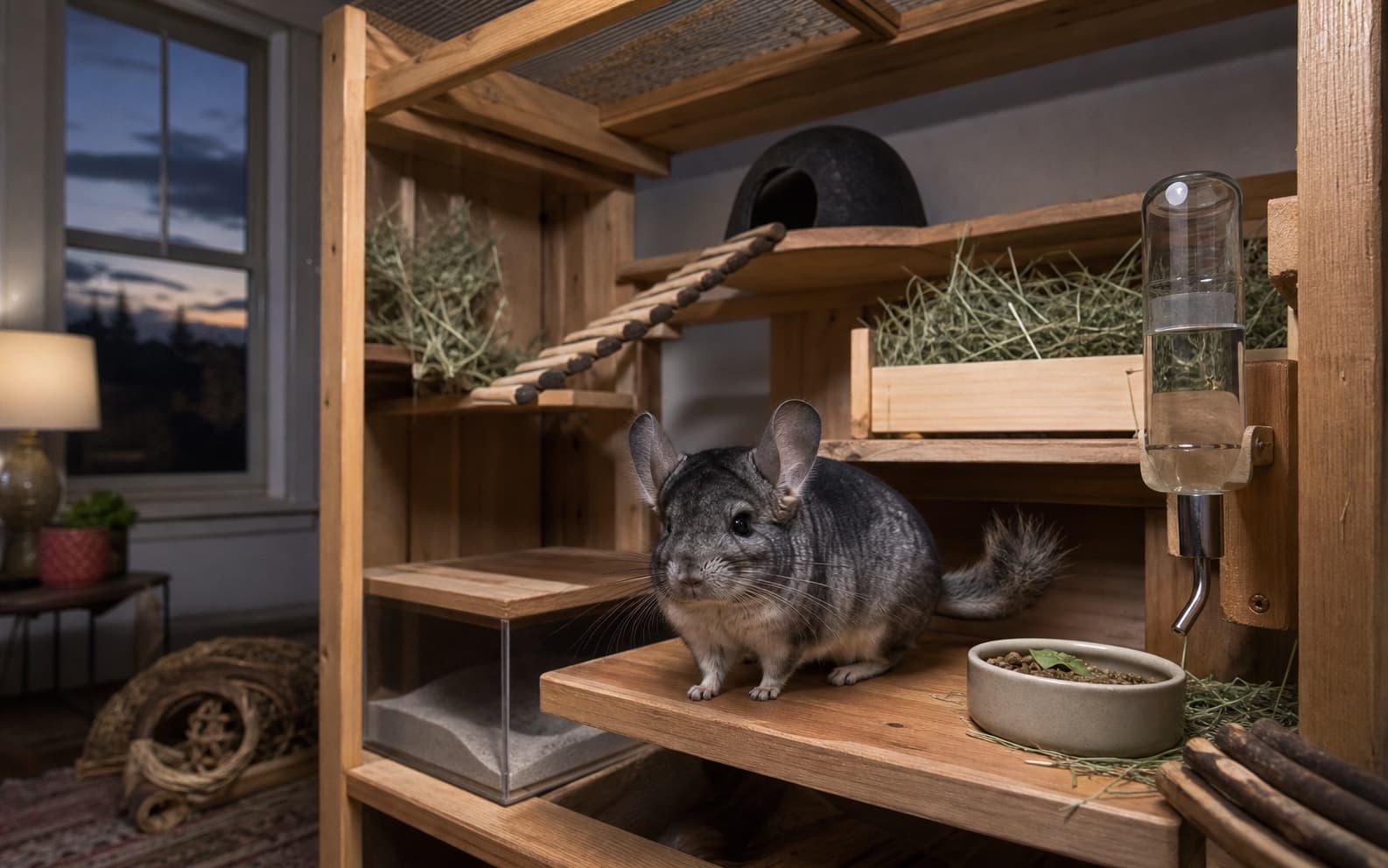
The first week with a chinchilla begins before the carrier reaches the house. The room needs to stay cool and dry, the enclosure needs safe height and solid places to land, and the food routine should already be waiting. Once those pieces are steady, the new arrival can learn the home at its own pace.
Chinchillas can live well into their teens. The RSPCA chinchilla guide describes a 10 to 20 year commitment, while the Blue Cross care guide centers daily care on company, cool indoor housing, hay, and opportunities to behave naturally.
Prepare the room before the enclosure
Choose a quiet indoor room away from direct sun, radiators, fireplaces, cooking heat, steamy bathrooms, and busy speakers. Chinchillas have dense fur and handle heat poorly. Blue Cross gives 10 to 18°C as an ideal room range, and the RSPCA environment guidance likewise calls for a cool, dry place.
Check the room across the warmest part of the day, not only in the morning. Make sure an adult can reach every enclosure door, shelf, water point, and floor tray without dismantling the home.
Finish the tall home
Use a secure, well-ventilated enclosure that gives chinchillas room to move upward and across. Broad solid shelves, short safe routes between levels, and several covered resting places turn the height into usable territory. Cover any exposed wire floor with a solid surface.
Prepare the daily essentials:
- Unlimited grass hay in a clean, accessible holder.
- A small bowl of plain chinchilla pellets.
- Fresh water in a checked bottle or stable vessel.
- Separate dark hides for each chinchilla.
- Untreated wood and other chinchilla-safe items for chewing.
- A suitable dust bath that can be offered and removed.
- An open carrier that can become a familiar retreat.
The Animal and Veterinary Service of Singapore recommends opportunities for climbing, foraging, bathing, and chewing, along with solid flooring and suitable company.
Let the first days stay quiet
Set the carrier inside the secure enclosure and allow the chinchilla to leave voluntarily. Keep voices low, protect daytime sleep, and leave the layout steady. A new chinchilla may use a hide while it listens, watches, and learns when the room becomes active.
Observe from outside the enclosure. Check that hay is being disturbed, water is available, droppings are present, and the chinchilla moves normally during its active period. Avoid chasing, cornering, or repeatedly lifting the hide to produce interaction.
Build contact near the floor
Begin in the evening when the chinchilla is awake. Sit nearby, speak quietly, and offer an open hand as a stable surface. Let the chinchilla approach and leave. When contact becomes voluntary, use two open hands to support the body close to a secure surface.
The RSPCA behavior guide notes that chinchillas tend to prefer exploring over being picked up. The first goal is calm movement into a carrier or across supported hands, not a long cuddle.
Establish a short daily check
During the normal active period, notice appetite, water use, droppings, posture, breathing, balance, movement, and interest in the surroundings. Check the water source and remove wet bedding or spoiled food while keeping the familiar home intact.
Arrange a veterinarian who routinely treats chinchillas before an urgent question appears. A clear change in eating, droppings, breathing, movement, posture, or usual activity needs prompt veterinary advice.
Once the first week feels predictable, use the separate cage, room climate, food, company, sleep, handling, and dust-bath guides to refine each part of the routine.