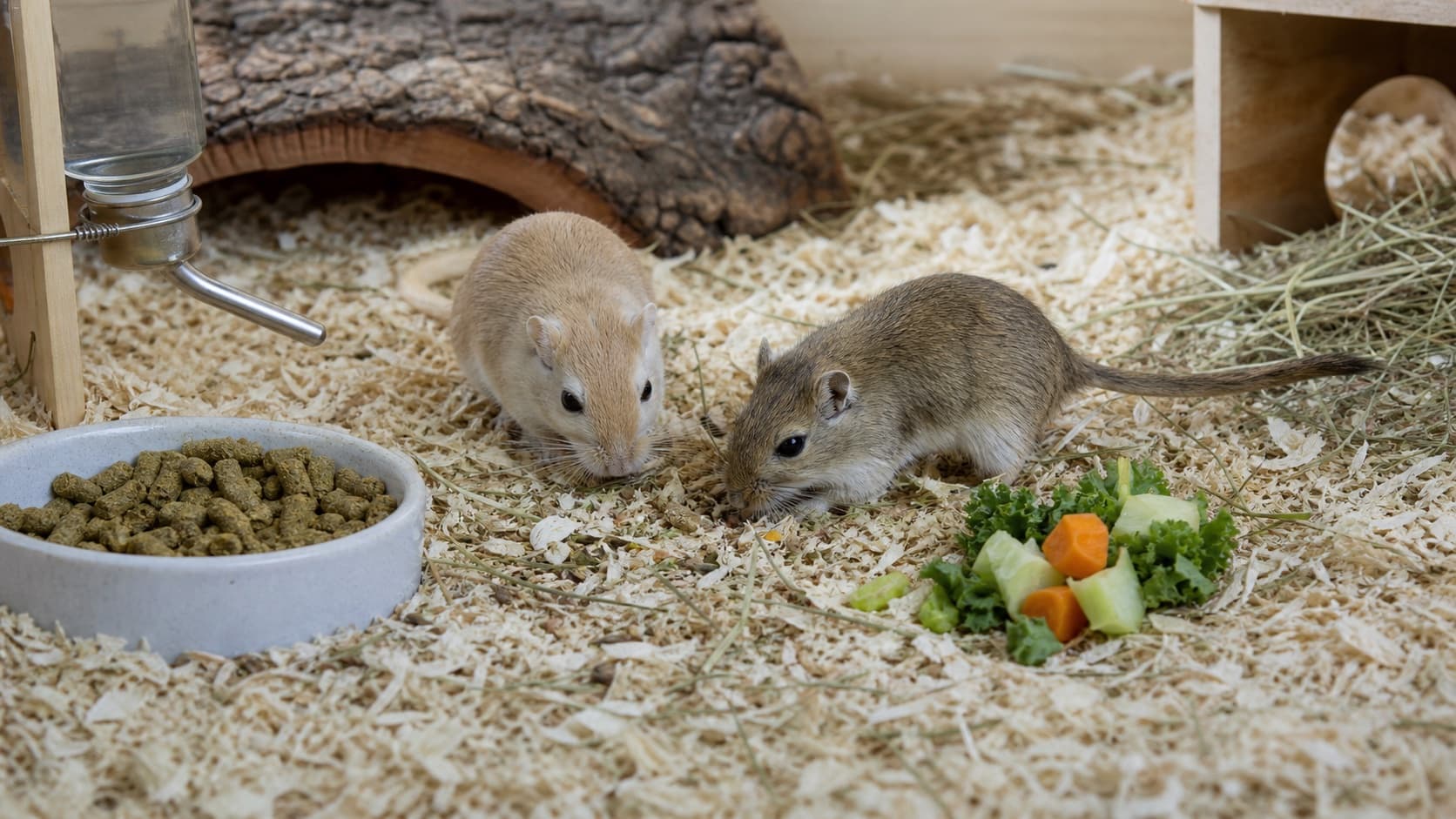
A complete food made for gerbils forms the center of the daily routine. Fresh water stays available at all times, while modest fresh foods add variety. Scatter part of the complete food across the enclosure so eating also becomes natural foraging.
The RSPCA gerbil diet guide recommends a balanced commercial diet specifically formulated for gerbils. The Blue Cross care guide describes gerbil-specific nuggets as the basis of the diet, with small amounts of fresh vegetables and fruit.
Start with complete gerbil food
Choose a clearly labeled complete gerbil food and follow the manufacturer's feeding guide for the product and the number of animals. A uniform nugget or pellet format helps make each mouthful nutritionally similar. A varied seed mix can encourage selective eating when the animals consistently choose favorite pieces.
Keep the food dry and store it in the original packaging or a sealed container with the label and best-before information. When changing brands, discuss the transition with a veterinarian who routinely treats gerbils and make the change gradually.
Turn part of the meal into a search
Gerbils naturally move, dig, and store food. Scatter part of the same daily complete food across clean bedding and hide a few pieces in cardboard tubes or simple paper parcels. A heavy ceramic dish can hold the remainder and makes it easier to see whether food has been disturbed.
The RSPCA specifically recommends scatter feeding to support foraging and reduce competition. Spread food across more than one area so both animals can participate.
Keep fresh foods modest
Small pieces of appropriate washed vegetables or fruit can add variety. Blue Cross lists examples including carrot, broccoli, cauliflower, and apple. Introduce one food at a time and keep the portion modest so the complete food remains the center of the diet.
Remove uneaten fresh food before it spoils underground. A fresh piece can disappear into a cache within minutes, so note where the pair usually stores food.
Keep rhubarb, potato, tomato leaves, grapes, and household foods high in sugar, salt, or fat out of the gerbil feeding routine. Source lists differ on individual produce items, so a veterinarian familiar with gerbils is the best place to check an uncertain food.
Make water easy to verify
Provide constant access to fresh water in a bottle fixed securely to the enclosure. Place the nozzle where it remains reachable after the bedding shifts. Gerbils chew plastic, so inspect the bottle and fitting every day.
Test flow by touching the ball at the nozzle tip and watching for a small bead of water. Refill with fresh water and clean the bottle according to the manufacturer's instructions.
Watch the pair, not only the bowl
Food can disappear into a cache even when little has been eaten. Daily observation is more useful than an empty dish by itself. Notice whether both animals come out to forage, handle food normally, drink, produce ordinary droppings, and maintain their usual activity.
Sudden changes in eating, drinking, droppings, movement, posture, or body condition need prompt veterinary advice. A veterinarian can assess the individual animals and review the actual food label.
Use feeding to support the whole habitat
Place the main foraging zones away from the sand bath and damp corners. Move simple cardboard parcels around the enclosure while keeping the complete food, water location, and overall daily rhythm predictable.
Food is one enrichment tool, not the only one. Deep bedding, tunnels, chewing, a solid wheel, sand, social company, and a varied layout provide activity without turning every interaction into a treat.