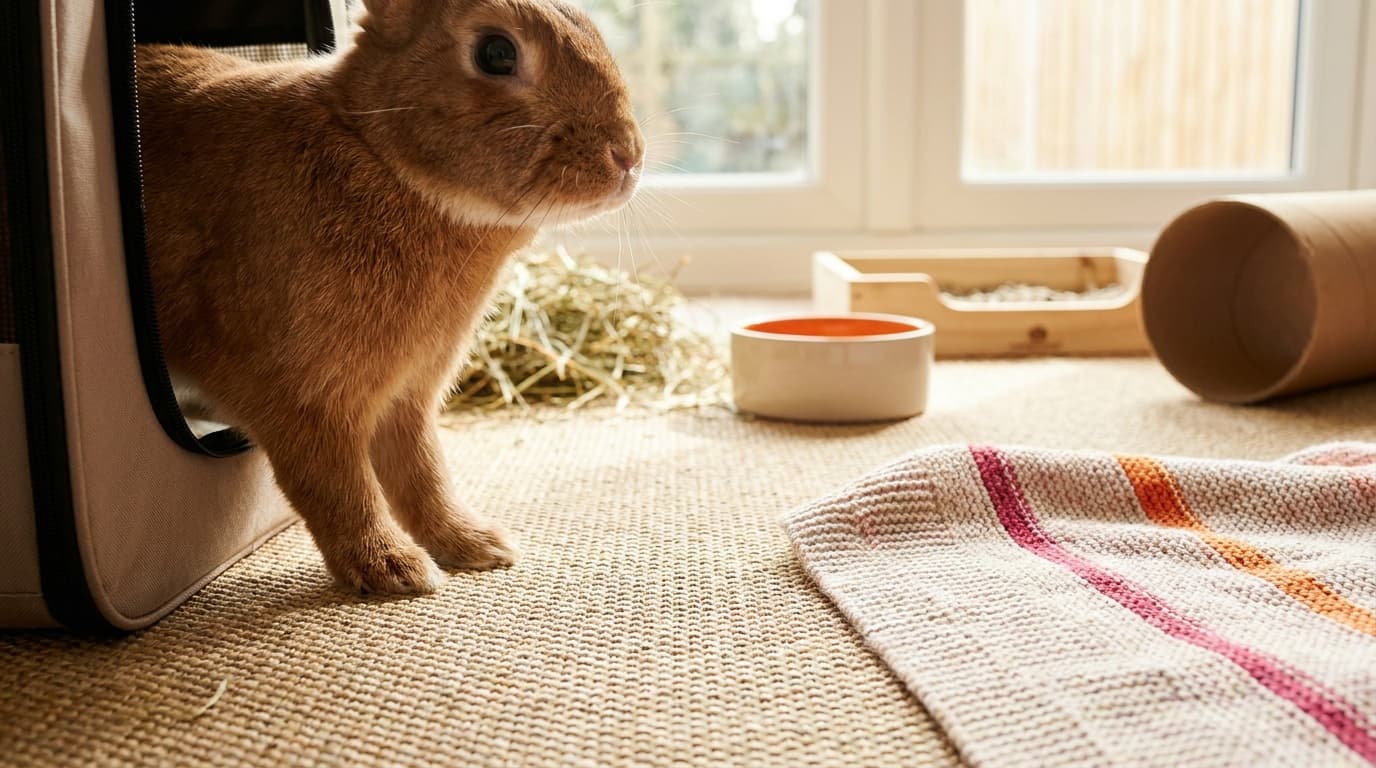
The first week should establish a predictable room, feeding routine, and observation baseline. Prepare the space before the rabbit arrives, keep the first few days quiet, and learn what normal eating, drinking, droppings, movement, and resting look like for that individual rabbit.
The House Rabbit Society organizes rabbit care around housing, diet, grooming, play, litter training, and veterinary care. The RSPCA indoor rabbit guide also emphasizes a rabbit-proofed room, a darkened resting shelter, protection from wires and toxic materials, and enough connected space for normal movement.
Prepare one complete home base
Use an indoor pen or rabbit-proofed room with a solid floor. The area should contain:
- A covered shelter with an unobstructed entrance.
- Hay, fresh water, and the same food the rabbit was eating before the move.
- A litter tray placed where the rabbit already chooses to toilet.
- Nonslip flooring and enough open length for hopping, stretching, and turning.
- Cardboard, untreated rabbit-safe chew materials, and a digging option.
Block access to electrical cords, houseplants, foam, rubber, and gaps behind appliances. Rabbits investigate with their teeth, so a barrier needs to prevent contact rather than depend on supervision alone.
Keep the first days predictable
Place the carrier inside the prepared area and let the rabbit exit without being pulled. Keep food, water, litter, and shelter in consistent locations. Sit on the floor nearby and allow the rabbit to approach, investigate, or remain under cover.
Avoid passing the rabbit between people or lifting it for introductions. When handling is necessary, support the chest and hindquarters and stay close to the floor. Never place a rabbit on its back to make it still. The House Rabbit Society explains that this position can trigger tonic immobility, an involuntary fear response, in its guide to why rabbits should not be tranced.
Record the baseline
Check the rabbit several times a day without repeatedly disturbing rest. Note:
- Whether hay and water are being consumed.
- The usual size, shape, and amount of droppings.
- Normal times for activity and rest.
- Posture, breathing, and willingness to move.
- Which shelter, litter corner, and floor surfaces the rabbit uses.
A sudden reduction in eating or droppings is urgent in rabbits. Contact a veterinarian promptly instead of waiting for the next scheduled visit.
Plan for rabbit company
Rabbits are social animals. The RSPCA rabbit behavior guidance recommends compatible rabbit company unless a veterinarian advises otherwise. An established bonded pair should move together. Introducing unfamiliar rabbits is a separate, managed process and should not be improvised during the first week in a new home.
By the end of the week, the useful result is a stable routine and a clear baseline. Expansion into more of the home can then follow the rabbit's consistent litter use and your completed rabbit-proofing.