All small pets
Build the burrow. Keep the evening.
Source-cited hamster guidance for the enclosure below the surface, the routine after lights out, and the small set of equipment that has to fit.
Home first. Routine second. Hands later.
A new hamster needs a complete territory before it needs a busy introduction. These three guides move from the room to the daily rhythm.
- 01 · First weekPrepare the whole homeA steady arrival, evening check, and low-pressure start to contact.Begin the first week
- 02 · EnclosureBuild across and belowFloor space, burrow depth, stable equipment, cover, and everyday access.Plan the enclosure
- 03 · FoodChoose the daily foodComplete food, reliable water, small fresh additions, and measured forage.Build the food routine

Fit the base and the wheel as one system.
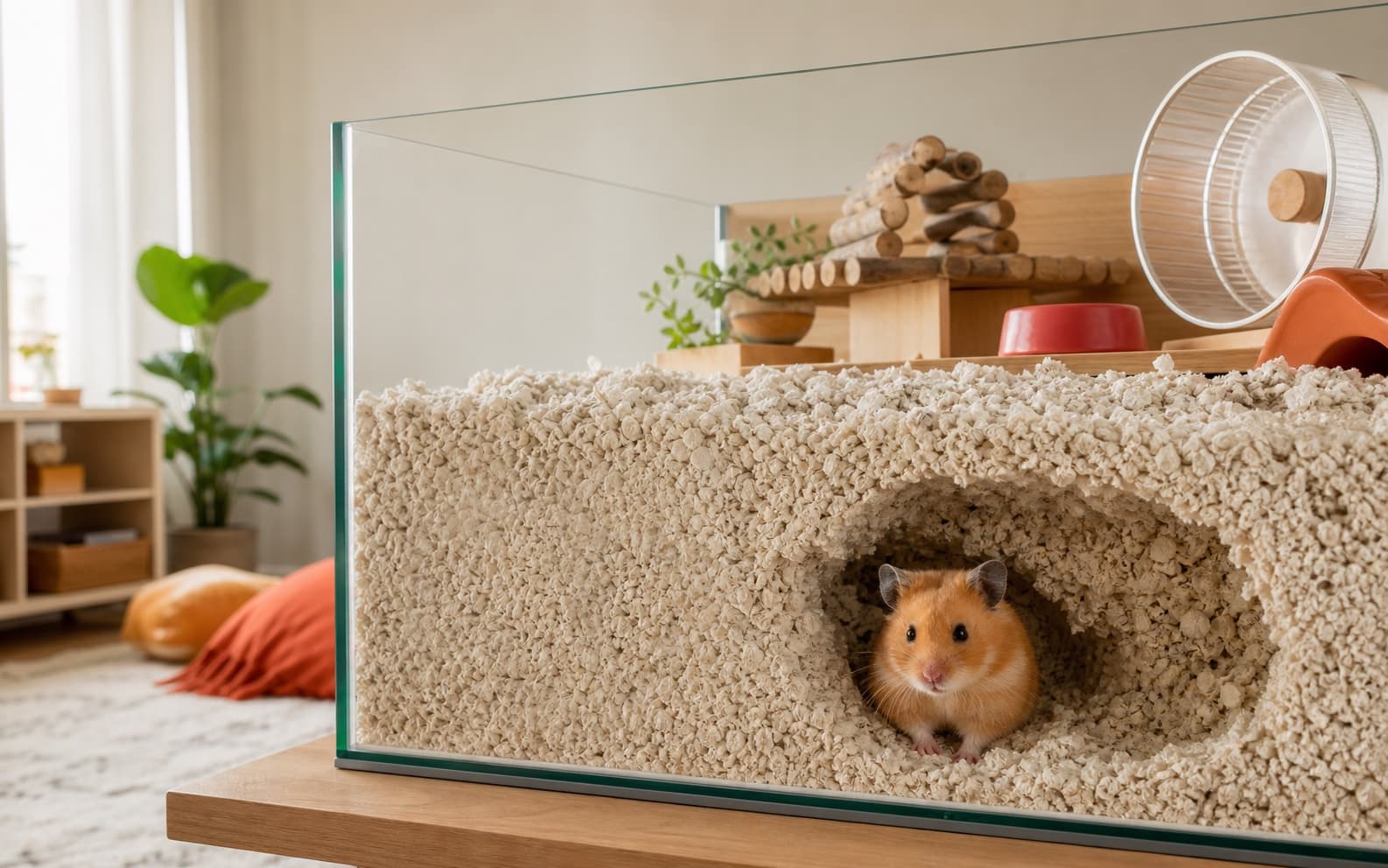 The baseHamster bedding and burrowing: build a base that holdsChoose low-dust paper bedding, create a deep burrow zone, support heavy objects, preserve the nest, and spot-clean around normal hamster behavior.Build a burrow that holds
  The night shiftHamster wheel setup: size for a straight running postureChoose and place a solid hamster wheel by running posture, stable support, safe clearance, cleanability, nighttime sound, and daily use.Fit the wheel by posture
 Setup + Fit Lab
Draw the wheel inside the finished habitat.
Enter the inside habitat, finished bedding, and complete assembled wheel. The planner shows the height and side gaps and whether a 90 degree turn changes the fit.
Side viewTop viewTight-edge checkSave, share, and print
Open the wheel fit lab Three purchases shape most of the room.
Current Amazon listings are grouped for comparison. Researched recommendations stay clearly labeled and link to the guide that explains the choice.
- HabitatsCompare usable floor area, bedding capacity, ventilation, and access for daily care.Compare hamster habitats
- WheelsCompare diameter, solid running surface, base stability, clearance, and cleanability.Fit a wheel to the habitat
- BeddingCalculate the expanded volume, then compare paper color, published label details, and storage size.Compare paper refills
Eleven hamster guides cover setup, food, sleep, handling, company, bedding, wheels, and researched equipment.