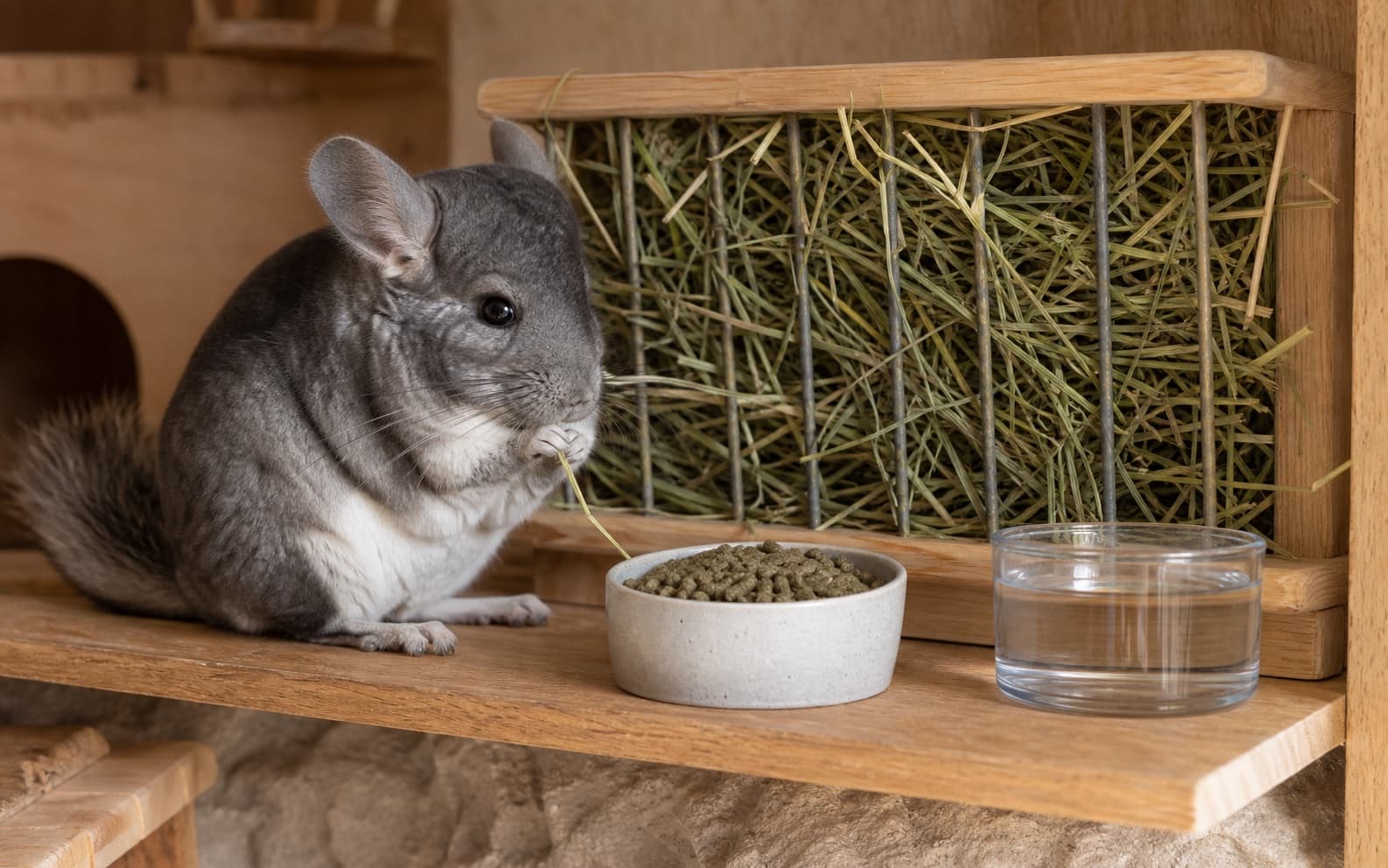
A chinchilla's daily food routine is compact: abundant grass hay, a measured amount of plain chinchilla pellets, and clean fresh water. The useful work is keeping that routine consistent, protecting the hay from contamination, and noticing changes in eating or droppings early.
The NC State Veterinary Hospital chinchilla guide and the Animal and Veterinary Service of Singapore both place hay at the center of feeding, supported by chinchilla pellets and fresh water.
Make grass hay the constant food
Offer clean, dry grass hay at all times. Timothy and other suitable grass hays provide the long fiber that supports normal chewing and digestion. Replace hay that becomes wet, dusty, or soiled, and position the holder so a chinchilla can pull strands while standing on a solid surface.
Hay quality is visible and tactile. It should smell fresh, contain recognizable stems and leaves, and stay free of mold or heavy dust. Store the main supply in a cool, dry, ventilated place.
Use a plain chinchilla pellet
Choose a uniform pellet made for chinchillas rather than a colorful mix of seeds, nuts, dried fruit, and loose pieces. Uniform pellets reduce selective eating and keep the daily food predictable.
Ask the breeder or rescue which pellet the chinchilla already eats. If a change is needed, discuss the transition with a veterinarian who routinely treats chinchillas. Sudden food changes can disrupt a sensitive routine.
Keep water easy to verify
Provide fresh water every day. A bottle should release water when tested and sit at a height that supports a natural stance. A stable vessel needs protection from tipping and contamination. Whichever format the chinchilla uses reliably, verify it during the daily check.
More than one water point can help a compatible pair, especially in a large multilevel enclosure.
Treat extras as a separate decision
Chinchillas have a specialized herbivorous digestive system. Sweet fruit, dried fruit, nuts, seed mixes, and rich human foods can displace the high-fiber routine and create avoidable risk. The RSPCA chinchilla care page advises a high-fiber diet and notes that sugary treats can cause digestive problems.
Use veterinarian-approved chinchilla-safe chewing materials and occasional food additions only when their role is clear. A chew item supports normal gnawing; it does not replace hay.
Read the routine every day
Notice how much hay is disturbed, whether pellets disappear normally, whether the water source works, and whether droppings remain consistent for that animal. A meaningful decrease in appetite, fewer droppings, trouble chewing, wetness around the mouth, weight change, or a change in usual behavior needs prompt veterinary advice.
The strongest feeding setup is easy to audit at a glance: fresh hay, plain pellets, working water, and a chinchilla eating with its usual interest.