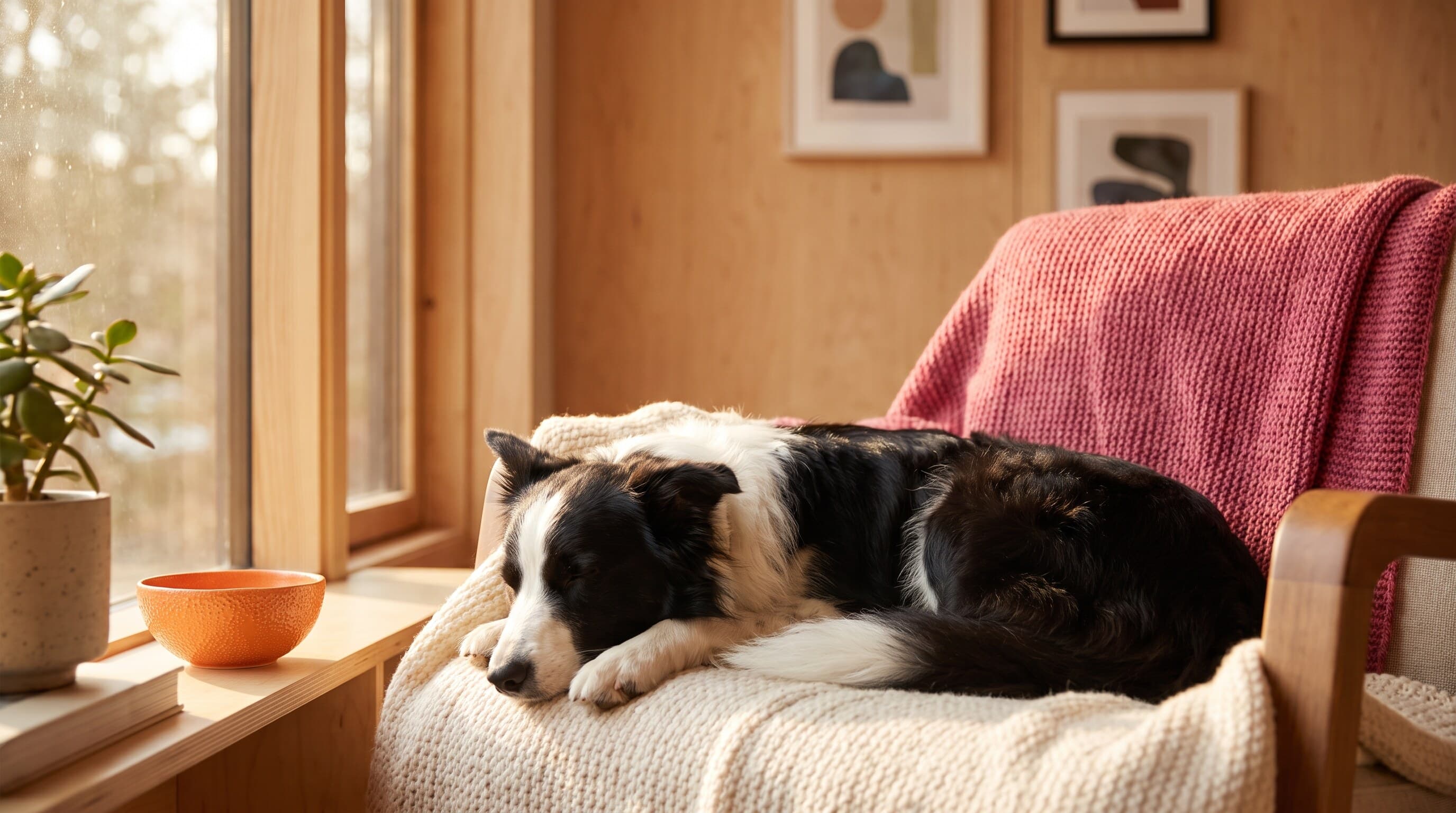
Trembling, hiding, pacing, drooling, clinging, and escape attempts during fireworks or thunderstorms are common signs of noise aversion. According to Fear Free Happy Homes, shivering, shaking, hiding, drooling, and trying to escape are all signs of a possible noise phobia. Bring the dog indoors, reduce sound and flashes, prevent escape, and provide an accessible hiding place. Do not force the dog toward the noise.
Set up a quiet interior room
Start with a room away from exterior windows. The American Kennel Club recommends creating a calm, comfortable space away from windows, ideally an interior room, a closet, or a covered crate, stocked with a familiar bed, favorite toys, and water. Many dogs instinctively seek out small, enclosed spots when frightened, so letting your dog choose their own hiding place and making it cozy is often more helpful than trying to coax them out. If your dog is already crate trained, an open crate draped with a blanket can become an excellent den.
- Keep your dog indoors during fireworks and storms, and make sure they are wearing current ID in case a panicked dog bolts.
- Close curtains and blinds to dim the flashes of fireworks and lightning.
- Stay calm yourself. Dogs read our body language, and a relaxed, matter-of-fact owner is reassuring.
Mask the sound
Because it is the noise itself that triggers the fear, covering it up helps enormously. Fear Free Happy Homes suggests masking scary sounds by running a fan, a white noise machine, or an air conditioner, and by playing calming music. The AKC likewise recommends white noise or background sound to blunt the sudden booms that startle a dog most. Turn these on before the fireworks or storm ramp up, so your dog is already settled in a soothing sound environment rather than reacting to the first bang.
- Play white noise or soft music at a comfortable volume in the quiet room.
- Muffle the space with soft furnishings; an interior room with the door closed helps.
- Time it right. On a known fireworks night, or when a storm is forecast, set the scene early and bring your dog into their safe space before the noise begins.
Counterconditioning and calming tools
Beyond getting through a single night, you can gradually change how your dog feels about loud noises. VCA Animal Hospitals describes the long-term approach as systematic desensitization and counterconditioning, in which a dog is exposed to very quiet recordings of the feared sound while receiving something wonderful, then the volume is increased only as the dog stays relaxed. Done patiently and always below the threshold that scares your dog, this teaches the brain that booms predict good things. Pairing quiet noise with a few of the best dog training treats is a simple way to start this association on ordinary days, not during an actual storm.
Some dogs are also helped by a snug body wrap or pressure garment, calming pheromone diffusers, or a long-lasting chew or food puzzle that gives them something absorbing to do. These are supportive tools rather than cures, but they can take the edge off. A frozen stuffed toy or a durable option from our best dog chew toys roundup can be a useful distraction for a mildly worried dog.
When to ask your veterinarian
Mild worry often improves with a safe space and sound masking, but more intense fear deserves professional help, and there is no reason to let a dog suffer through it. VCA notes that severe noise phobias are best managed with a combination of behavior modification and, in many cases, medication prescribed by a veterinarian. Talk to your vet if your dog panics, tries to escape, injures themselves, refuses food, or cannot settle during noise events, or if the fear is getting worse each season. Your vet can rule out other issues, discuss anti-anxiety options, and refer you to a veterinary behaviorist for a tailored plan. Reach out well before the next fireworks holiday so there is time to prepare rather than scrambling on the day.
For a related foundation that makes a familiar retreat easier to build, see our guide to crate training a puppy.