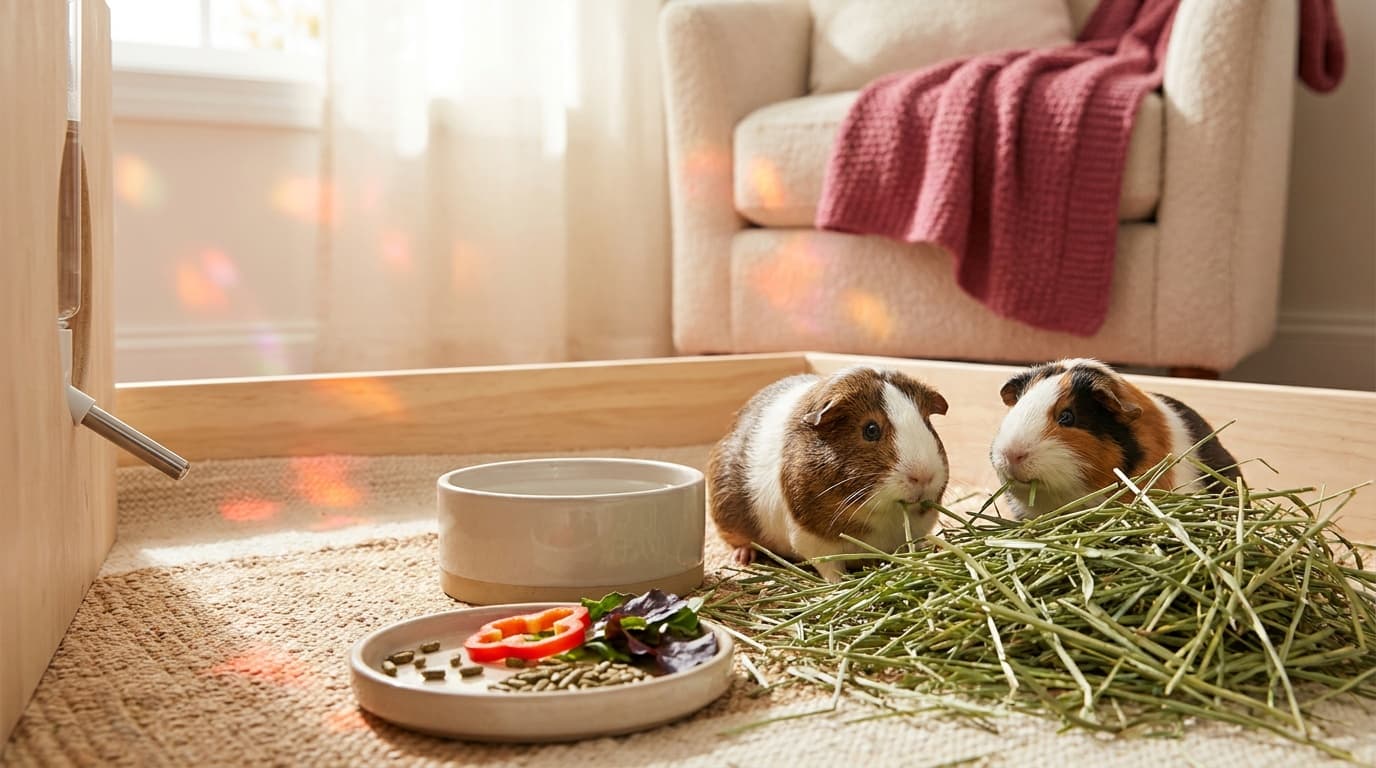
Good-quality hay or grass should make up most of a guinea pig's diet and remain available at all times. Fresh water, species-specific guinea pig pellets, and appropriate fresh vegetables complete the usual feeding routine.
Guinea pigs require dietary vitamin C because they cannot make it themselves. The RSPCA guinea pig diet guide recommends fresh guinea pig pellets and vitamin C-containing vegetables as part of the routine. Follow the pellet directions and ask a guinea pig-experienced veterinarian about individual portions.
Keep hay available day and night
Hay supplies fiber and abrasive chewing. Guinea pig teeth continue to grow, and eating hay supports normal tooth wear. Replace damp or soiled hay and provide more than one hay point for a pair or group.
Fresh grass can also be offered when it is clean and free from chemicals. Never feed lawnmower clippings. Cut grass rapidly ferments and can cause serious digestive illness.
Use fresh guinea pig pellets
Choose uniform pellets labeled for guinea pigs. Vitamin C degrades with time and air exposure, so store pellets as directed, keep the package closed, observe the best-before date, and replace the daily portion instead of continually topping up old food.
Fresh vegetables and herbs can add vitamin C and variety. Introduce new foods gradually and watch appetite and droppings. Fruit and higher-sugar vegetables belong in the occasional category.
Check the water every day
Provide fresh water continuously. Verify that a bottle flows freely and does not leak, or use a stable bowl that cannot be tipped. A pair may benefit from more than one water source so access remains available if one container fails.
Treat a change in eating as urgent
Contact a veterinarian promptly if a guinea pig stops eating, produces fewer droppings, sits hunched, becomes reluctant to move, or shows a clear change in drinking or toileting. Describe which animal changed, when it started, and what food and water were consumed.