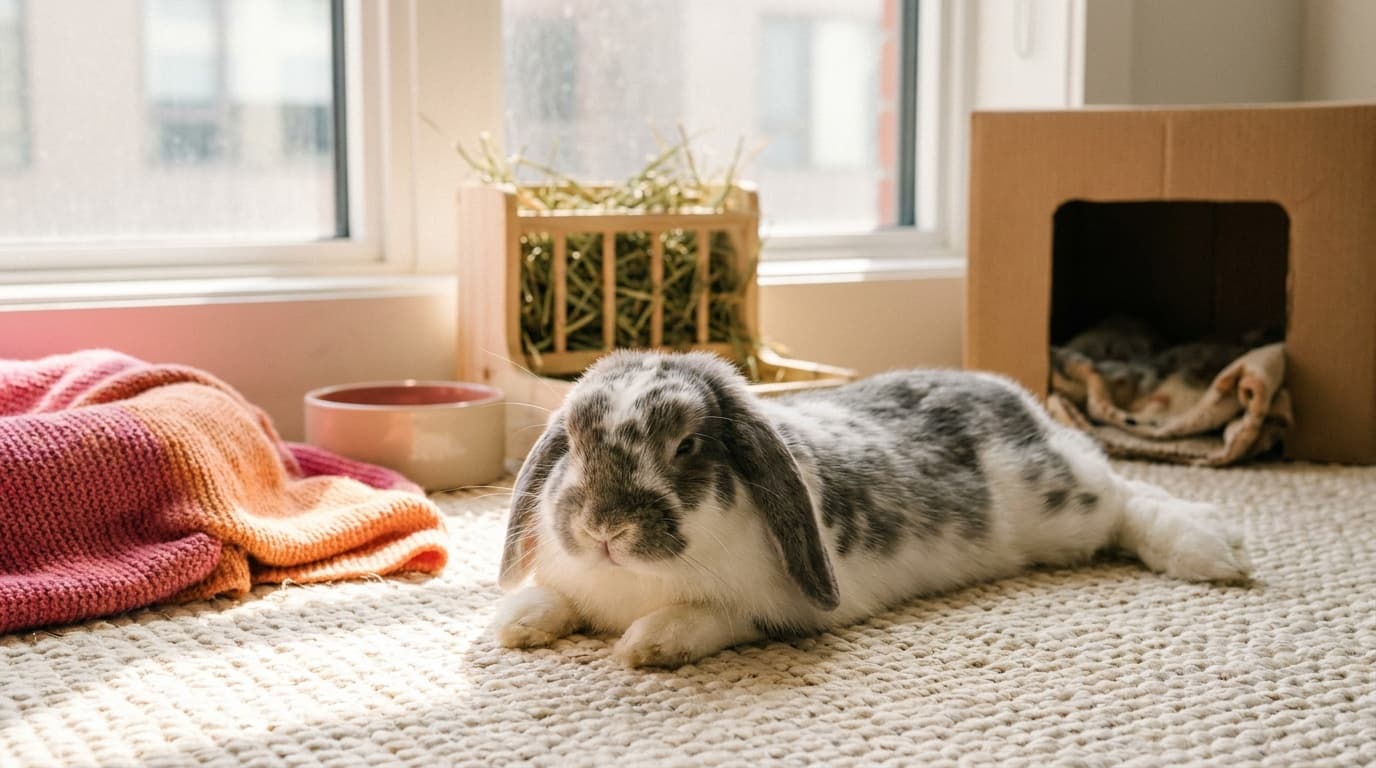
Rabbits are quiet animals, but they are talking all the time. Most of what a rabbit says comes through posture, ears, nose, and a handful of small sounds, and once you know the vocabulary it becomes easy to tell a happy rabbit from a worried one. This guide covers the signals owners ask about most, grouped by what they usually mean, with the few that are worth a call to your veterinarian.
Read any single signal alongside the rest of the rabbit. Ears, body tension, and what just happened in the room tell you more than one gesture on its own.
At a glance
Swipe or use arrow keys to compare every column.
| What you see or hear | What it usually means | What to do |
|---|---|---|
| Binky: a leap with a twist in the air | Pure happiness | Enjoy it |
| Flop onto the side | Deep relaxation and trust | Let them rest |
| Licking your hand or face | Affection, grooming you as a friend | Stroke the forehead back |
| Nose nudge or tug on your clothes | "Notice me" | Give attention, or move if you are in the way |
| Circling your feet, soft honking | Courtship or excitement | Normal, but raise neutering with your vet if it is constant |
| Rubbing the chin on things | Scent marking what belongs to them | Nothing, it is harmless |
| Soft tooth purring while stroked | Contentment | Keep going |
| Quick nip | "Move over" or "that is enough" | Give space and change what you were doing |
| Thumping a back foot | Alarm, or something unusual nearby | Check for noises, smells, or other animals |
| Ears flat, body crouched | Fear or worry | Lower the noise and let them hide |
| Loud tooth grinding, hunched posture | Possible pain | Call your veterinarian |
Signs of a happy, relaxed rabbit
Binkies. A binky is the joyful leap where a rabbit jumps with all four feet off the ground and twists in midair before landing. The RSPCA's guide to rabbit behaviour and the PDSA both describe it as a sign of happiness. Rabbits often binky after a run across the room, and the House Rabbit Society describes the same dash and midair turn as a rabbit saying "yippee."
Flops. A rabbit that suddenly tips over onto its side, or lies fully stretched out, is deeply relaxed. The RSPCA describes a relaxed rabbit's body as loose and extended, with legs stretched out to the side or behind. It can look alarming the first time, but a flop means your rabbit feels safe enough to let its guard down.
The loaf. A rabbit sitting with its legs tucked neatly underneath, like a loaf of bread, is comfortable and resting. The PDSA also lists a gently twitching nose as a sign of a content rabbit, whether it is busy or relaxed.
Tooth purring. A soft grinding or clicking of the teeth while you stroke your rabbit is the rabbit version of a cat's purr. The House Rabbit Society describes it as a sign of contentment. It is quiet and relaxed, which is what separates it from the loud grinding covered below.
Affection and attention
Why does my rabbit lick me? Rabbits groom the rabbits they are bonded to, and licking you is the same gesture. The House Rabbit Society calls it obvious affection, and the PDSA says rabbits groom people to show their love and bond with them. Many rabbits enjoy a slow forehead stroke in return.
Nose nudges and tugging clothes. A nudge at your ankle or a tug on your trouser leg means "notice me," according to the House Rabbit Society. It can be a request for attention or food, or a polite way of asking you to move.
Circling your feet and soft honking. Running circles around your feet while making soft honks or grunts is courtship behavior, and the House Rabbit Society notes it is also used to ask for food and attention. The PDSA links frequent circling and foot nibbling to hormones and suggests talking to your veterinarian about neutering if it happens a lot.
Chinning. Rabbits have scent glands under the chin and rub them on furniture, toys, and sometimes your feet to mark them as theirs. The scent is undetectable to people, and the House Rabbit Society describes it as a harmless way of claiming property.
Nipping and biting
Why does my rabbit bite me softly? A gentle nip is usually communication rather than aggression. The House Rabbit Society describes it as a rabbit saying "move over" or "that is enough," and notes that a nip can also be part of grooming a friend. Pay attention to what you were doing just before: moving a rabbit, touching the back or feet, or reaching into its space are common triggers.
Harder bites. Biting that is new, frequent, or hard deserves a closer look. The PDSA lists pain, illness, hormonal changes, and boredom among the reasons a rabbit may start biting or scratching. If the change is sudden, start with a veterinary check before treating it as a training problem, and make sure your rabbit has room to run, dig, and chew every day.
Warning and worry signals
Thumping. A sharp thump of a back foot is an alarm. Wild rabbits use it to warn others of danger, and pet rabbits thump at sudden noises, unfamiliar smells, or other animals. Our guide to why rabbits thump covers how to find and remove the trigger.
Flattened ears and a crouched body. According to the RSPCA, a worried rabbit presses its ears flat against its back, tenses its muscles, and holds its head low to the ground. The PDSA adds that a frightened rabbit may stop twitching its nose. Lower the noise, give the rabbit a place to hide, and do not pull it out. Hiding is how rabbits cope.
Foot flicks. A rabbit that flicks its back feet as it hops away is annoyed, the RSPCA says. It is a mild "I did not like that," often after being handled.
Boxing, grunting, and showing teeth. Standing up with front paws raised, grunting or growling, or showing the teeth are the strongest warnings a rabbit gives. The RSPCA and PDSA describe these as signs of anger or extreme fear. Step back and give the rabbit space.
Signals that need a veterinarian
Rabbits are prey animals and are very good at hiding illness, so changes in behavior are often the first sign that something is wrong. The House Rabbit Society separates contented tooth purring from loud tooth grinding, which can signal pain. Treat loud grinding, a hunched or tucked-up posture, a rabbit that stops eating or stops producing droppings, or any sudden, unexplained change in behavior as a reason to call your veterinarian the same day. The House Rabbit Society's guidance on gut slowdown treats a rabbit that stops eating or passing droppings as an emergency, and describes a rabbit in pain hunching up and loudly crunching its teeth. The PDSA recommends a veterinary check for any unexplained change in how a rabbit behaves.
If you are still getting to know a new rabbit, our guides to rabbit companionship and litter training cover the next steps in building a settled routine.