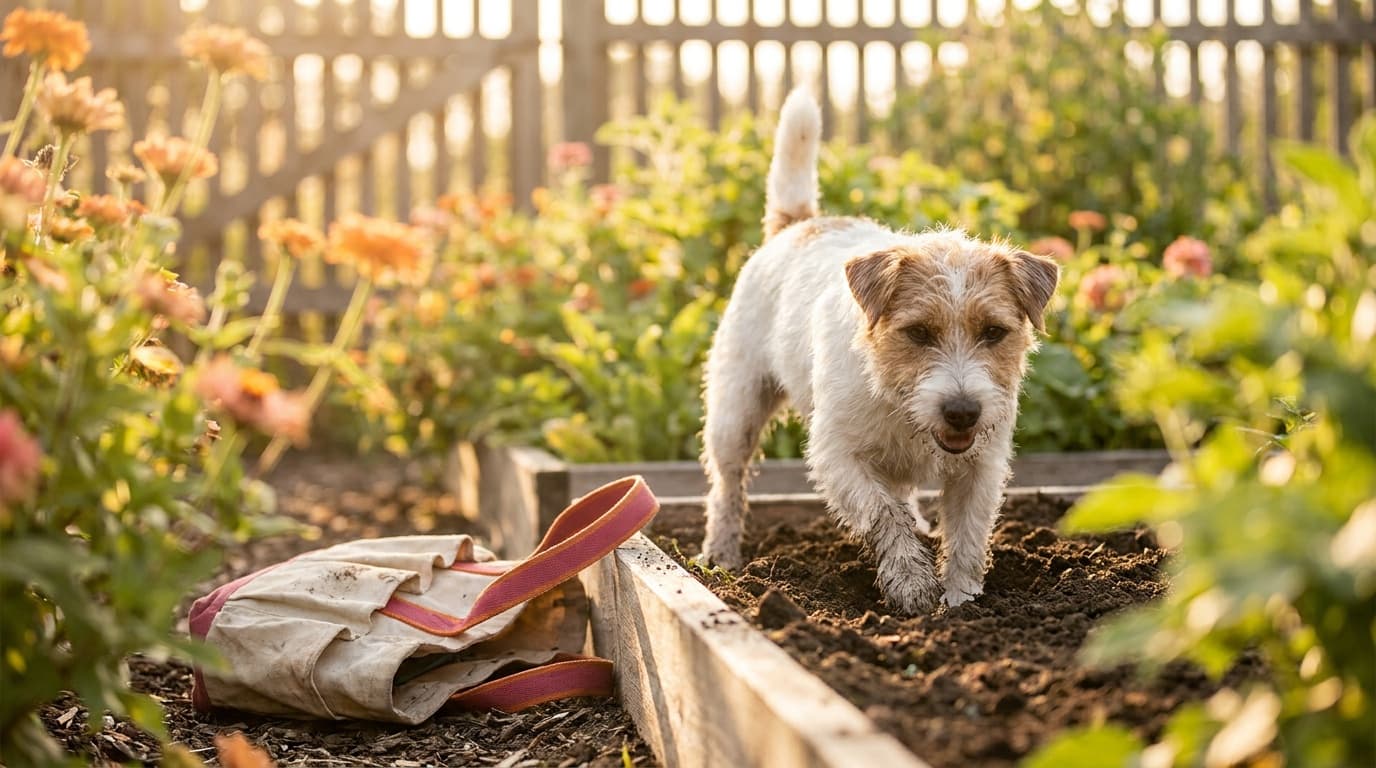
Few things test a gardener's patience like a fresh crater in the lawn, but digging is one of the most natural behaviors a dog can show. According to the American Kennel Club, dogs dig for a whole range of ordinary reasons, and the key to stopping the frustrating kind is figuring out which reason is driving your particular dog. Once you know the motive, you can meet the underlying need and give the behavior an acceptable outlet, all without punishment.
The common reasons dogs dig
Digging is rarely random. In a PetMD guide, certified dog trainer and author Victoria Schade lays out the usual motives, and the AKC echoes them:
- Instinct and breeding. Many breeds were developed to dig. Terriers and dachshunds were bred to go to ground after burrowing prey, so for them digging is written into the job description. The University of California, Davis veterinary school notes that breed-linked hunting drive is one of the most common natural causes.
- Boredom and energy. A dog left alone in a yard with nothing to do will often invent a project, and landscaping is a popular one. Schade points out that boredom digging usually signals a dog who is not getting enough physical and mental stimulation.
- Temperature and comfort. Dogs dig to reach cool, damp earth on a hot day or to create a sheltered spot in cold weather. Thick-coated northern breeds are especially prone to digging a cool hollow to lie in.
- Hiding treasures. Some dogs bury bones, chews, or toys and then dig them back up, following an old instinct to cache food for later.
- Escape or company. Digging along a fence line often means a dog is trying to get out, whether from anxiety, to chase something, or to find social contact.
Redirect, do not punish
The single most important principle is that punishing a dog for digging does not work and can make things worse. Schade is explicit that scolding, spraying with a hose, or any attempt to teach the dog a lesson tends to backfire and can damage your relationship, because it adds stress without addressing why the dog was digging in the first place. The AKC takes the same position, framing the solution as redirecting the behavior rather than suppressing it.
The productive approach is to give the drive somewhere to go:
- Build a dig zone. Set aside a sandbox or a corner of loose soil that is fair game, then make it exciting by burying toys and treats for your dog to unearth. When your dog digs there, reward it warmly so the approved spot becomes the fun one. The AKC recommends this designated digging area as one of the most reliable solutions.
- Meet the real need. If boredom is the cause, add walks, play, training games, and enrichment. A rotation of the best dog toys and long-lasting options from our best dog chew toys roundup can absorb a lot of the energy that would otherwise go into the flowerbed.
- Fix the environment. For a dog digging to stay cool, provide shade, fresh water, and a comfortable indoor resting place. For a fence-line digger, address the motivation to escape and make the barrier more secure.
Enrichment is the long-term answer
For the majority of dogs, the durable fix is a fuller day. UC Davis and PetMD both stress that dogs who dig from boredom are telling you they need more to do, so building a routine of daily exercise, sniff walks, training, and interactive feeding tends to quiet the behavior over time. Puzzle feeders and short training sessions with a few of the best dog training treats give the brain a workout, which often matters even more than physical tiredness. Supervision helps too: when you can watch your dog outdoors, you can calmly interrupt and redirect to the dig zone before a new hole gets started.
When digging signals something more
Most digging is ordinary and easily redirected. But a few patterns are worth a closer look. If your dog suddenly starts digging frantically, digs in a way that seems compulsive or self-injurious, or the behavior appears alongside other signs of anxiety such as pacing, panting, or destructiveness when alone, that is a reason to check in with your veterinarian. A vet can rule out discomfort or underlying stress and, if needed, refer you to a qualified positive-reinforcement trainer or veterinary behaviorist. For a related outlet-and-exercise approach, see our guide to stopping destructive chewing in dogs.