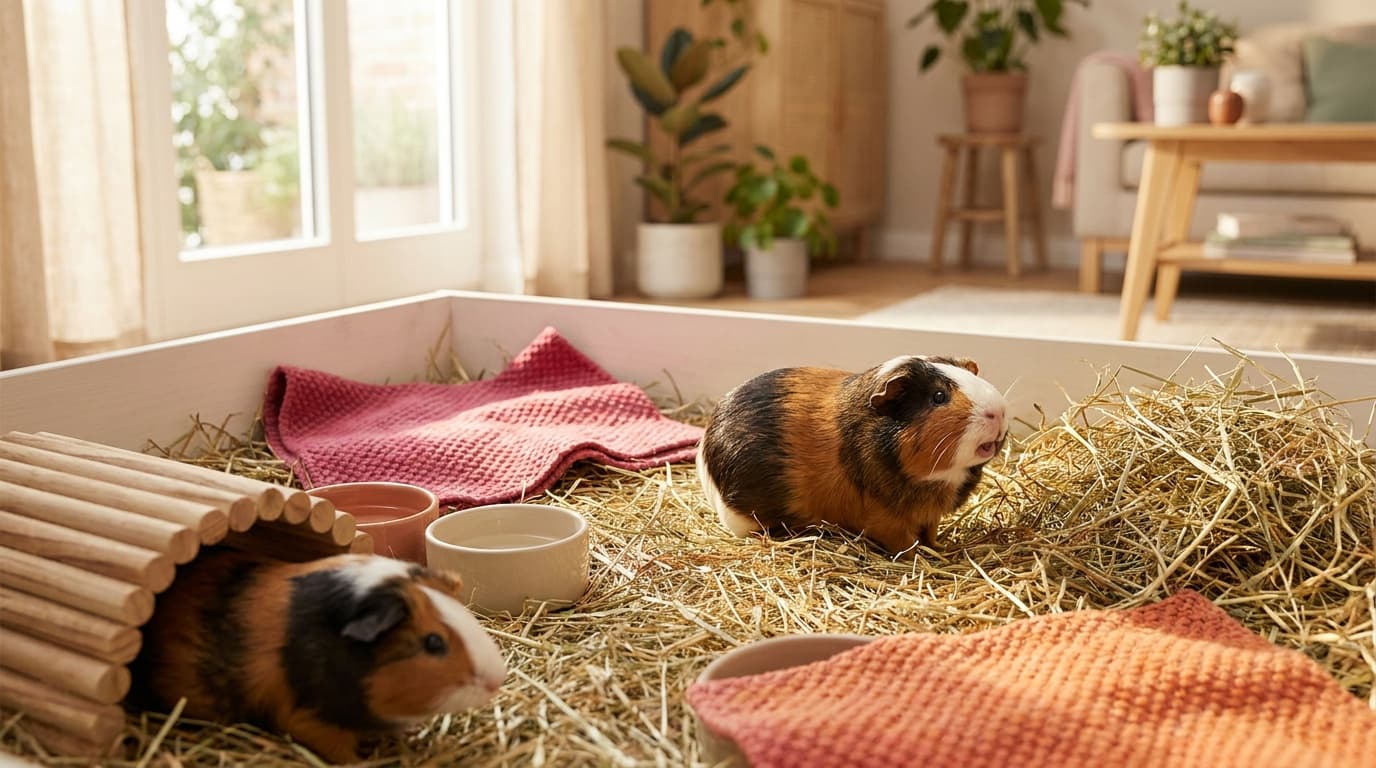
Guinea pigs use several distinct vocalizations, but a sound is not a one-word translation. Read the noise with body posture, movement, nearby animals, food preparation, and any change from the individual's normal pattern.
The Merck Veterinary Manual lists wheeking, chutting, bubbling, rumbling, chattering, whining, chirping, and shrieking among normal guinea pig vocalizations. The RSPCA guinea pig care booklet connects several of those sounds to common contexts.
Wheeking
The loud repeated "wheek" often appears when food is being prepared, a familiar person enters, or guinea pigs are separated and calling. Check what happened immediately before the sound. A guinea pig running toward the hay area at the sound of a bag presents a different context from one standing rigid after a sudden noise.
Chutting and low purring
Short "putt-putt" or chutting sounds often accompany exploration. A low purring sound can occur during relaxed contact, but pitch, duration, posture, and movement matter. Do not use the sound alone as proof of comfort.
Teeth chattering
Audible teeth chattering is a warning signal. It can occur during conflict, crowding, introductions, or unwanted approach. Give the animals room, make sure shelters have open exits, and watch for chasing, biting, raised heads, or one animal repeatedly blocking another.
Squealing or shrieking
A sudden high-pitched squeal can occur with fear or pain. Stop handling, check the immediate environment, and observe movement, breathing, appetite, and posture. Contact a veterinarian when the sound accompanies injury, reduced eating, labored breathing, hunched posture, or a clear behavior change.
Record unfamiliar or repeated sounds when possible. A short video that includes the animal's whole body and enclosure gives a veterinarian or qualified behavior professional more useful context than an audio clip alone.