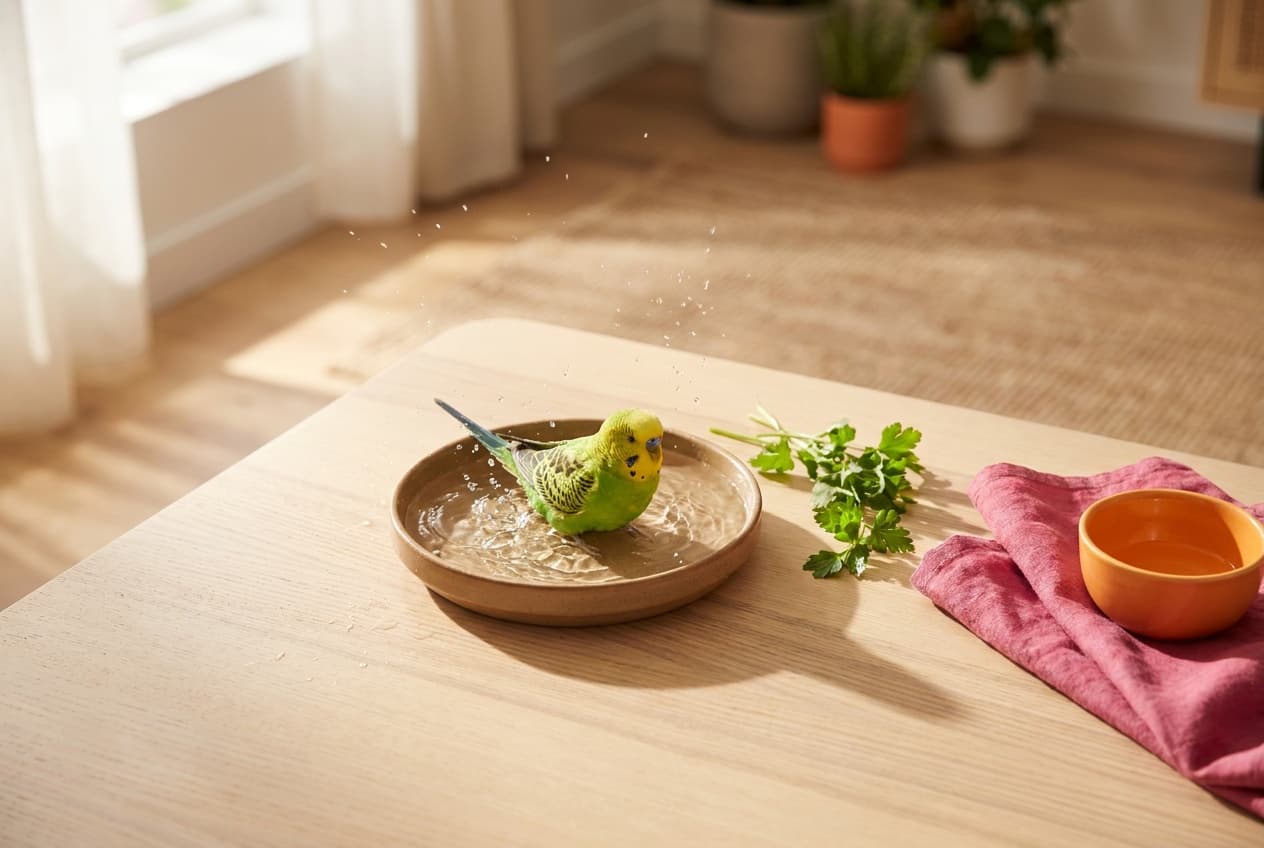
Feather care is mostly the budgie's own job. Preening spreads conditioning oil, zips barbs back together, and keeps flight surfaces true, and bathing supports all of it. Your job is to offer water in a form the bird accepts and to keep the routine pressure-free. The RSPCA pet bird guidance includes normal grooming behavior among the everyday signs of a bird doing well, and the MSD Veterinary Manual grooming page covers the parts that belong to professionals.
Offer, never force
Budgies differ. Some bathe daily, some weekly, some only ever roll in wet greens. Offer options and let the bird pick:
- A shallow, wide dish with a thumb-depth of clean, room-temperature water.
- A gentle mist from a clean spray bottle used only for water, aimed above the bird so droplets fall like rain.
- Wet, washed leafy greens clipped to the cage side for leaf bathing.
Never submerge a budgie, never spray directly at the face, and skip any bathing additive or shampoo unless a veterinarian who treats birds has specifically directed one.
Timing and drying
Offer baths in the morning or early afternoon of a warm day, so the bird dries fully before the evening cover goes on. A damp budgie in a cool, drafty room loses heat fast; keep the flight room draft-free and let the bird preen itself dry. No hair dryers; nonstick coatings on some dryers and the direct heat both make them a bird hazard.
Molt is maintenance, not an emergency
A few times a year, a budgie replaces feathers gradually. Expect extra down on the cage floor, pin feathers on the head and neck, more rest, and sometimes a grumpier bird. Keep the diet steady, offer baths, and let the schedule relax. A molt is gradual and symmetrical; feathers falling in patches, bald spots that persist, or a bird actively plucking and destroying feathers is a veterinary question, and the AVS pet bird guidance lists feather plucking among the signs that need professional attention.
Leave trims to professionals
Wing trims, nail trims, and anything involving the beak are decisions and procedures for an avian veterinarian or an experienced professional, per the MSD grooming guidance. A bad wing trim changes how a budgie can land and fall, and a bleeding nail or blood feather is more than a cosmetic problem. Varied natural perches, covered in the cage setup guide, do most of the everyday nail work.
With bathing settled, the sleep and out-of-cage guides complete the budgie's daily rhythm.