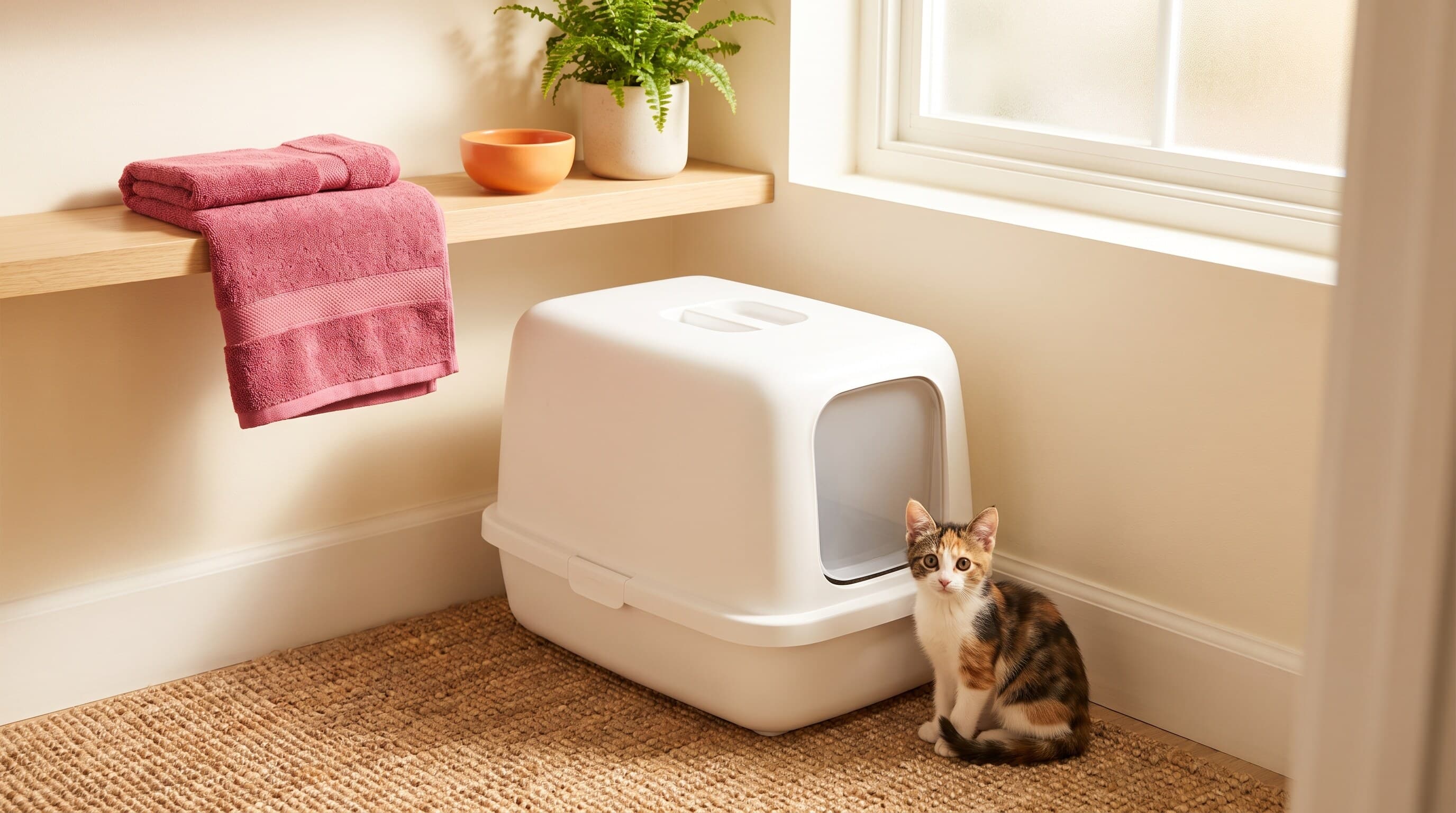
Litter training a kitten is usually one of the easiest parts of new-kitten life, because cats come with a strong natural instinct to bury their waste in a loose, sandy substrate. According to VCA Animal Hospitals, most kittens learn to use a litter box quickly with very little effort from you, and your main job is to set up the box correctly and keep it clean so the instinct has an easy place to land. With the right setup, most kittens are reliable within days.
Set up the box for success
The physical setup matters more than any training technique. A box that is the wrong size, in the wrong place, or not clean enough is the most common reason a kitten looks elsewhere.
- Choose an accessible box. For a small kitten, use a shallow box with low sides they can climb into easily, and size up as they grow. A box that is roughly one and a half times the length of your cat gives them room to turn around. Our roundup of the best cat litter boxes covers open and covered options.
- Provide enough boxes. The widely used rule from feline behavior guidance is one box per cat plus one extra, placed in different locations. VCA notes that having more than one box, in more than one spot, prevents many problems before they start.
- Pick a quiet, reachable location. Put boxes away from the food and water bowls, away from noisy appliances, and somewhere your kitten can always get to without stairs or closed doors in the way.
- Use an unscented, fine-grained litter. Most cats prefer a soft, sand-like clumping litter and dislike heavy perfumes. Start with what your kitten used at the breeder or shelter if you can, then change slowly if needed.
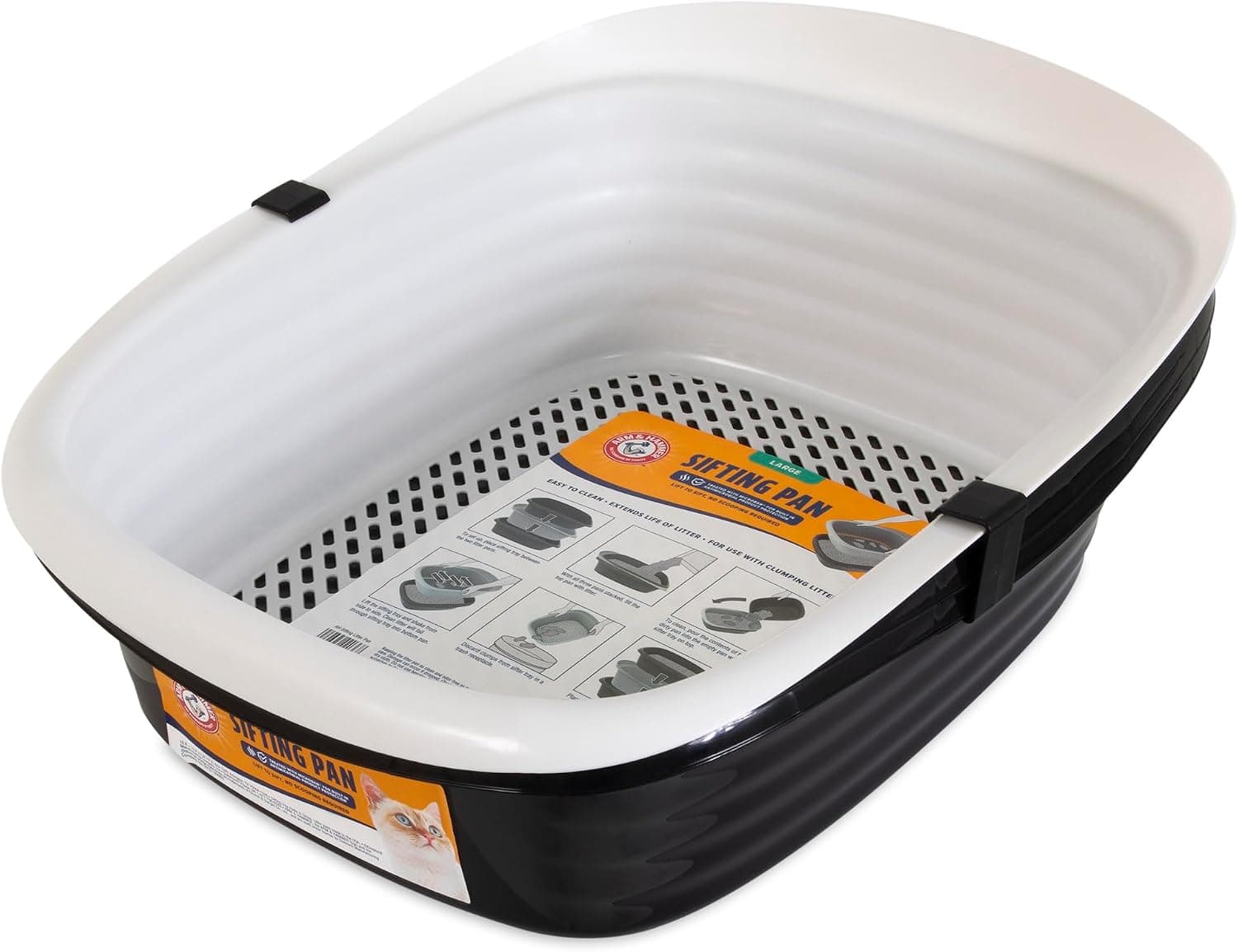
Starting with a low-sided, easy-to-clean box removes the most common early obstacles, and the Arm & Hammer sifting litter box is a simple option that makes daily scooping quicker.
ARM & HAMMER
Large Sifting Cat Litter Box
- System
- Sifting, lift-to-sift technology
- Odor control
- Built-in Microban antimicrobial protection
- Litter compatibility
- Pine, crystal, pellets, clumping
- Origin
- Made in USA with recycled materials
A three-piece sifting litter box that lets owners lift and shake to separate waste from clean litter without a scoop. Built-in Microban protection is intended to help inhibit odor-causing bacteria in the tray.
See more detailSee less detail
Strengths
- Largest review base of the litter boxes compared
- Sifting design removes the need for a separate scoop
- Compatible with multiple litter types
Weaknesses
- Multi-piece sifting design has more parts to keep track of than a single-tray box
- No lid, so odor and scatter control rely on the tray alone
Best for
Owners who want scoop-free cleanup and are flexible on litter type
What owners say
The simple training steps
With the setup right, the training is mostly gentle guidance:
- Show your kitten the box. After bringing your kitten home, place them in the litter box so they know where it is, and let them sniff and explore. Repeat this after meals and naps, which are common times to go.
- Watch for the signals. A kitten who is sniffing, crouching, or scratching at the floor may be about to eliminate. Calmly place them in the box when you see these cues.
- Reward the right choice. When your kitten uses the box, offer quiet praise or a small treat afterward. Positive reinforcement builds a good association with the box.
- Confine at first if needed. For a very young kitten or a big house, start them in a smaller room with the box, food, and bed, then expand their territory once they are using the box reliably.
Handling accidents the right way
Accidents happen, and how you respond shapes how quickly your kitten gets it right. The most important rule is never to punish, scold, or rub a kitten's nose in a mess. VCA and feline behavior experts agree that punishment only teaches a kitten to fear you and to hide when they eliminate, which makes the problem worse. Instead, clean the spot thoroughly with an enzymatic cleaner made for pet messes, because ordinary cleaners leave scent markers that draw a kitten back to the same place. Then look at what might have prompted the accident: was the box too far away, too dirty, or blocked?
If your kitten repeatedly avoids the box, iCatCare's guidance on soiling indoors points to reviewing the whole toileting setup first, since anxiety, an unpleasant box, or a poor location often lie behind the behavior. Adding a box, moving one to a calmer spot, or switching to a litter your kitten prefers frequently solves it.
When a lapse points to a medical issue
Because cats instinctively want to use a clean box, a real change in litter box habits is often the first visible sign of a health problem rather than a training failure. The Cornell Feline Health Center explains that house soiling can stem from medical conditions, an aversion to the box, or a surface or location preference, and that medical causes should be ruled out first. Straining to urinate, frequent trips with little result, blood in the urine, crying in the box, or going right beside it are all reasons to call your veterinarian promptly, and a male cat straining to urinate is an emergency. This article is educational and not a substitute for veterinary advice; when in doubt, have your kitten examined.
For everything else about your kitten's first days at home, see our new kitten checklist for the first week.