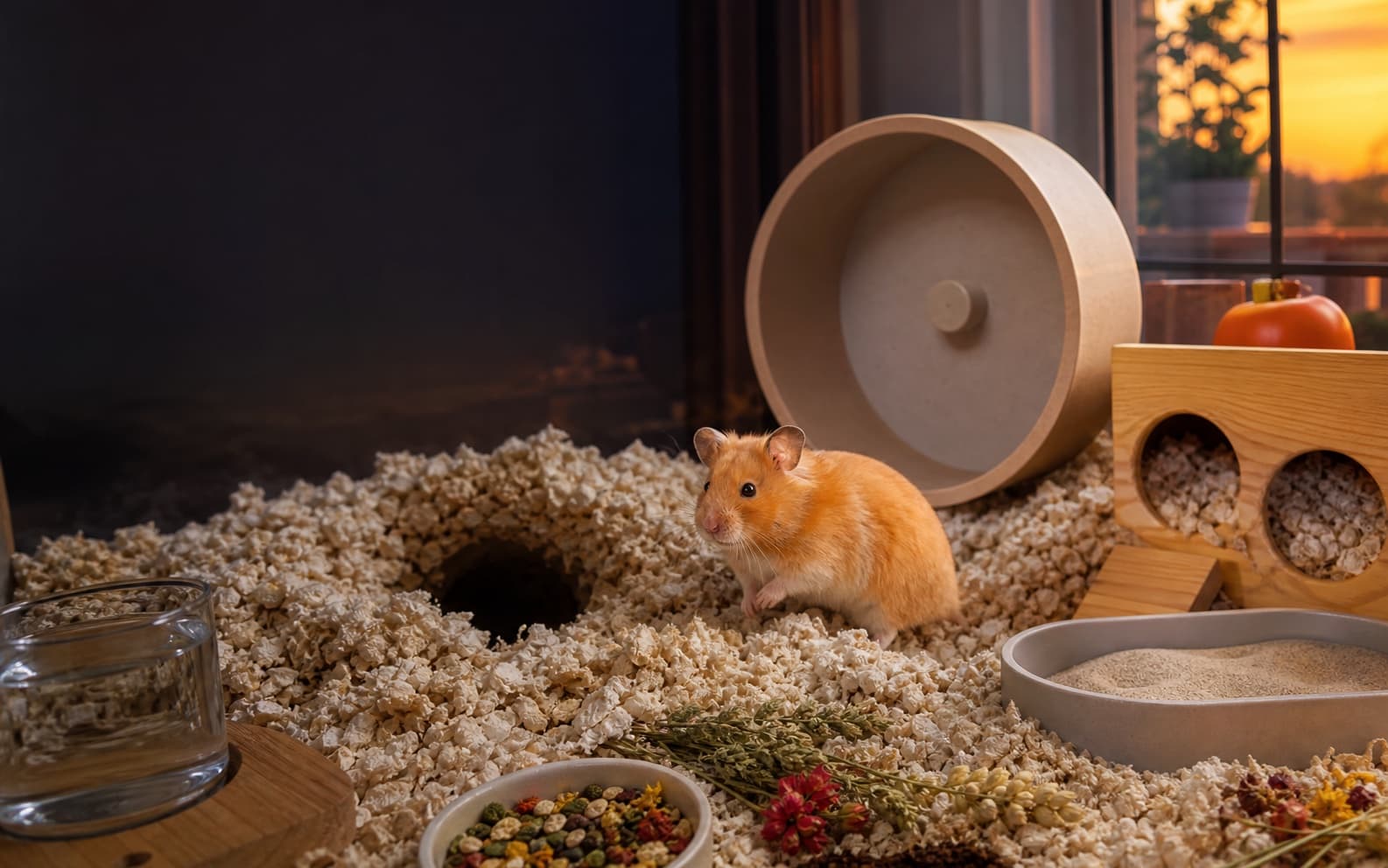
The first week with a hamster is mostly about giving one small animal a complete home, a predictable evening routine, and enough quiet time to learn the space. Prepare the enclosure before arrival, keep the layout steady, and let handling grow from voluntary contact.
The Blue Cross hamster care guide describes hamsters as naturally active in the evening and at night. The BC SPCA connects that schedule to their wild pattern of sleeping in burrows and traveling at night to gather food. A successful first week works with that rhythm.
Finish the home before arrival
Set the enclosure in a quiet indoor room with stable conditions, away from direct sun, drafts, loud speakers, and the reach of other pets. Use a secure, well-ventilated enclosure with broad uninterrupted floor space and enough depth for a substantial layer of paper-based bedding.
Add the working parts before the hamster arrives:
- Deep, low-dust bedding that can support burrowing.
- A dark main hide plus another covered retreat.
- A solid-surface wheel large enough for a straight running posture.
- Fresh water in an accessible bottle or stable bowl.
- A plain sand bath, safe chewing material, and simple tunnels.
- The same complete food the hamster was already eating, when that information is available.
The Animal and Veterinary Service of Singapore recommends an enclosure that supports burrowing, foraging, bathing, and chewing. Those behaviors belong in the starting setup rather than being treated as later extras.
Let the hamster map the room
Place the travel carrier inside the prepared enclosure and let the hamster leave at its own pace. Keep the room calm and the enclosure layout consistent for the first several evenings. A hamster may spend long stretches underground while it builds a nest, moves bedding, and starts a food store.
Check that the water is working and that food is available, then observe from outside the enclosure. Resist the urge to lift hides or open a new burrow just to confirm where the hamster is sleeping. Evening movement, disappearing food, tracks in the sand, and normal droppings can provide useful signs that the routine is underway.
Build contact in the evening
Wait until the hamster is fully awake. Start by sitting near the enclosure and speaking quietly. Next, offer a familiar food from an open hand placed low and still. Let the hamster approach, sniff, take the food, and leave.
When the hamster repeatedly walks onto the hand, use both open hands as a low platform. Keep every early session close to the enclosure floor or a secure play area. Merck Veterinary Manual handling guidance emphasizes gentle full-body support and careful handling because hamsters are small and easily injured.
Use a short daily check
Look at the hamster when it is naturally active. Notice whether it is eating, drinking, moving freely, using the wheel, grooming, and exploring. Check the water source, remove spoiled fresh food, and spot-clean visibly soiled bedding while preserving most of the familiar nest and scent landscape.
Arrange a veterinarian who routinely treats hamsters before one is urgently needed. Changes in appetite, breathing, movement, posture, droppings, discharge, or normal evening activity deserve prompt veterinary advice.
Once the first week feels predictable, deepen the setup through the separate guides to housing, bedding, wheels, feeding, handling, and nighttime behavior.