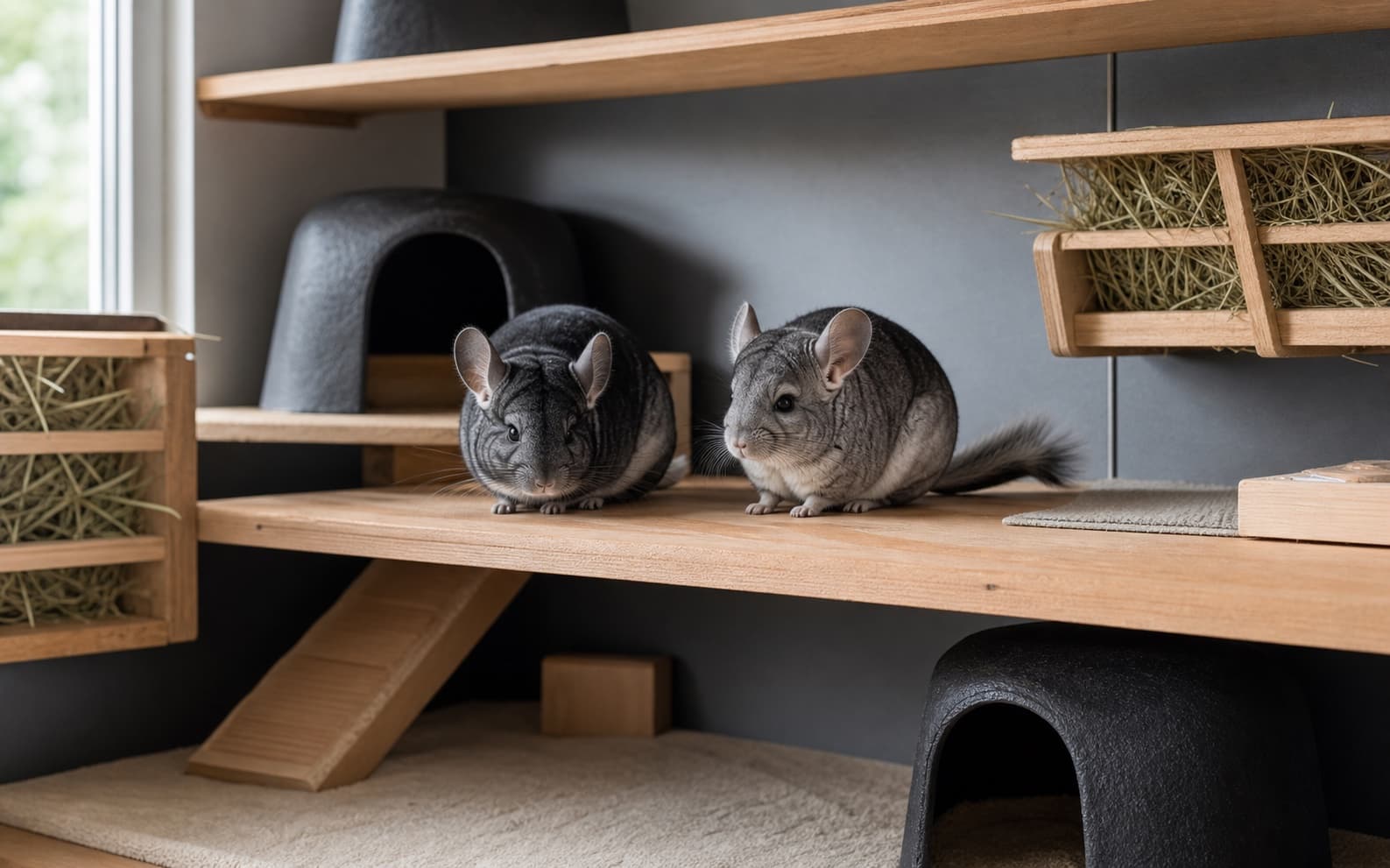
Chinchillas are social animals, and compatible companions can share resting, movement, grooming, and daily activity. Compatibility still needs planning. A pair requires enough space, more than one route to key resources, and a safe process for introductions.
The RSPCA chinchilla overview describes chinchillas as naturally sociable and recommends keeping them with at least one other friendly chinchilla unless a veterinarian or behavior expert advises otherwise. Blue Cross also recommends same-sex pairs or groups, with careful sex confirmation.
Begin with a compatible plan
Rescues that routinely house chinchillas can often help identify an established pair or guide a careful match. Confirm sex accurately and discuss neutering, reproductive risk, and any individual health concern with a chinchilla-experienced veterinarian.
Age, previous social experience, temperament, health, and enclosure history can all affect a pairing. A second chinchilla is not an object to place into an established territory without preparation.
Duplicate the important choices
Set up more than one dark hide, more than one comfortable resting shelf, and more than one route to hay and water. Duplicated resources reduce the chance that one animal can control every useful part of the home.
Use an enclosure large enough for both chinchillas to move apart. Broad shelves and staggered routes should allow one animal to pass without cornering the other. Every enclosed hide needs an exit arrangement that does not become a trap.
Make introductions gradual
Use the plan provided by the rescue, veterinarian, or experienced welfare organization helping with the match. Introductions often begin with separate secure spaces that allow gradual familiarity before shared territory. Move at the pace of the animals rather than aiming for a deadline.
Watch posture, movement, access to resources, resting distance, and the ability of each chinchilla to disengage. Calm proximity and voluntary shared space matter more than forcing physical closeness for a photograph.
Know when the plan has changed
Brief disagreement can look different from persistent pursuit or a fight. Repeated chasing that prevents rest or access to food, cornering, biting, injury, or a sudden breakdown in an established relationship needs immediate safe separation and expert guidance.
Pain or illness can also change social behavior. A new conflict in an established pair is a reason to contact a veterinarian, especially when it appears beside a change in eating, droppings, posture, or movement.
Keep human attention in the right role
Daily interaction, enrichment, and calm handling can make life more interesting, but a person cannot copy all of the communication and shared routines another compatible chinchilla provides. Human care supports the social environment; it does not turn solitary housing into the default plan.
A successful pair can choose closeness and distance. The enclosure should make both choices possible every day.