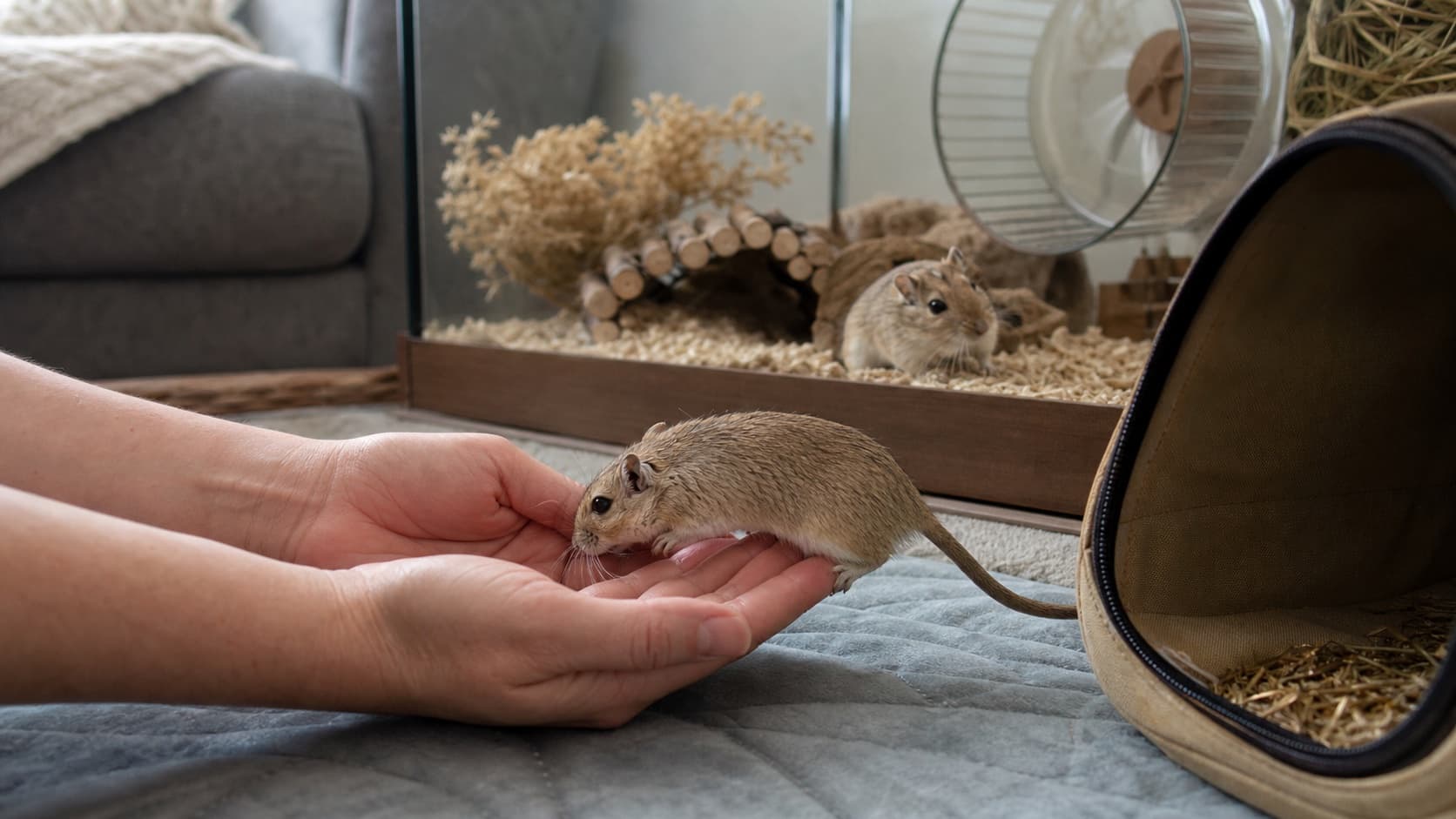
Safe gerbil handling begins with voluntary movement. Let the gerbil investigate your hand, step onto a stable two-hand platform, and travel only a short distance close to a padded surface. A carrier, tube, or small box can do the moving until that trust is established.
The PDSA handling guide recommends forming a cup with both hands around the gerbil and supporting the animal carefully. The RSPCA handling guidance also centers gentle, secure handling.
Begin while the gerbils are awake
Choose a naturally active period and sit quietly beside the gerbilarium. Speak softly, move at a steady pace, and approach from the side where the gerbil can see you. A hand descending quickly from above can feel like a threat.
Place a still hand on the bedding and let the gerbil smell it. Keep the first sessions short. The goal is a calm return to ordinary activity, not a long hold.
Make the hands a platform
When the gerbil comfortably approaches:
- Place both hands low and close together.
- Curve the fingers and palms into a broad cup.
- Let the gerbil step onto the hands or gently guide the body from the side.
- Support the chest, abdomen, and hindquarters.
- Keep the hands just above a padded, enclosed surface.
The gerbil should be able to balance naturally without dangling. Bring the hands close to the destination before opening the cup.
Teach the carrier route
Leave the hard-sided carrier open beside the enclosure during calm sessions. Put a little familiar bedding and cardboard inside. Let the pair enter and leave without every visit becoming a trip.
For a transfer, hold a cardboard tube, small box, or carrier against a familiar surface and let the gerbil walk inside. Cover the opening securely before moving it. This route is especially useful for cleaning, weighing at a veterinary visit, or moving a gerbil that is still nervous around hands.
Prepare the whole room
Handle gerbils inside a closed room with doors and windows shut, gaps blocked, and other animals elsewhere. Sit on the floor or beside a low, padded play area. Keep reclining furniture, cables, plants, vents, and narrow gaps out of reach.
Gerbils are fast and can jump. A high table, open sofa, or standing carry adds distance and escape routes without adding value.
Read the response
A gerbil that remains curious may sniff, step onto a hand, take food, groom, or return to exploring. A gerbil that needs more space may flatten, freeze, dart away repeatedly, thump, vocalize, or struggle to leave.
Return the animal to the enclosure or carrier before the session becomes a chase. The next session can begin with the easiest successful step.
Keep children and gerbils supported
An adult should remain responsible for the interaction. A child can sit on the floor with hands cupped inside a secure play area while an adult controls the environment and the return route. The adult should move the gerbil when the animal is restless or the child cannot maintain a low, steady platform.
Notice physical changes
A gerbil that suddenly resists ordinary handling, moves differently, or reacts to touch may need veterinary assessment. Put the animal into a familiar carrier with the bonded companion when appropriate and contact a veterinarian who routinely treats gerbils.