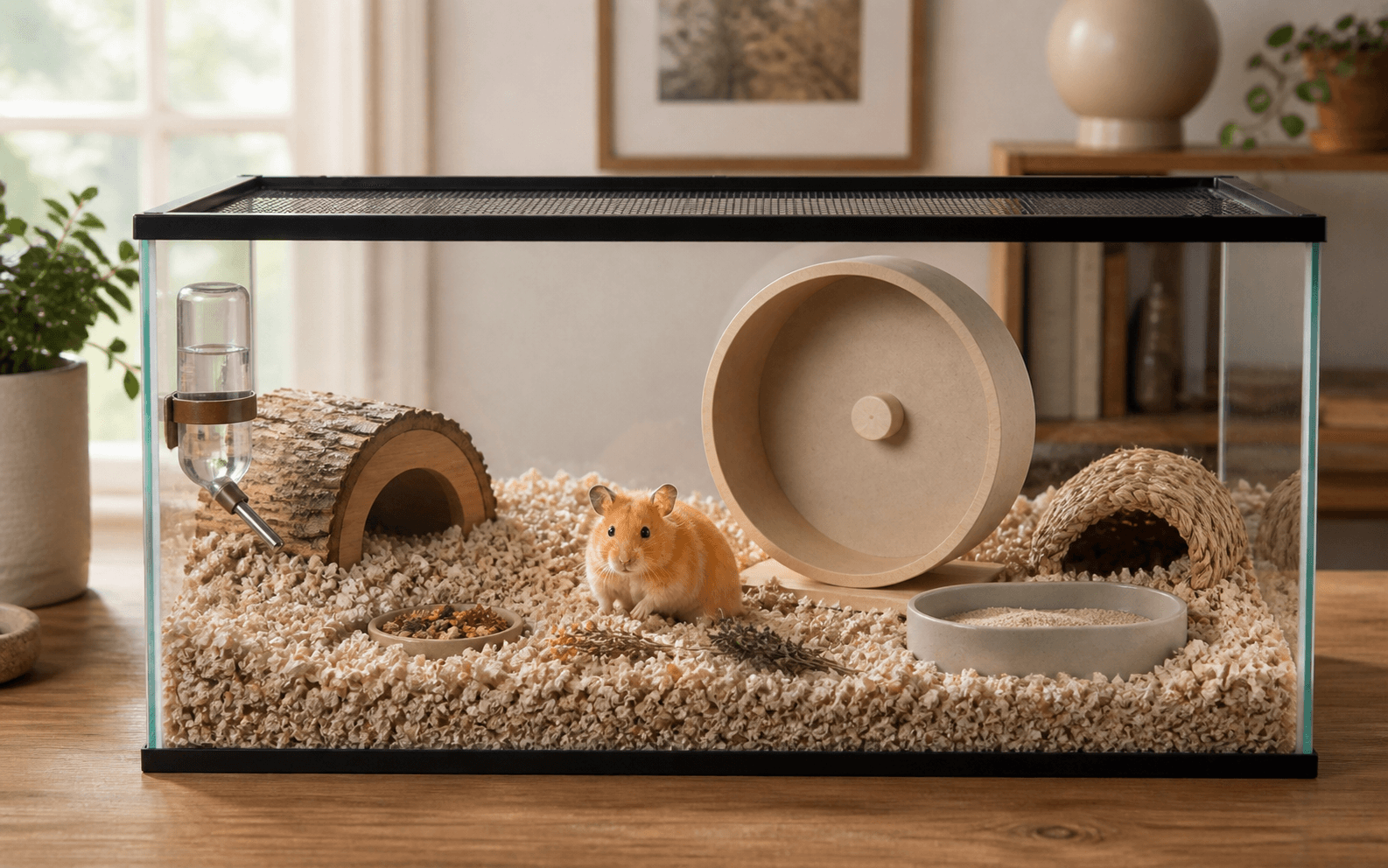
A good hamster enclosure is a wide, deep working landscape. It gives the animal room to burrow, run, hide, forage, groom, drink, and choose where to be. Start with the footprint and bedding depth, then fit the wheel and other equipment around those two priorities.
The Blue Cross housing guidance recommends generous floor space and deep digging bedding. The RSPCA hamster environment guide likewise centers the enclosure on a secure place to rest, suitable bedding, and opportunities to express normal behavior.
Choose broad floor space
Hamsters travel across the ground and below it. Compare enclosures by the uninterrupted internal floor area the hamster can actually use, rather than the number of platforms, tubes, or decorative rooms. A long, broad base is easier to divide into useful zones and easier for the hamster to navigate.
Glass-sided or high-sided enclosures can hold deep bedding, but they still need secure ventilation. Barred enclosures can ventilate well, but the base must be deep enough to contain bedding and the spacing must prevent escapes. In every format, doors and lids should close securely while remaining easy for an adult to open for care.
Plan three connected zones
Divide the habitat loosely by function instead of filling every inch with objects.
Deep burrow zone
Use the deepest bedding across a large part of the enclosure. Place a multi-chamber hide at or just below the surface so the hamster can extend the space. Keep the material deep enough to hold tunnels after gentle packing.
Stable activity zone
Set the wheel, sand bath, water, and any heavy ceramic items on firm platforms or the enclosure floor. Stable support keeps equipment level when the hamster digs underneath nearby bedding.
Open route
Leave a clear path between the nest, wheel, water, sand, and forage. Low tunnels and cork pieces can add cover without turning the route into a cramped obstacle course.
The Hamster Wheel Fit Lab turns those measurements into a side view and floor plan. It keeps incomplete product dimensions visible instead of estimating them.
Give cover without crowding
Hamsters use enclosed places to rest and open areas to travel. Provide a dark main hide, a secondary retreat, and low cover along exposed routes. Every hide should be large enough for the species using it, with smooth openings and no loose staples, sharp wire, or narrow gaps.
Offer cardboard, untreated wood, and species-appropriate chewing items. Scatter some of the daily dry food through clean bedding or forage material so the hamster can search rather than visiting only one bowl.
Put the enclosure in the right room
Choose a stable indoor location away from direct heat, bright sun, drafts, smoke, vibration, and constant foot traffic. Since hamsters are active at night, a bedroom may be a poor fit for the people sleeping there. The enclosure also needs protection from dogs, cats, and curious hands.
Keep enough clearance around the habitat to open it fully and reach every care zone without dismantling the whole arrangement. Easy daily access supports better water checks, spot cleaning, and observation.
Clean around the hamster's map
Remove spoiled food and visibly wet or soiled bedding as needed. Preserve clean nesting material and much of the familiar bedding so the habitat does not become an entirely unfamiliar place after every clean. The Blue Cross care guide recommends regular spot cleaning, with larger cleans paced to enclosure size and toileting habits.
The completed habitat should make the important behaviors obvious: digging below, traveling across, running safely, resting under cover, and finding food throughout the space.