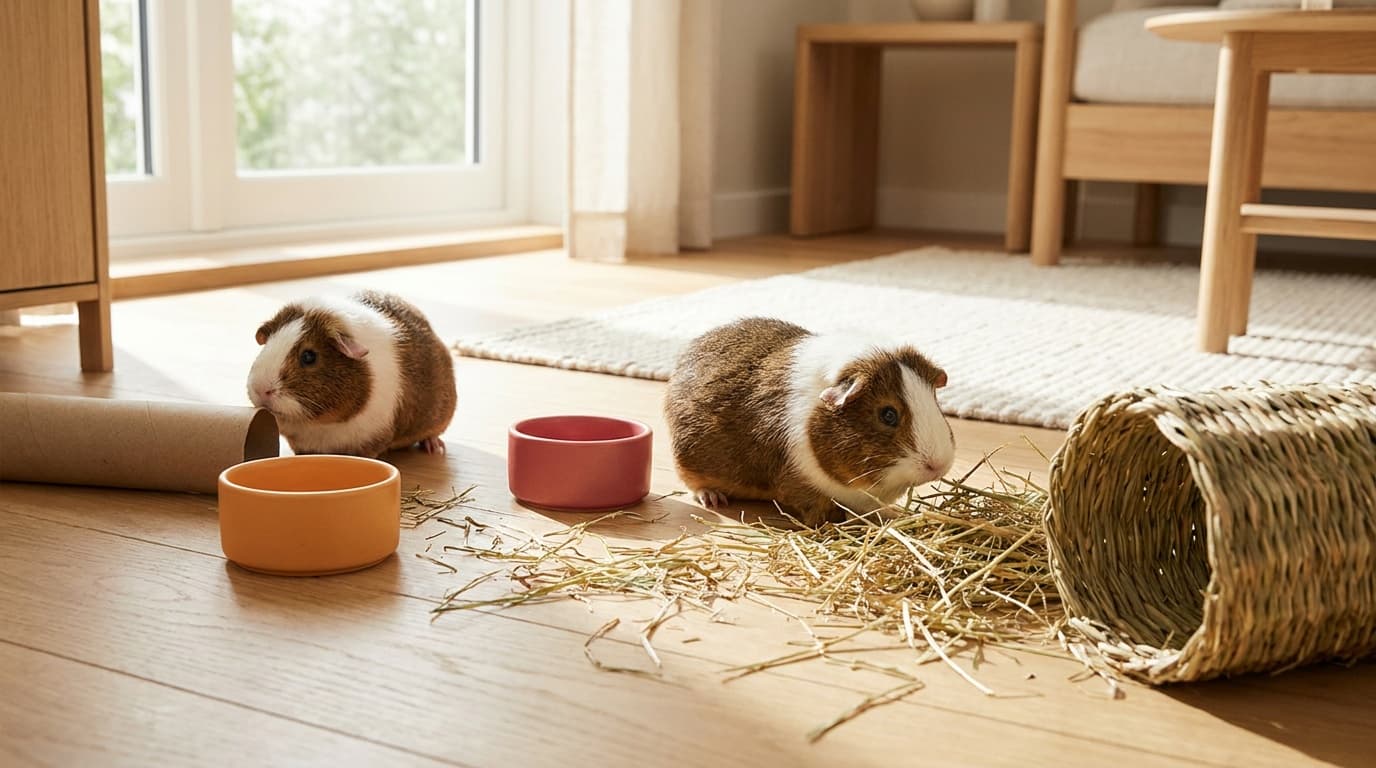
Guinea pigs are social animals and generally need compatible guinea pig company. A pair or stable group can eat, rest, explore, call, and respond to the environment together throughout the day. Human attention does not replace that continuous same-species contact.
The RSPCA guinea pig company guide recommends keeping guinea pigs with at least one friendly guinea pig unless a veterinarian or qualified behavior professional advises otherwise. It also emphasizes individual compatibility, gradual introductions, and enough resources for every animal.
Start with a compatible pairing plan
Ask a rescue or guinea pig-experienced veterinarian to confirm sex and reproductive status before combining animals. A rescue that already knows the individuals may be able to match temperament and preserve an established pair.
Rabbits are not substitute companions. Rabbits and guinea pigs differ in diet, size, movement, and communication, and a rabbit can injure a guinea pig even without an obvious fight.
Duplicate the important resources
Before the animals meet, prepare enough room and resources for both. Include:
- Several large hay areas.
- More than one water source.
- Separate food locations.
- One shelter per guinea pig plus an extra option.
- Open-ended tunnels and houses.
- A clear route around every major object.
Resource duplication reduces the chance that one animal controls the only bowl, bottle, shelter, or exit.
Introduce on neutral ground
Use a secure, clean area that neither animal treats as its established home. Keep the floor solid and nonslip, provide scattered hay, and remove single-exit objects that could trap an animal. Supervise closely and follow the rescue or veterinarian's introduction plan.
Sniffing, following, rumbling, raised heads, brief chasing, and mounting can occur while guinea pigs establish a social order. Persistent teeth chattering, biting, injury, relentless chasing, or one animal being kept away from food and cover needs intervention and experienced advice.
Do not repeatedly separate and reunite animals for every normal interaction, but do not leave an escalating fight to resolve itself. Use a barrier or towel if separation is necessary; avoid placing bare hands between fighting animals.
Watch both animals after the move
Clean and rearrange the shared enclosure before the new pair enters. Continue the duplicate resources and open-exit shelters. Observe each animal's access to hay, water, rest, and movement rather than judging the pair only by whether they sleep together.
Weighing and physical examination belong with a veterinarian's care plan. At home, record changes in appetite, droppings, posture, movement, hiding, wounds, and social access.
Contact a guinea pig-experienced veterinarian promptly when conflict accompanies injury, reduced eating, fewer droppings, unusual breathing, or a marked change in movement or posture.