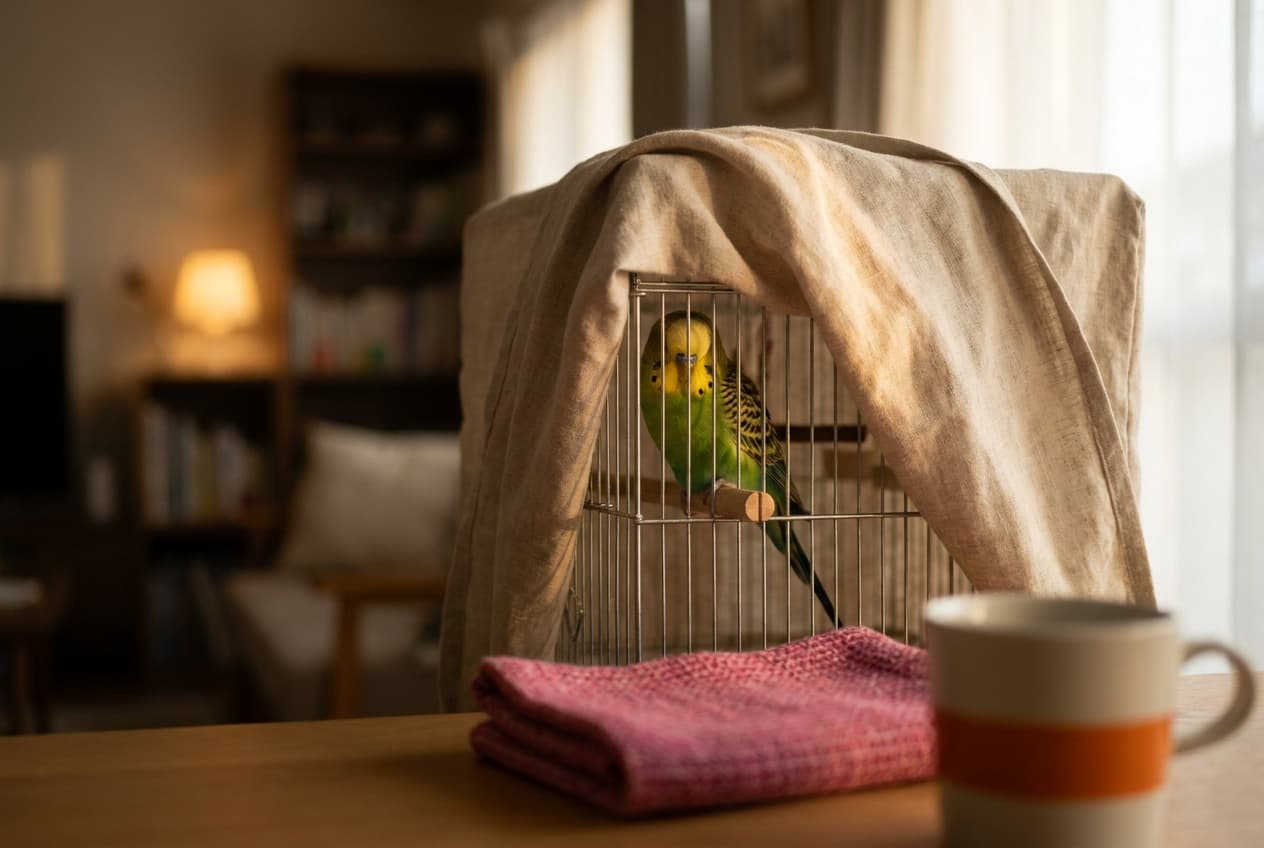
Budgies are daytime birds that sleep through the night and nap lightly through the day. The working target for most homes is a consistent quiet, dark period of about ten to twelve hours each night. The RSPCA environment guidance puts a suitable, calm environment at the center of bird welfare, and for a budgie the sleeping arrangement is the biggest single piece of that environment.
The rhythm a budgie expects
In a household running on lamps and screens, a budgie's day can quietly stretch to sixteen waking hours, and short sleep shows up as irritability, extra daytime napping, and more screaming-range chatter. Pick a realistic lights-out time, keep it consistent, and let the morning uncovering happen at a similar hour daily. The bird will pattern-match the routine within days.
Covering the cage
A breathable cover turns the cage into a dark, draft-shielded sleeping box and blocks the flicker and movement that keep a bird alert. Most budgies settle faster under one. Leave a corner of airflow, never cover with anything scented, and make covering part of a short, predictable evening sequence rather than a surprise blackout.
Where the cage sleeps
The sleeping position should be away from television sound, late-night foot traffic, and drafts. If the living room stays loud late, a second, simpler sleep cage in a quiet room is a legitimate setup: the budgie commutes at lights-out and returns to the main flight cage in the morning.
Daytime naps are normal
A healthy budgie perches quietly, tucks one foot, fluffs briefly, and dozes in short daytime stretches, especially after active mornings. The change worth attention is a bird that becomes fluffed, still, and uninterested for long daytime periods, sleeps on both feet with labored breathing, or stops chattering entirely. Those are prompt questions for an avian-experienced veterinarian, not sleep quirks.
Evening checklist
- Fresh water in place, fresh-food leftovers removed.
- Toys clear of the sleeping perch and the flight lane.
- Cover on at the usual time, one corner breathing.
- Room dark, quiet, and draft-free until morning.
The first-week and cage setup guides cover where the cage sits during the day; this routine decides where it sleeps.