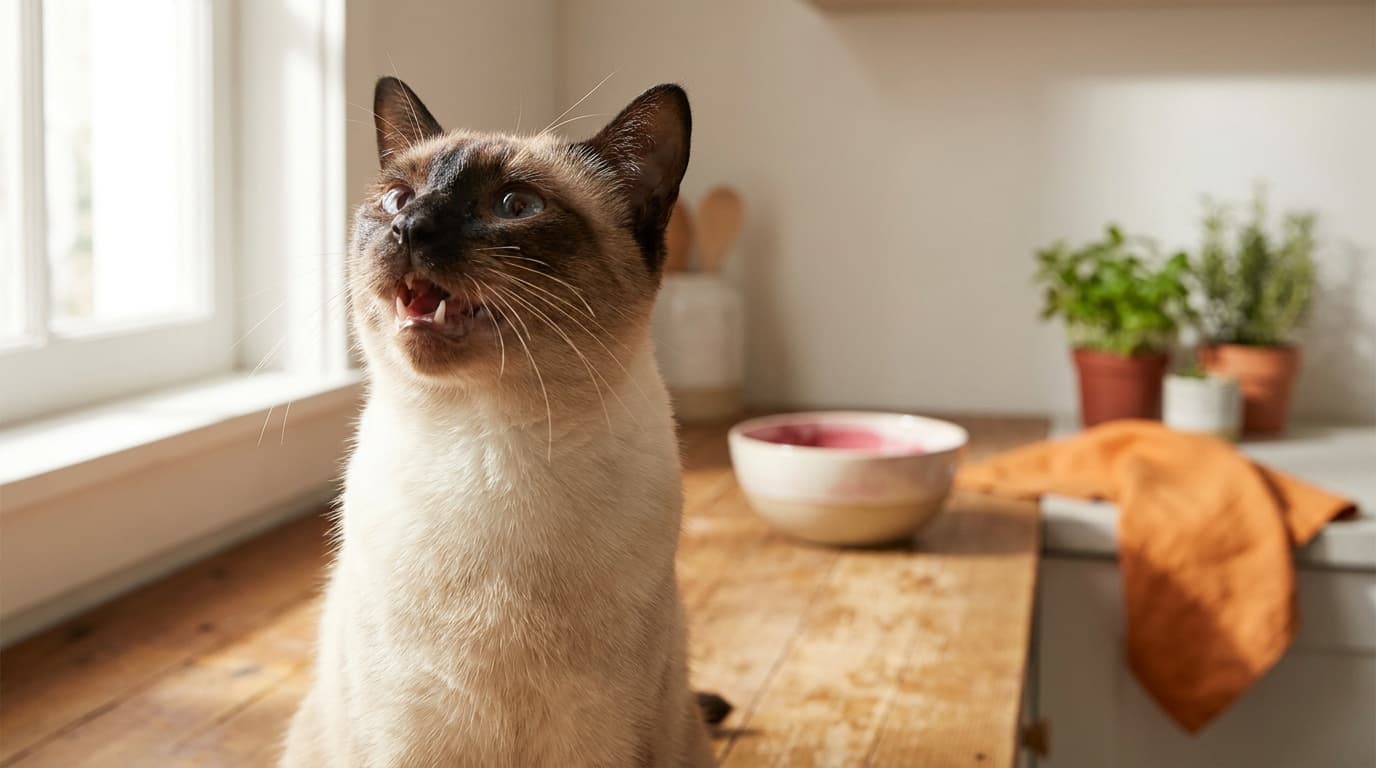
A sudden increase in meowing can reflect a change in routine, hunger, learned attention-seeking, stress, or a medical problem. Adult cats direct most meows toward people rather than other cats. According to the ASPCA, the useful first step is to compare the vocalizing with the cat's normal pattern and check for changes in appetite, thirst, weight, energy, or litter box use.
The everyday reasons cats meow
The ASPCA and the Cornell Feline Health Center describe several common drivers.
- Attention and social contact. Many cats meow when greeting people or before petting and play. If meowing has reliably earned attention in the past, the cat is likely to repeat it.
- Hunger and food requests. A cat that has learned meowing produces breakfast will meow at mealtimes, and often well before them.
- Boredom. A cat without enough enrichment may meow more, especially an indoor cat with energy to spare and little to do.
- Stress or change. New people, a new pet, a move, or a change in routine can all prompt more vocalizing as a cat expresses unease.
- Wanting in or out, or reaching a closed door. Cats are quick to protest a barrier between them and where they want to be.
Life-stage and reproductive causes
Some meowing ties to a cat's stage of life. An unspayed female cat in heat can become notably loud, along with becoming more affectionate, rubbing on things, and rolling around, as the ASPCA notes, and unneutered males may yowl in response. Spaying and neutering resolve this and carry other health and behavior benefits.
Kittens and older cats also tend to be more vocal for their own reasons, kittens because they are still learning to communicate their needs, and seniors sometimes because of the age-related changes described below.
Medical causes and the signs that warrant a vet visit
This is the part not to skip, because increased meowing is sometimes the first outward sign of a health problem. The ASPCA points out that numerous conditions can make a cat feel unusually hungry, thirsty, restless, or uncomfortable, any of which can prompt more meowing. As cats age, they become more prone to conditions such as an overactive thyroid and kidney disease, either of which can be linked to excessive vocalizing. Older cats can also develop cognitive changes, sometimes vocalizing loudly, especially at night, when they feel disoriented.
Because meowing can be a symptom rather than just a habit, the ASPCA advises that a cat who meows a lot should be checked by a veterinarian to make sure a medical condition is not the cause. This guide is not a diagnosis, so consider these signs a reason to book a vet visit rather than wait:
- A sudden or marked increase in meowing, particularly in a middle-aged or senior cat.
- Meowing paired with changes in appetite, thirst, weight, or energy.
- Loud vocalizing at night, disorientation, or confusion in an older cat.
- Any yowling that seems to signal pain, distress, or discomfort.
- Meowing alongside litter box changes, vomiting, or other physical symptoms.
Helping a healthy, chatty cat
If your vet has ruled out medical issues and your cat is simply talkative, a few things help. Increase enrichment with regular interactive play, puzzle feeders, and things to climb and watch, so a bored cat has better outlets than meowing. Keep routines predictable, since consistency reduces stress-driven vocalizing. Feed on a set schedule so mealtime meowing has less to work with, and consider a timed feeder for a cat that wakes you at dawn. And reward the calm, quiet moments with the attention your cat is seeking, rather than responding to the meow itself.
For enrichment ideas, see our roundup of the best cat toys, and for another feline behavior explained, our guide to why cats purr.