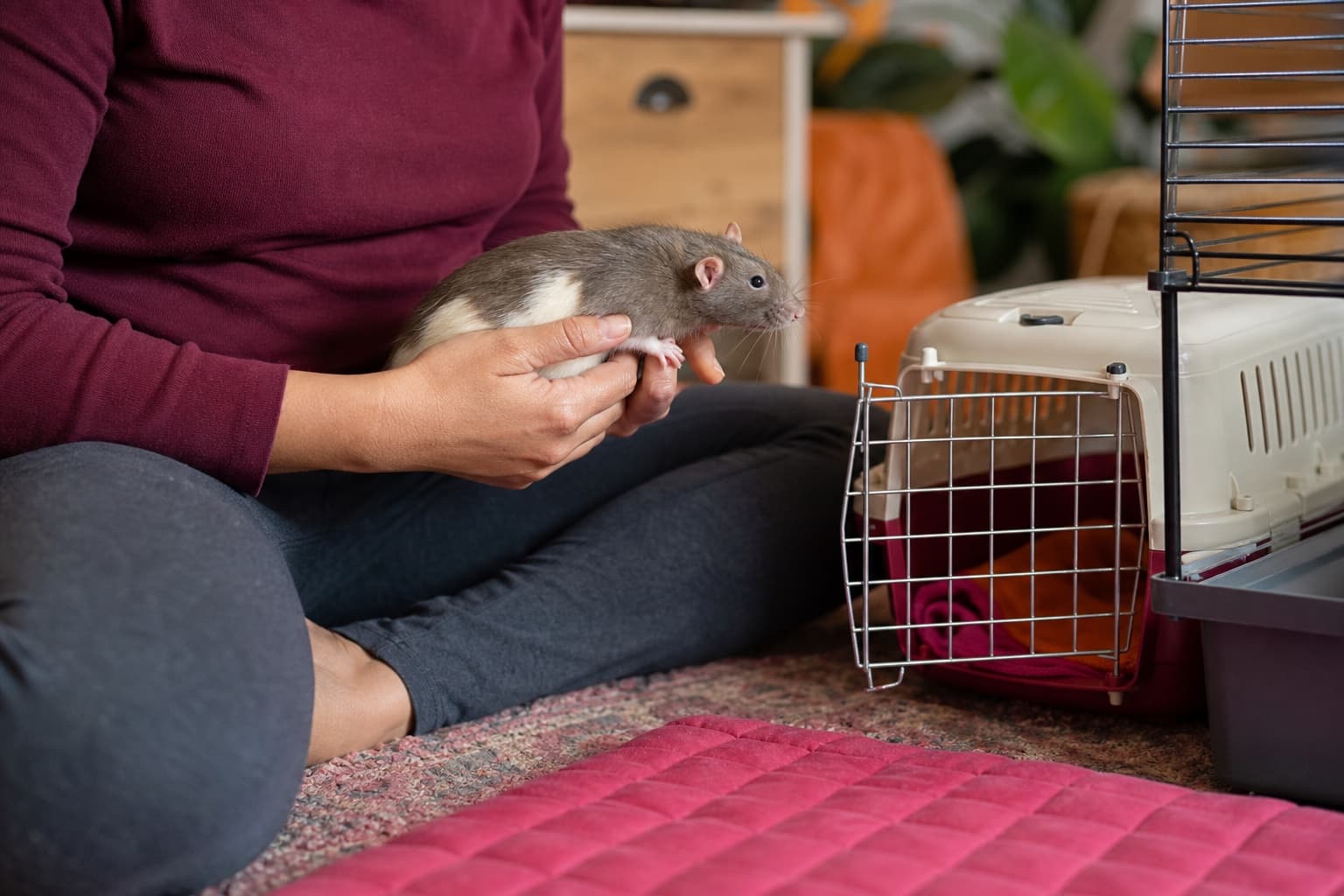
Good rat handling starts before a rat leaves the cage. The useful first skill is voluntary approach, followed by stepping into a carrier or onto two fully supportive hands. A calm transfer is safer and more repeatable than reaching from above and trying to hold on.
The RSPCA rat behavior guidance recommends gentle handling, positive interaction, and allowing rats choice. Blue Cross likewise advises supporting the body and never lifting a rat by the tail.
Begin at the cage door
Sit beside the cage during an active period. Open a large door and rest a hand on a stable shelf or at the entrance. Let the rat smell, touch, step over, and leave. Keep the hand still enough to become a predictable surface.
Use a small piece of the ordinary daily food to reinforce approach. Work with each rat individually while the social group remains nearby. A confident rat may step up quickly; another may need several sessions of investigation.
Teach a carrier transfer
Place an open hard-sided carrier in the cage or secure play area with familiar bedding and a cardboard tube. Scatter a few pieces of daily food inside. Allow entry and exit without closing the door at first.
Once the rats enter comfortably, close the door briefly, reopen it, and continue gradually. The carrier can then handle cage cleaning, room transfers, and travel without turning every move into a capture.
Use two hands for full support
Approach from the side where the rat can see and investigate. Place one hand under the chest and front body, then bring the second hand under the hindquarters and feet. Lift smoothly and keep the rat close to the body or just above a padded surface.
For a short transfer, the hands should form a stable platform rather than a closed grip. Keep fingers ready to guide movement without squeezing the chest. If the rat becomes restless, lower the hands to a safe surface or offer the carrier.
Never lift or suspend a rat by the tail. The tail is part of balance and temperature regulation, not a handle.
Work low before working far
Practice over a bed, sofa, padded floor area, or your lap. Sit down and close the room before opening the cage. Remove other pets and block routes under furniture.
Short, successful repetitions are more useful than one long hold. Lift a few inches, support, lower, and reward. Then build toward a brief carry to the carrier or play area.
Read the rat in front of you
A rat approaching, sniffing, grooming, exploring the hands, or choosing to stay nearby is giving useful information. A rat repeatedly retreating, freezing, struggling, or avoiding the entrance needs a smaller step and more time.
Handling preference varies. Some rats enjoy resting against a person; others prefer moving across arms and shoulders during a secure session. Respecting that difference makes practical care easier.
Sudden sensitivity, a new reluctance to move, marked balance change, unusual posture, or a clear change in ordinary handling behavior needs veterinary advice. Do not use restraint to investigate a possible injury at home.
Return to the group predictably
End the session before the rat becomes difficult to support. Return through the same cage door, carrier, or platform used to leave. Let the rat step away, then offer the group its normal routine.
If several rats are exploring together, count them before moving furniture, opening a door, or leaving the room. Check the carrier, blankets, sleeves, and hides before closing the cage.