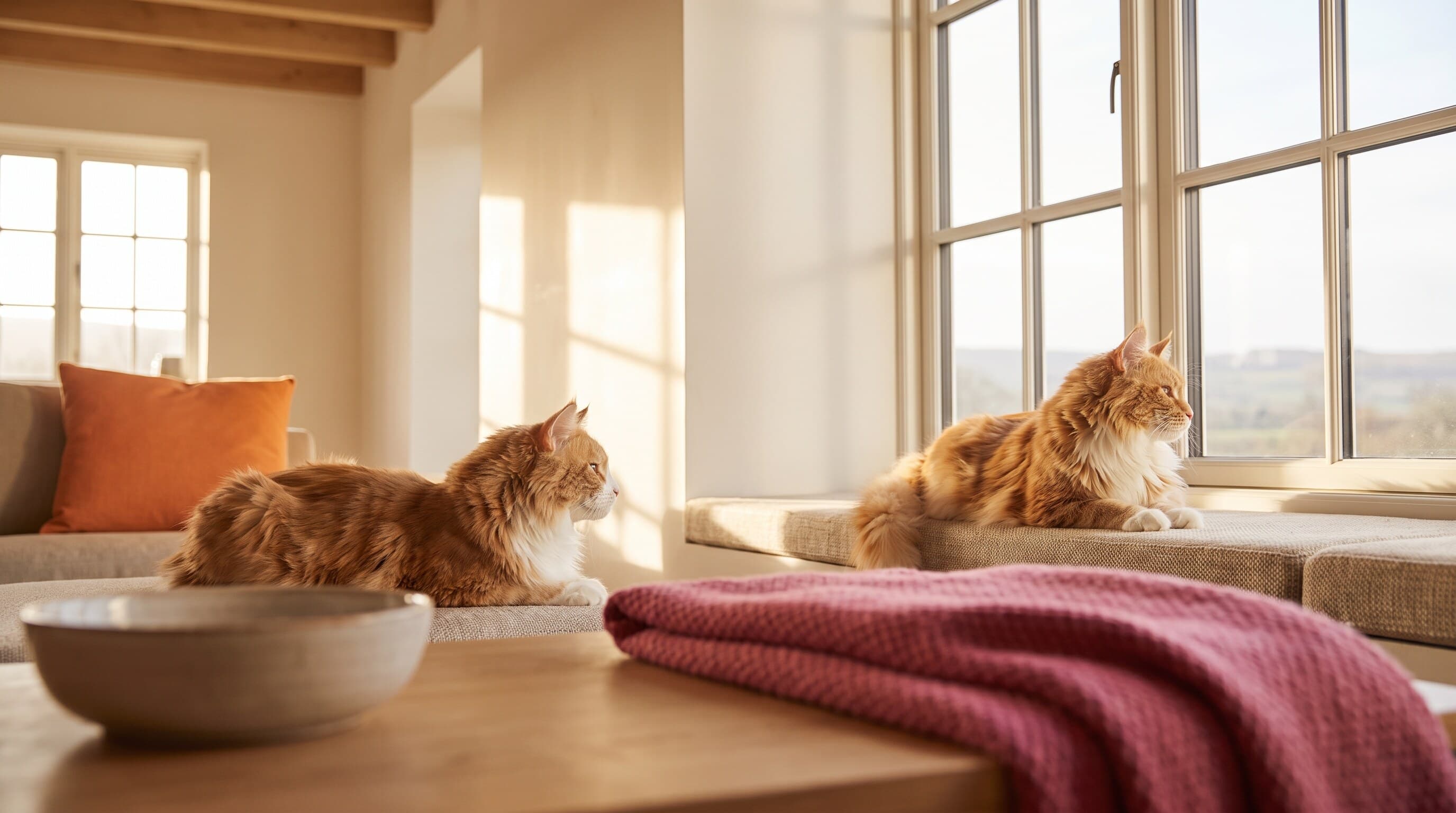
If your cat strolls past, ignores a call, or leaves during petting, start with the behavior rather than a story about intent. Cats commonly choose short interactions and move away when they have had enough. A stable pattern is usually ordinary; a sudden change in sociability is the part worth investigating.
Cats socialize differently
Domestic cats descend from a largely solitary hunting ancestor, and that heritage shapes how they relate to others. According to International Cat Care, cats can form strong bonds with familiar individuals, but they did not evolve to live in tightly bonded groups the way dogs did, and they do not need constant social contact to feel secure. A cat who spends part of the day doing their own thing is behaving exactly as a healthy, well-adjusted cat should.
Cats often approach more readily when they can control the distance. iCatCare's guidance on handling and interactions stresses that cats are most comfortable when they can choose to approach and to move away, and that they generally favor frequent, short, gentle interactions over long, intense ones. A cat who walks off has ended that interaction. Let it leave and watch whether it approaches again later.
What looks like ignoring is often normal
A number of ordinary things can make a cat seem distant:
- They are being a cat. Independence, long naps, and solo exploration are baseline feline behavior, not signs of a problem.
- Timing and mood. Cats have their own daily rhythms. A cat deep in a nap or focused on a window bird is not available for socializing, and that is fine.
- Petting limit. Some cats tolerate only a short period of handling before moving away. Stop when the cat leaves or shows a flicking tail, flattened ears, or tense posture.
- Environmental stress. Changes such as a new pet, houseguests, rearranged furniture, or a noisy household can make a cat retreat until things feel predictable again.
The Cornell Feline Health Center maintains a library of feline behavior resources, and a recurring theme across them is that much of what owners read as standoffishness is simply normal cat behavior interacting with a particular environment.
How to make interaction more likely
Approach less, provide consistent routines, and make interaction rewarding. Let your cat come to you and keep early interactions brief:
- Play together every day. Wand and fishing-pole toys let your cat act out the hunting sequence, which is deeply satisfying and strongly bonding. Regular interactive play is one of the most reliable ways to feel closer to an aloof cat.
- Use food and treats thoughtfully. Feeding, gentle treat rewards, and food puzzles build positive associations with your presence.
- Provide useful resources. Resting spots, vertical space, hiding places, and a predictable routine reduce competition and give the cat more choices about where to spend time.
- Watch approach and avoidance signals. A raised tail, cheek rubbing, and kneading often accompany approach; a flicking tail, flattened ears, tense posture, or moving away mean stop.
When withdrawal is a health flag
Here is the important distinction. A cat who has always been somewhat independent and keeps to their usual routine is just being themselves. But a real change, a normally affectionate cat who suddenly hides, stops greeting you, withdraws from the family, or drops their usual activities, is different and deserves attention. Cats instinctively mask illness, so behavior change is often the first visible sign that something is wrong. iCatCare notes that any change in a cat's behavior can indicate an underlying health condition and should not be dismissed.
Watch for withdrawal paired with other changes such as eating or drinking more or less, hiding, litter box changes, weight loss, poor grooming, or reluctance to jump or move. Any of these, and especially a sudden shift in a previously social cat, is a reason to contact your veterinarian. This guide is educational and not a diagnosis; when your cat's behavior changes noticeably, a vet exam is the right next step.
For more on reading feline signals, see our companion guides to why cats purr and why cats knead.