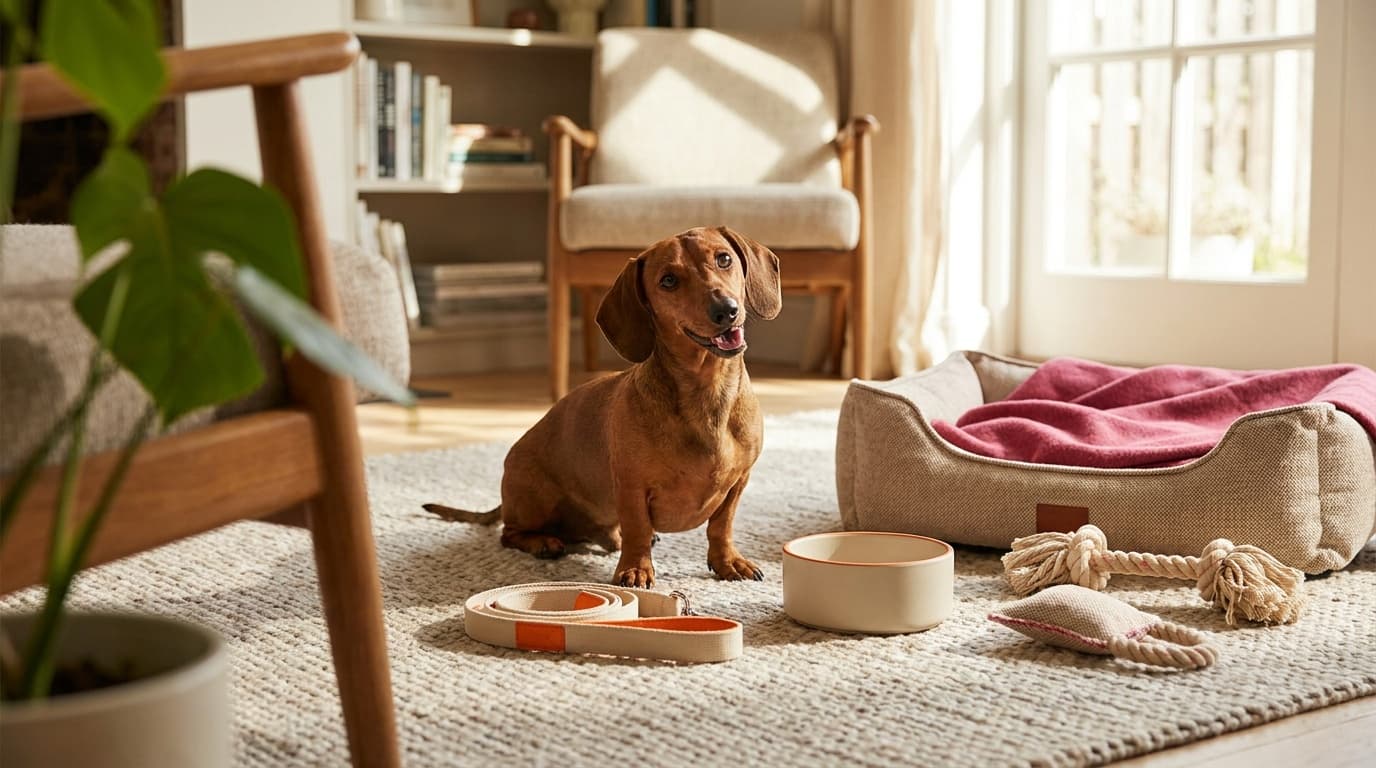
Having the essentials ready before your dog comes home makes the first day calmer for everyone. The ASPCA recommends gathering your supplies before bringing a dog home so you are not scrambling on day one. You do not need everything at once, but a core kit of feeding, resting, walking, identification, and cleanup gear should be in place before pickup.
This checklist is organized by priority: the must-haves for day one first, then the things you will want soon after.
Day-one essentials
These are the items you genuinely need before your dog walks through the door.
- Food and water bowls. Sturdy, appropriately sized dog bowls that are easy to clean. Stainless steel is a durable, dishwasher-safe default.
- Food. The ASPCA advises a complete-and-balanced diet suited to your dog's age and size. Start with the food the breeder, shelter, or rescue was already feeding to avoid stomach upset from a sudden change.
- A collar with an ID tag, and a leash. A flat collar with a tag showing your phone number is the simplest, fastest way for a lost dog to get home.
- A crate or a defined resting space. The ASPCA notes dogs need a warm, quiet place to rest off the floor. A crate doubles as a house-training and safety tool, and a dog bed gives an older or settled dog a comfortable spot.
- Cleanup supplies. Poop bags for walks, plus an enzymatic cleaner for the accidents that come with any new dog, especially a puppy.
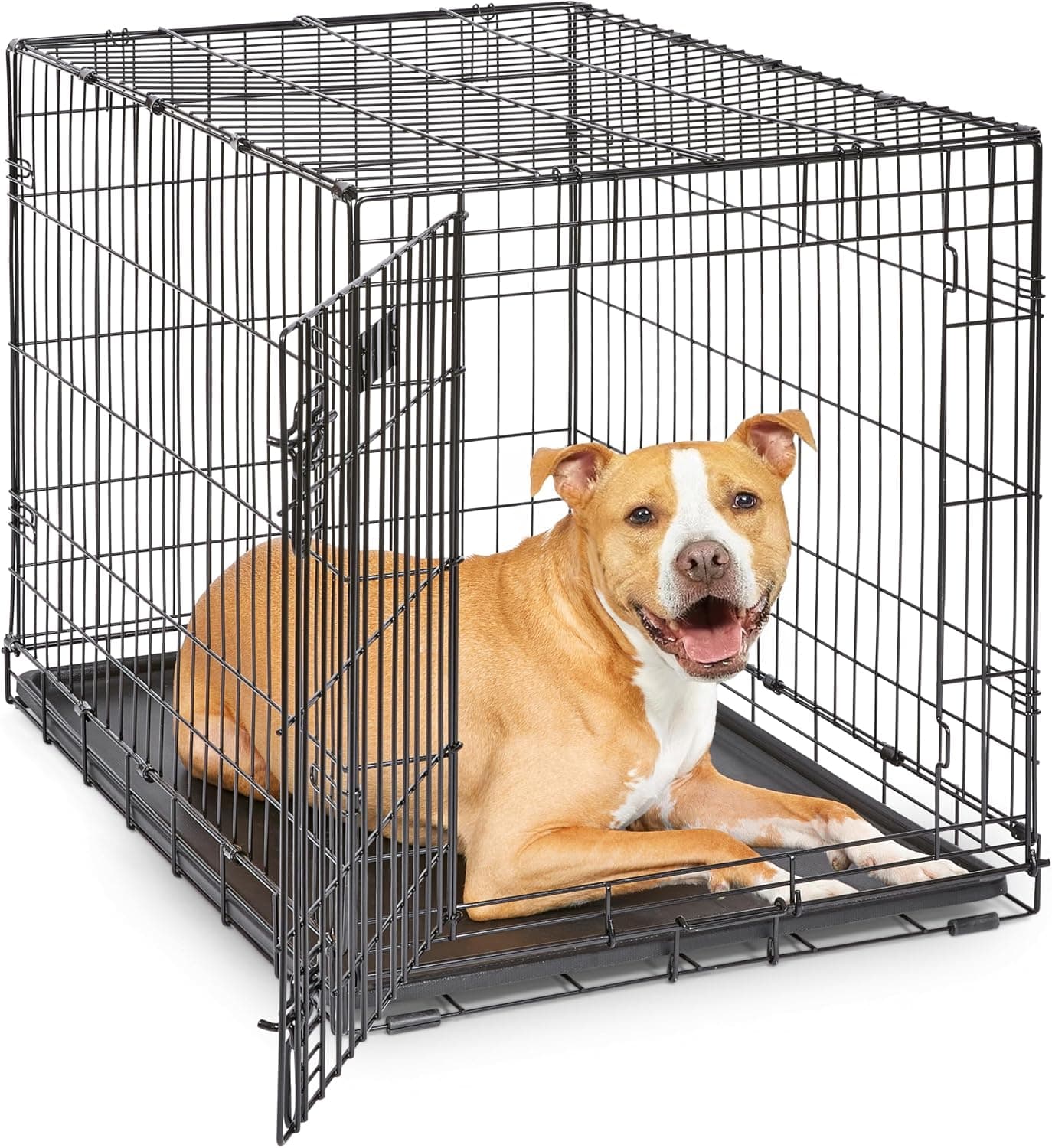
For a medium-breed dog, the MidWest iCrate in the 36-inch size comes with a divider panel, which is exactly the buy-once approach above.
MIDWEST HOMES FOR PETS
MidWest iCrate 36-Inch Folding Dog Crate
- Dimensions
- 36.5 x 23.25 x 24.75 in
- Dog weight range
- 41-70 lbs
- Divider panel
- Included
- Tray
- Leak-proof removable tray
- Doors
- Single door
A folding wire crate with a black e-coat finish, leak-proof tray, and an included divider panel that lets the crate size adjust as a puppy grows into an adult dog. Assembly is tool-free.
See more detailSee less detail
Strengths
- Massive review base with a strong average rating
- Divider panel lets one crate serve a growing puppy
- Leak-proof tray and rubber feet included
Weaknesses
- Wire construction offers less visual privacy than furniture-style crates
- Single door only, no side access
Best for
Owners crate-training a puppy through to full adult size in one purchase
What owners say
Identification you should not skip
Identification is cheap and the single most valuable thing you can do to get a lost dog back. At minimum, put an ID tag with a current phone number on the collar before your dog ever goes outside. Ask your veterinarian about a microchip as a permanent backup that cannot fall off, and remember that a microchip only works if you keep your contact details current in the registry.
Feeding and house-training gear
Beyond bowls and food, a few items smooth the first weeks. Treats are essential for training. Small, soft training treats let you reward good behavior quickly during house-training and early cue work. For a puppy still learning where to go, puppy pads can protect floors during the transition, used as a bridge rather than a permanent solution. A consistent feeding schedule, more than any product, is what drives house-training progress in the early days.
Comfort, grooming, and enrichment
Once the basics are covered, add the items that keep a dog comfortable and occupied. Safe chew toys give a puppy an appropriate outlet and protect your belongings. Grooming basics, a brush suited to the coat and a nail trimmer or grinder, keep your dog comfortable between professional visits. A dog that is mentally and physically occupied is far less likely to chew, dig, or bark out of boredom, so enrichment is not a luxury.
Prepare the home, not just the gear
Supplies are only half of getting ready. Before your dog arrives, prepare the space it will use by removing hazards, securing cords and chemicals, and deciding where the dog will sleep and eat. Our puppy-proofing guide walks through this room by room, and it applies to adult dogs too. A prepared home prevents the accidents and emergencies that no amount of gear can fix after the fact.
What you can buy later
Resist the urge to buy everything at once. A dog does not need a wardrobe, a dozen toys, or specialty gear on day one. Start with the essentials above, see what your individual dog actually needs and enjoys, then add from there. Many first-time owners overspend on things their dog ignores while underspending on identification and a proper resting space, which are the items that matter most.
The bottom line
A short, well-chosen supply list beats a cart full of extras. Cover feeding, resting, walking, identification, and cleanup before day one, prepare the space, and let your individual dog show you what else it needs. For the first seven days once your dog is home, follow the new puppy checklist for the first week.