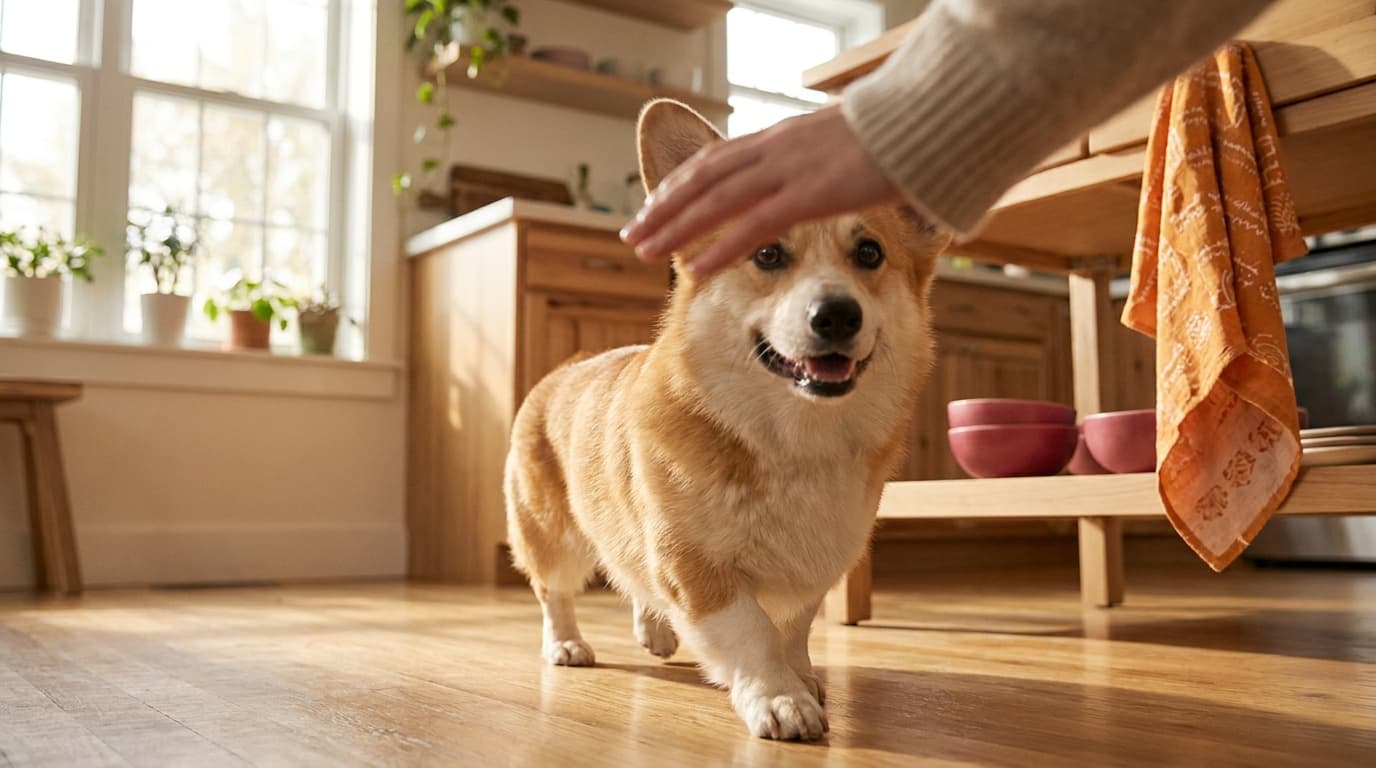
If your dog trails you from room to room and waits outside the bathroom door, you have what many owners call a velcro dog. According to the American Kennel Club, following is common in a social species that has lived and worked alongside people for generations. The important distinction is observable: can the dog rest when you leave, or does your departure lead to pacing, destruction, house soiling, or persistent vocalizing?
Why dogs follow us
Several ordinary reasons explain the shadowing. Dogs are social animals, and the AKC notes that generations of breeding for companionship and work have favored attention to people. Young puppies also follow nearby caregivers closely while they learn a household routine.
There is also a simpler explanation: following often pays off. If being near you reliably brings affection, treats, or attention, your dog learns that sticking close is worthwhile, so the behavior gets reinforced without you ever intending it. Some breeds are also more inclined to be underfoot than others, with many companion and working breeds bred specifically to stay near their people. And a dog with energy to burn may follow you simply out of boredom, hoping the next interesting thing will happen wherever you are.
Velcro dog versus separation anxiety
This is the distinction that matters most, and it is easy to blur. The crucial difference is what happens when you are not there. A velcro dog is clingy while you are present: it follows you around and seeks contact, but it can settle and cope when you leave. Separation anxiety, by contrast, is a genuine distress response that shows up when the dog is left alone.
The ASPCA describes separation anxiety as behavior that occurs only when a dog's person is gone or the dog is left alone, and it typically comes bundled with other signs of distress. Those can include pacing, destructive behavior often focused on doors and windows, house soiling in an otherwise trained dog, and persistent barking or howling. A dog that follows you happily around the house but then relaxes when you head out for errands is very different from a dog that panics the moment it is alone.
When following becomes a concern
A few patterns suggest it is worth paying closer attention. Consider looking deeper if your dog cannot be alone even briefly without becoming distressed, if you see the separation-anxiety signs above when you leave, or if the clinginess appears suddenly in a dog that was previously independent. A noticeable change in behavior, especially in an older dog, can occasionally reflect pain, declining eyesight or hearing, or age-related cognitive changes, so a sudden increase in shadowing is a good reason to check in with your veterinarian to rule out a medical cause.
For a healthy dog that follows constantly, the AKC and reward-based approaches favor practical independence exercises: reward resting on a bed or mat, provide regular physical exercise and enrichment, and practice very short, low-key departures and returns. Puzzle toys and chews can give the dog a separate activity while you move around or leave briefly.
If the picture looks more like true separation anxiety, that is a specific behavioral condition that responds best to a gradual desensitization plan, ideally guided by a positive-reinforcement trainer or a veterinary behaviorist, and never to punishment, which increases fear. Your veterinarian can rule out medical contributors and point you to qualified help.
For channeling a bored, energetic dog's attention productively, see our roundup of the best dog toys, and for another everyday behavior explained, our guide to why your dog barks so much.