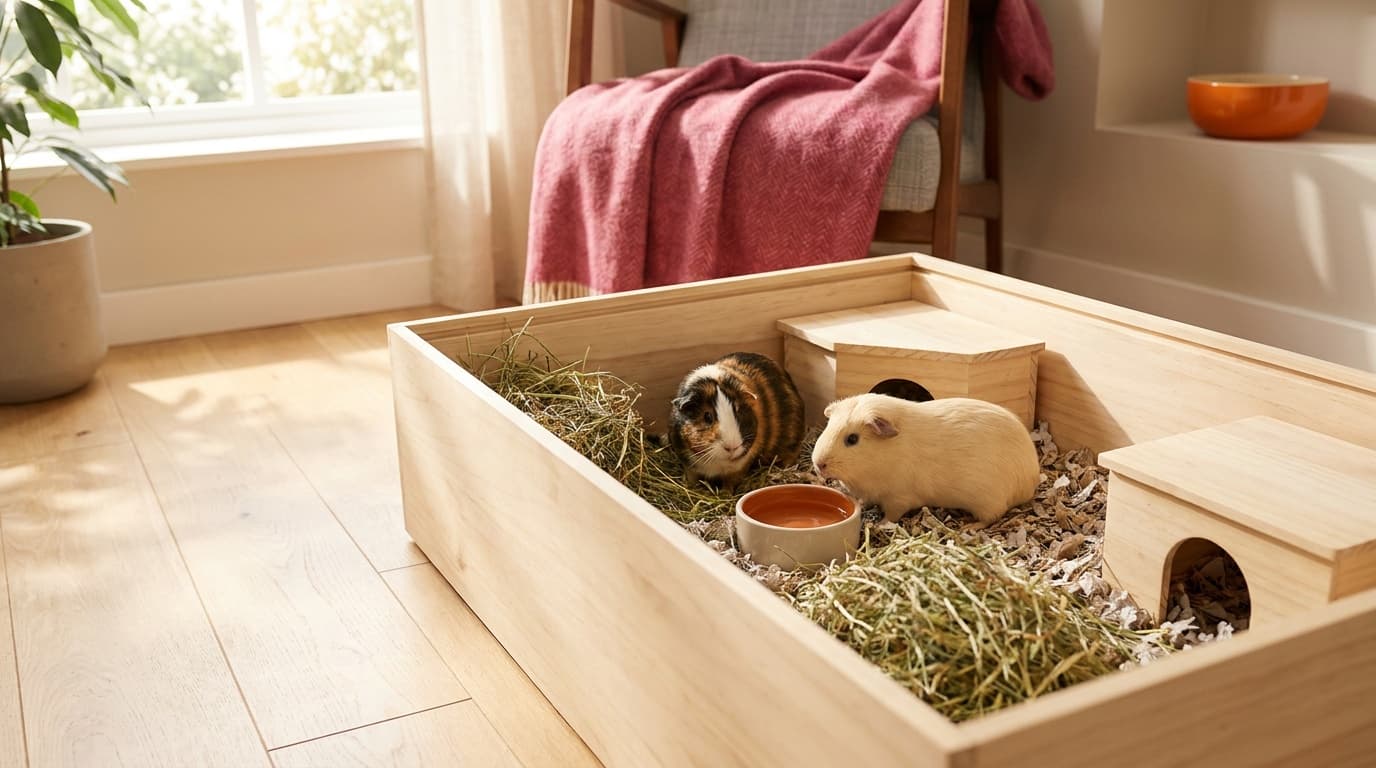
Guinea pig care starts with compatible guinea pig company, usable floor space, multiple shelters, continuous hay and water, and a predictable daily check. Prepare the full enclosure before arrival and keep the first week focused on routine and observation.
The RSPCA guinea pig care library covers environment, diet, behavior, company, and health as connected parts of the setup. The Merck Veterinary Manual describes guinea pigs as social animals that commonly do best in compatible pairs or trios.
Set up for more than one guinea pig
Use a large enclosure with a solid floor and enough open area for each guinea pig to run without squeezing past the other. Provide one more shelter than the number of animals when possible, and choose shelters or tunnels with multiple openings so one guinea pig cannot block another inside.
Add:
- Continuous clean hay and fresh water.
- Species-specific guinea pig pellets stored away from heat and air exposure.
- Several hay and feeding points for a pair or group.
- Dust-free bedding and dry resting areas.
- Tunnels, plain cardboard, and safe chew items.
Keep dogs, cats, and other potential predators away from the enclosure. Rabbits are also unsuitable enclosure companions because their body size, movement, and dietary needs differ. The RSPCA advises against housing rabbits and guinea pigs together.
Make the first days quiet and consistent
Place carriers inside the prepared enclosure and let the guinea pigs exit. Keep hay, water, shelters, and food in fixed locations while they learn the space. Avoid repeated lifting during introductions.
When handling is necessary, support the chest with one hand and the hindquarters with the other, as described by Merck's guinea pig handling guidance. Hold the animal close to your body and low over a secure surface.
Learn the normal daily pattern
Record whether each guinea pig is eating hay, drinking, producing droppings, moving normally, and using the shelters. Watch individuals within a pair so one animal's activity does not hide a change in the other.
A reduction in eating or droppings, labored breathing, discharge, hunched posture, or reluctance to move warrants prompt veterinary advice. Use the first week to establish the baseline that makes those changes easier to recognize.