The chinchilla room plan
Cool room. High house.
Source-cited chinchilla guidance for the room around the cage, the levels inside it, and the evening routine that connects food, company, handling, and fur care.
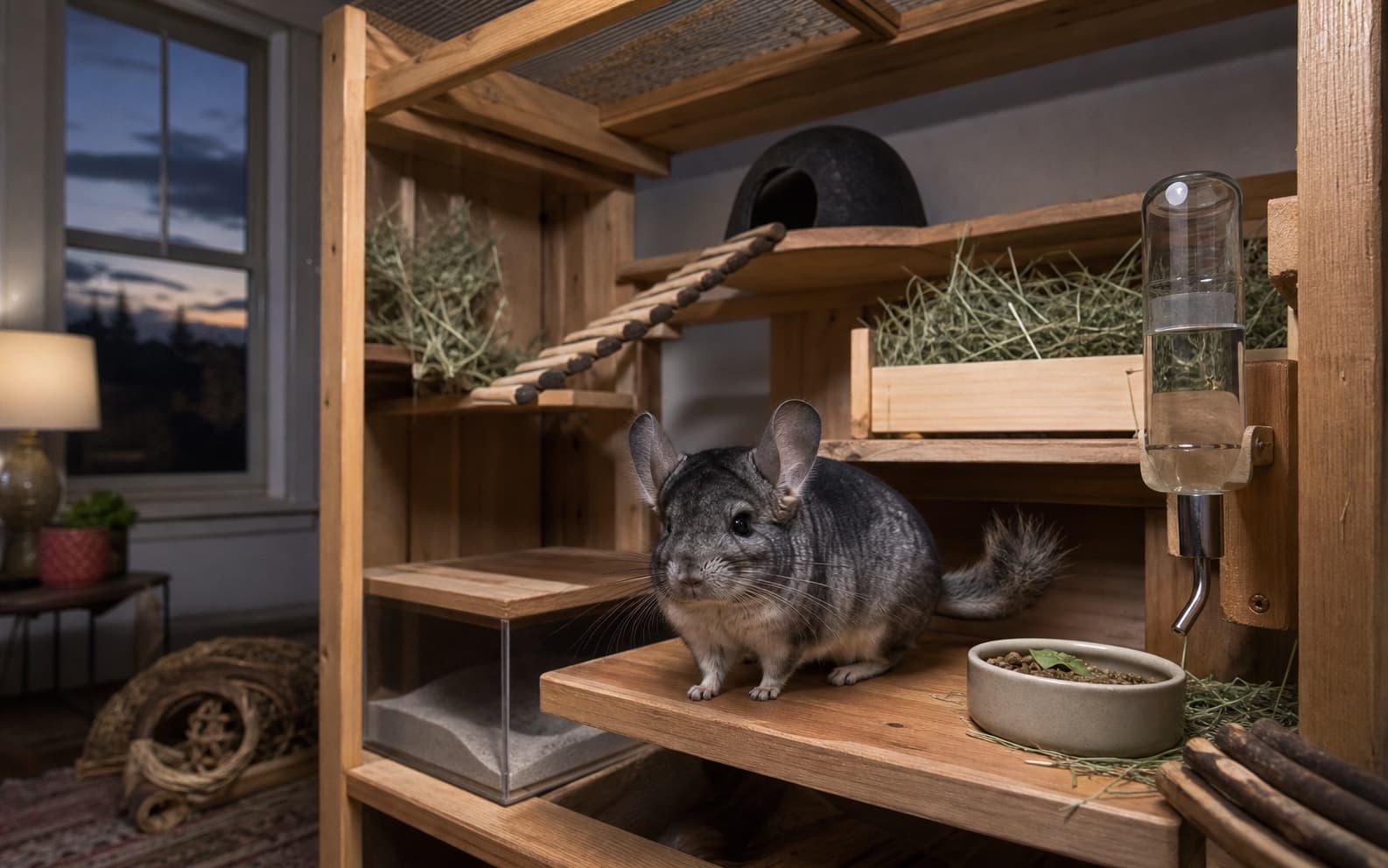
Begin in order
The room, the height, then the routine.
- 01Prepare the roomA quiet arrival begins with stable conditions, a finished enclosure, familiar food, and a local veterinarian.Set up the first week
- 02Build the heightBroad solid shelves, short landing routes, duplicate hides, hay, water, and doors that support daily care.Draw the cage plan
- 03Hold the food steadyGrass hay, plain chinchilla pellets, fresh water, and a routine that is easy to check every evening.Build the feeding routine
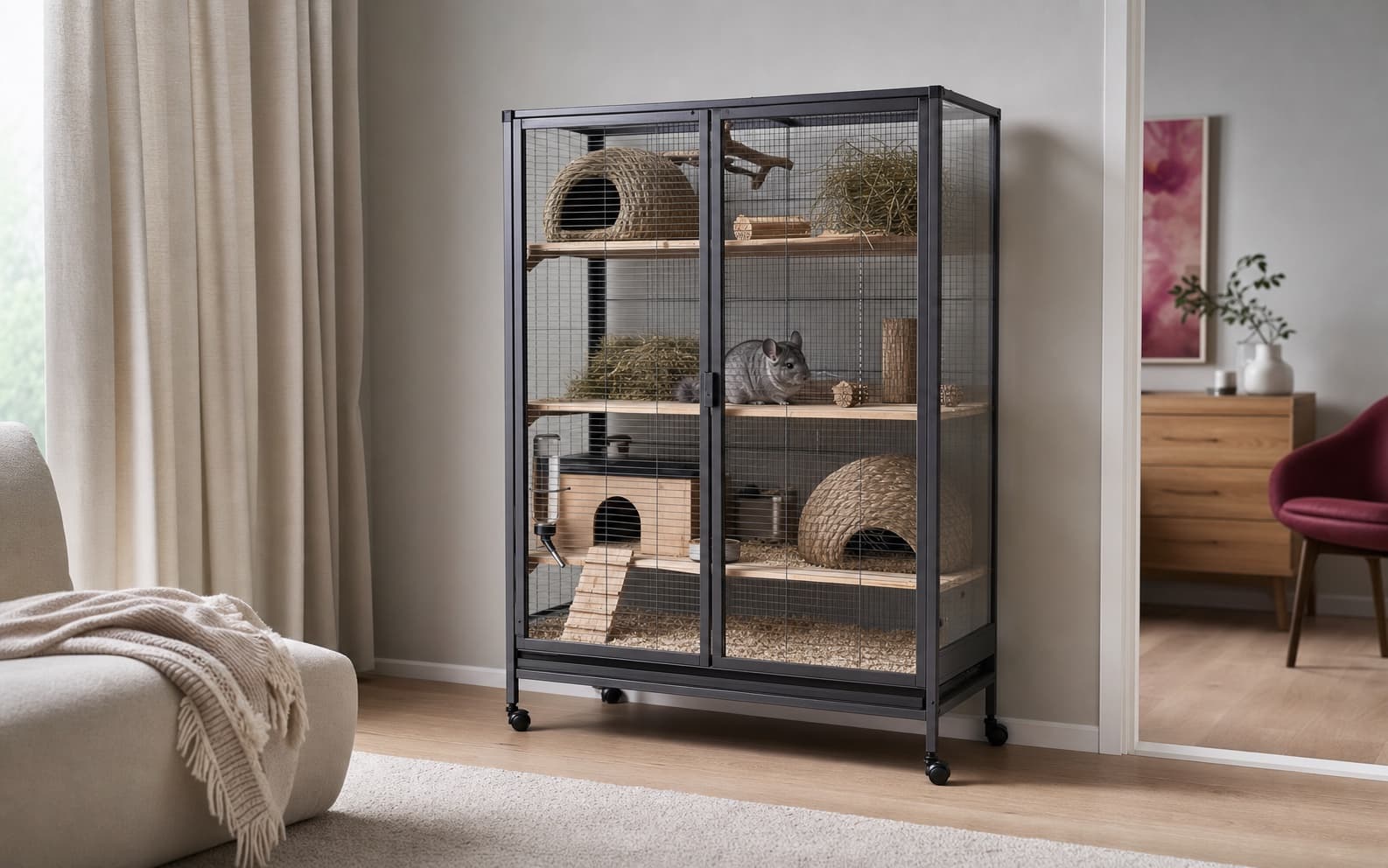
The invisible part of the enclosure
Choose the room before the cage.
Check the warmest afternoon, moving sun, humidity, noise, airflow, door clearance, and the route from cage to carrier.
Check the room planLife after the room is ready
Quiet days. Social evenings. Low hands.
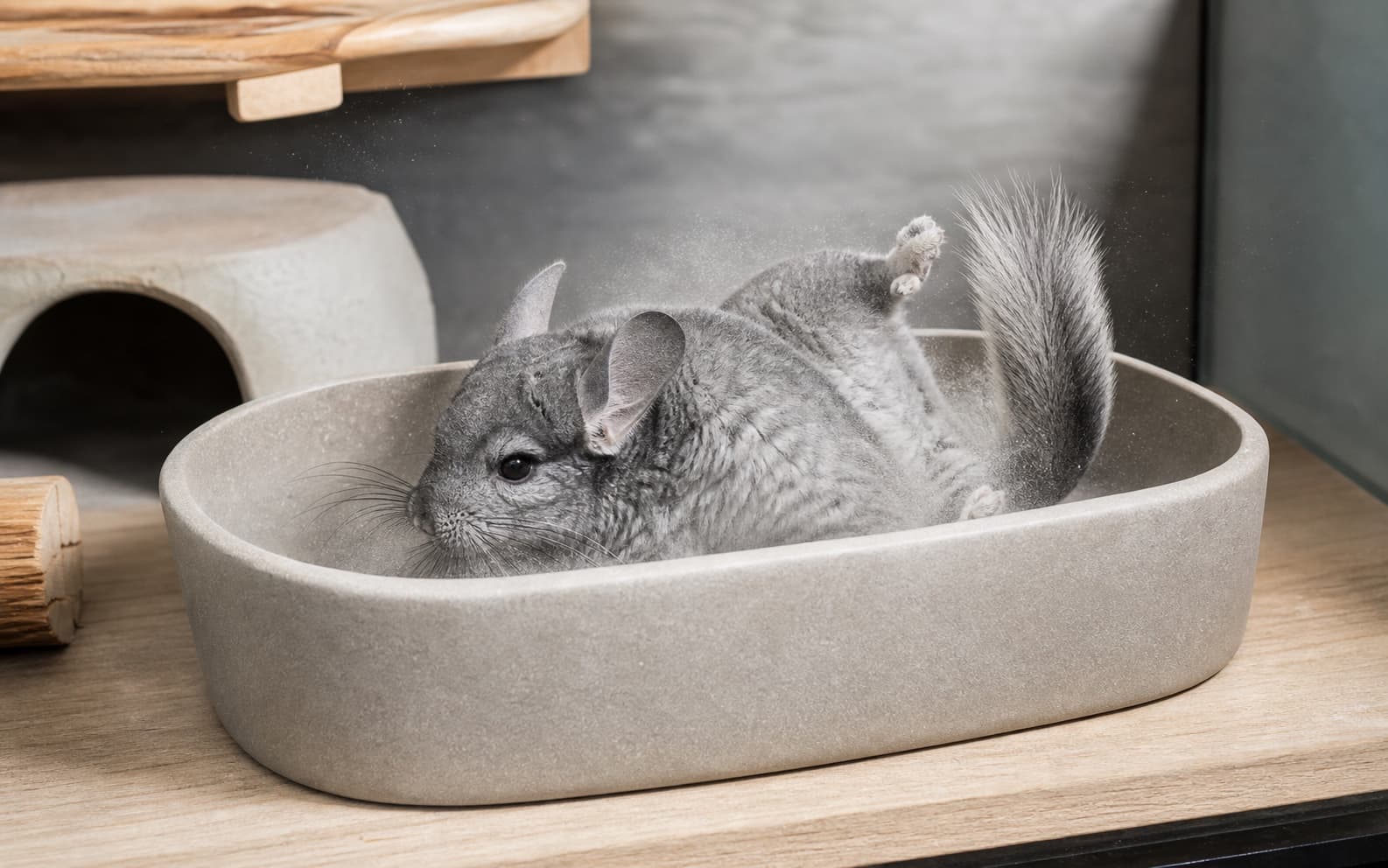
The coat station
Make room for the roll.
Fit the container to the animal, keep the material clean and dry, place it on a broad solid surface, and remove the station after use.
Set up the bath stationCompare after the plan
Three systems shape the whole home.
Current Amazon listings are grouped by product type. The care guides explain the dimensions, placement, and material decisions to make before checkout.
- The frameTall cagesUse the source-cited size benchmark, then map broad shelves, doors, bar spacing, ventilation, and safe access.Plan a qualifying enclosure
- The coat stationDust bathsCompare rolling room, stable weight, smooth entry, dust containment, chew resistance, and cleanability.Find the bath format
- The usable heightLedges and chewsCompare solid landing area, secure fixings, untreated materials, edge finish, and replacement access.Browse shelves and chews
Eight chinchilla guides cover the first week, cage, room climate, food, company, sleep, handling, and dust bathing.
Browse the chinchilla library