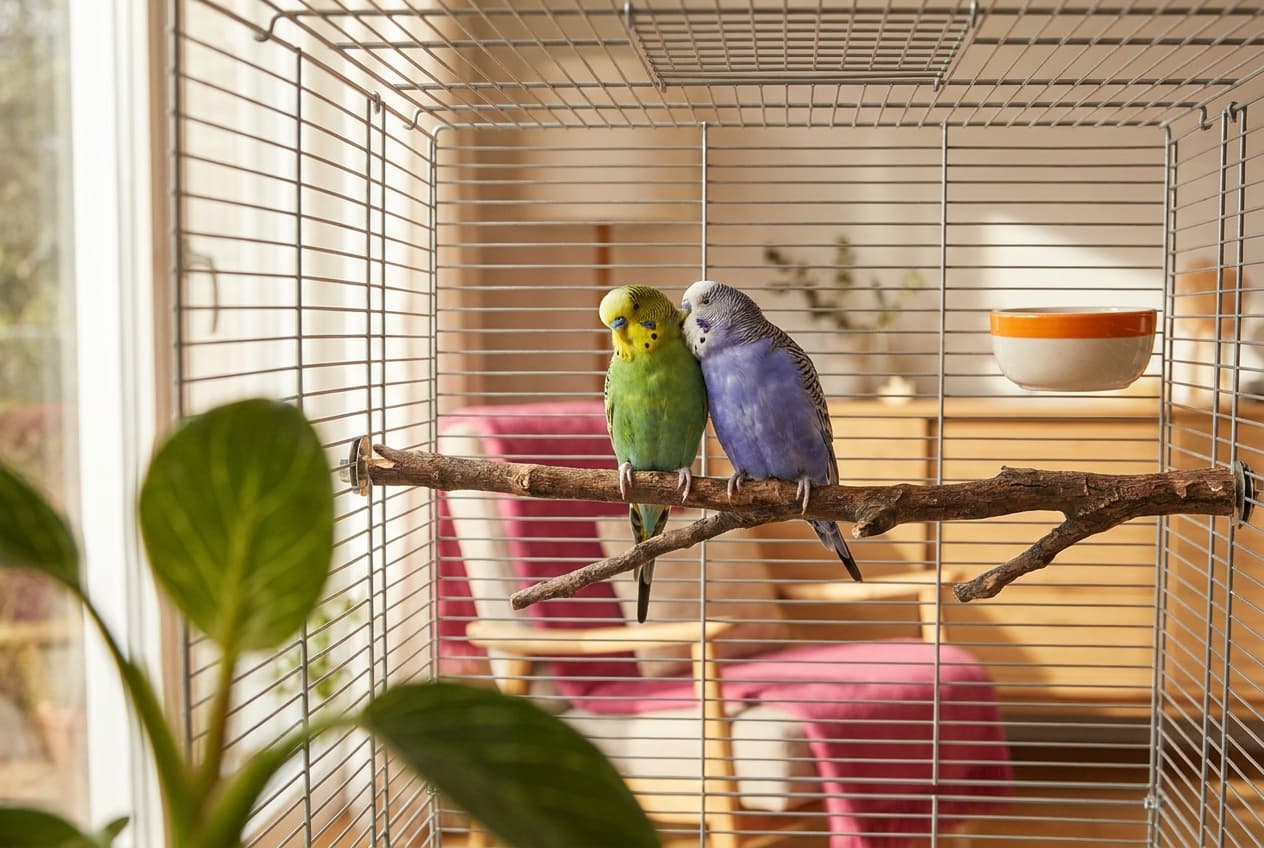
Budgies are flock parrots. In the wild they live, feed, preen, and rest in groups, and a companion of their own kind answers social needs a human household cannot fully cover. The RSPCA environment guidance notes that smaller species that usually live in groups, such as budgerigars, can be kept together, and the RSPCA pet bird overview treats company as a core welfare need for social birds.
The honest starting question
The practical question is not whether budgies enjoy company; it is how many hours the bird will spend without you. A budgie in a busy home with someone present most of the day, daily out-of-cage time, and real interaction can do well as a closely-bonded single bird. A budgie alone through work-length days is a flock animal in an empty room, and a compatible companion is the answer that actually fits the species.
What a pair changes
Two budgies preen, chatter, and rest together, keep each other active, and stay behaviorally normal through hours no human can cover. Expect the birds to bond with each other first and to need more patient taming work from you. That trade is real, and for most homes with long absent stretches it is the right one.
Plan the pairing, not just the purchase
A same-sex pair or a male and female kept without breeding plans both work when the individuals are compatible. Introduce new birds gradually: separate cages within sight first, supervised neutral time next, and shared housing only once the two eat and rest calmly near each other. Give the shared cage duplicate food and water stations and enough width that both birds can fly and retreat.
Keep new-bird health boundaries
Keep any new bird separated for an initial observation period and arrange a health check with a veterinarian who treats birds before full introduction. Bring the question of quarantine length and testing to that veterinarian rather than working from forum rules of thumb.
When company is not going well
Persistent chasing, guarding food stations, or one bird pinned to a corner means the pairing needs a reset: back to adjacent cages and slower reintroduction, with advice from an avian-experienced veterinarian or qualified behaviorist if it does not improve. Bonded aggression around a single resource often disappears when stations are duplicated and space widens.
The taming guide covers how trust-building changes when there are two birds instead of one.