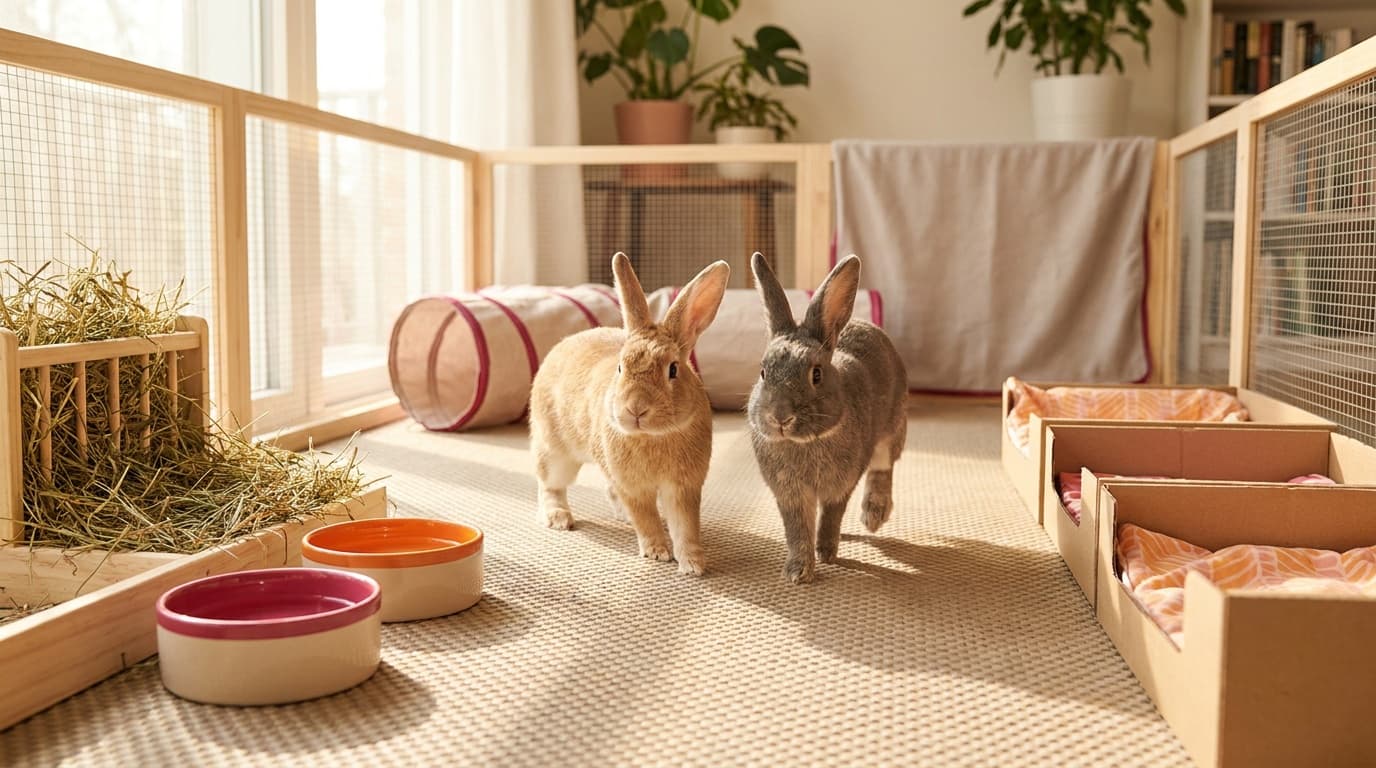
Good rabbit housing is a connected living area, not a small box plus occasional exercise. Rabbits need room to hop, run, stretch, stand upright, forage, hide, eat, rest, and use a toilet area without waiting for someone to open a door.
The RSPCA rabbit environment guide organizes the home around a secure shelter connected to an exercise area. Its indoor rabbit guidance adds a quiet location, a solid nonslip floor, rabbit-proofing, hiding places, and opportunities to dig and forage.
Start with continuous floor space
Use an indoor exercise pen, a rabbit-proofed room, or a secure connected setup that remains available during the rabbit's active periods. The rabbit should be able to move between resting, feeding, toileting, and exercise areas without being carried.
Plan the floor before adding accessories:
- Cover slick tile, laminate, or wood with washable nonslip runners or rugs.
- Keep a clear lane for running and hopping.
- Place food and water where both rabbits in a pair can reach them.
- Keep the litter area away from beds and bowls while leaving hay within easy reach.
- Check gates, seams, and gaps from floor level.
A large floor area can become unusable when it is filled with furniture, tiny shelters, or objects that force the rabbit through narrow gaps. Leave open movement space as well as covered spaces.
Give every rabbit cover and an exit
Provide a darkened resting shelter plus additional boxes or tunnels. Open-ended shelters reduce the chance that one rabbit blocks another inside. A compatible pair should be able to rest together or choose separate cover.
Cardboard boxes, sturdy tunnels, low platforms, and digging boxes can make the space more useful without turning it into an obstacle course. Inspect chewable items regularly and remove sharp, splintered, damp, or heavily soiled pieces.
Rabbit-proof the room physically
Cover electrical cords with rigid barriers or route them completely outside the rabbit area. Move houseplants, medicines, cleaning products, foam, rubber, books, and fabric fringe out of reach. Block gaps behind appliances and furniture rather than assuming the rabbit will ignore them.
Training and supervision can support the setup, but neither replaces a physical barrier around a dangerous item. Recheck the room whenever furniture, seasonal decorations, or electronics move.
Build a daily housing check
At least once each day, verify that:
- Water is available and the container works.
- Hay is clean, dry, and accessible.
- Litter and resting surfaces are dry.
- Gates, barriers, flooring, and shelters are intact.
- Each rabbit is moving, eating, and producing droppings in its usual pattern.
Spot-clean soiled areas while preserving the familiar layout. Make larger changes one at a time so you can see whether the new floor, shelter, or object affects movement, eating, or litter use.
If a rabbit suddenly avoids a surface, stops using part of the enclosure, moves differently, or changes its eating or droppings, contact a rabbit-experienced veterinarian. A housing change can reveal a practical problem, but a sudden behavior change can also accompany pain or illness.
For the toilet zone, compare roomy open litter trays and tape the finished tray-and-hay footprint into the floor plan before adding the rest of the furniture.