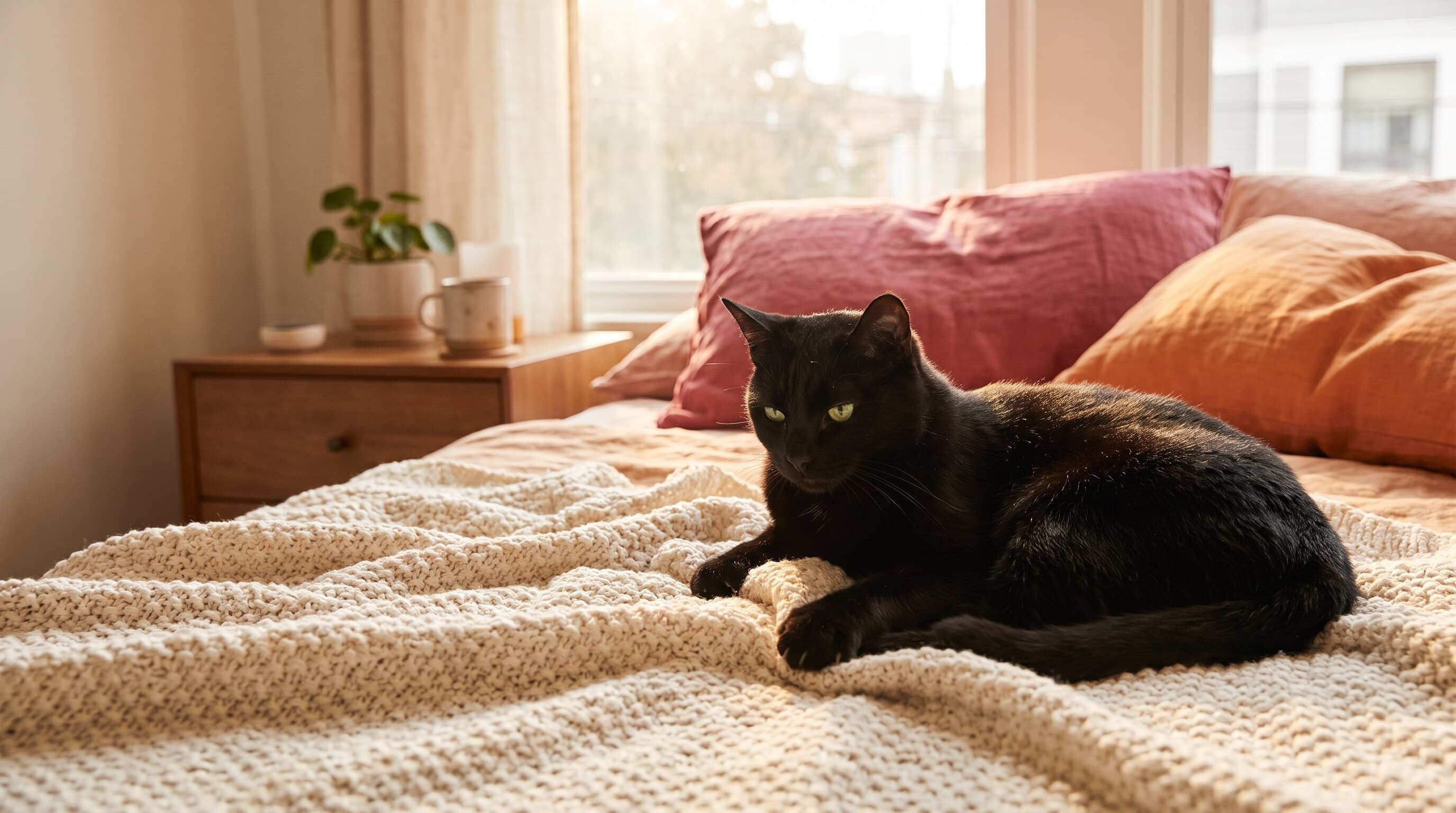
Kneading, the rhythmic push-pull of a cat's front paws against a soft surface, sometimes called "making biscuits," is one of the most endearing and most normal things cats do. There is no single proven reason behind it, but veterinary behavior experts generally agree it is a behavior retained from kittenhood and commonly seen before rest. According to PetMD, in the large majority of cases kneading is a sign of a relaxed, content cat, not something to worry about.
The leading theories
Because we cannot ask cats directly, the explanations for kneading are well-reasoned theories supported by what we know about feline development and instinct. Several are likely true at once.
- A behavior retained from nursing. The most widely held theory, described by both PetMD and VCA Animal Hospitals, is that kittens knead against their mother while nursing to stimulate milk flow. The motion often continues into adulthood, especially before rest.
- Resting behavior. Adult cats often knead as they settle onto a blanket, bed, or lap.
- Nest-making instinct. Wild ancestors may have padded down grass or leaves to make a soft, safe resting spot. Kneading a blanket or a lap may be a modern echo of that bedding-down behavior.
- Scent marking. Cats have scent glands in the soft pads of their paws. VCA notes that kneading may deposit a cat's personal scent onto a surface or a person, a subtle way of marking something as familiar and theirs.
- Familiar social contact. Cats often knead on familiar people or animals, a point echoed by the American Animal Hospital Association. pattern that commonly appears during relaxed contact.
When kneading is completely normal
For most cats, kneading needs no intervention at all. It is normal when it happens in familiar contexts: as your cat curls up to sleep, settles onto a soft blanket, climbs into your lap, or greets you calmly. A cat that kneads, purrs, and then dozes off is simply a comfortable cat. Frequency varies a lot between individuals, and some cats barely knead while others do it constantly, both of which are within the normal range.
Is it ever a concern?
Kneading itself is not a medical problem, but like any behavior, a sudden change in it can be worth noting. VCA points out that cats sometimes purr and knead when they are unwell, so context is what matters. Kneading is not a symptom on its own, but it is reasonable to pay closer attention if it appears alongside other changes: kneading much more than usual in unusual places, combined with hiding, reduced appetite, litter box changes, or signs of discomfort.
In those cases it is not the kneading you are reacting to, but the cluster of changes around it, and that cluster is a reason to check in with your veterinarian. Compulsive suckling or kneading paired with wool-chewing or fabric-eating is also worth mentioning at a routine visit, since persistent object-sucking can occasionally point to a behavioral or dietary issue a vet can help sort out.
The bottom line
For most cats, kneading is an ordinary behavior seen before rest or during familiar contact. Protect your lap with a blanket and let your cat continue. If you are curious about another feline behavior that often happens at the same time, see our guide to why cats purr.