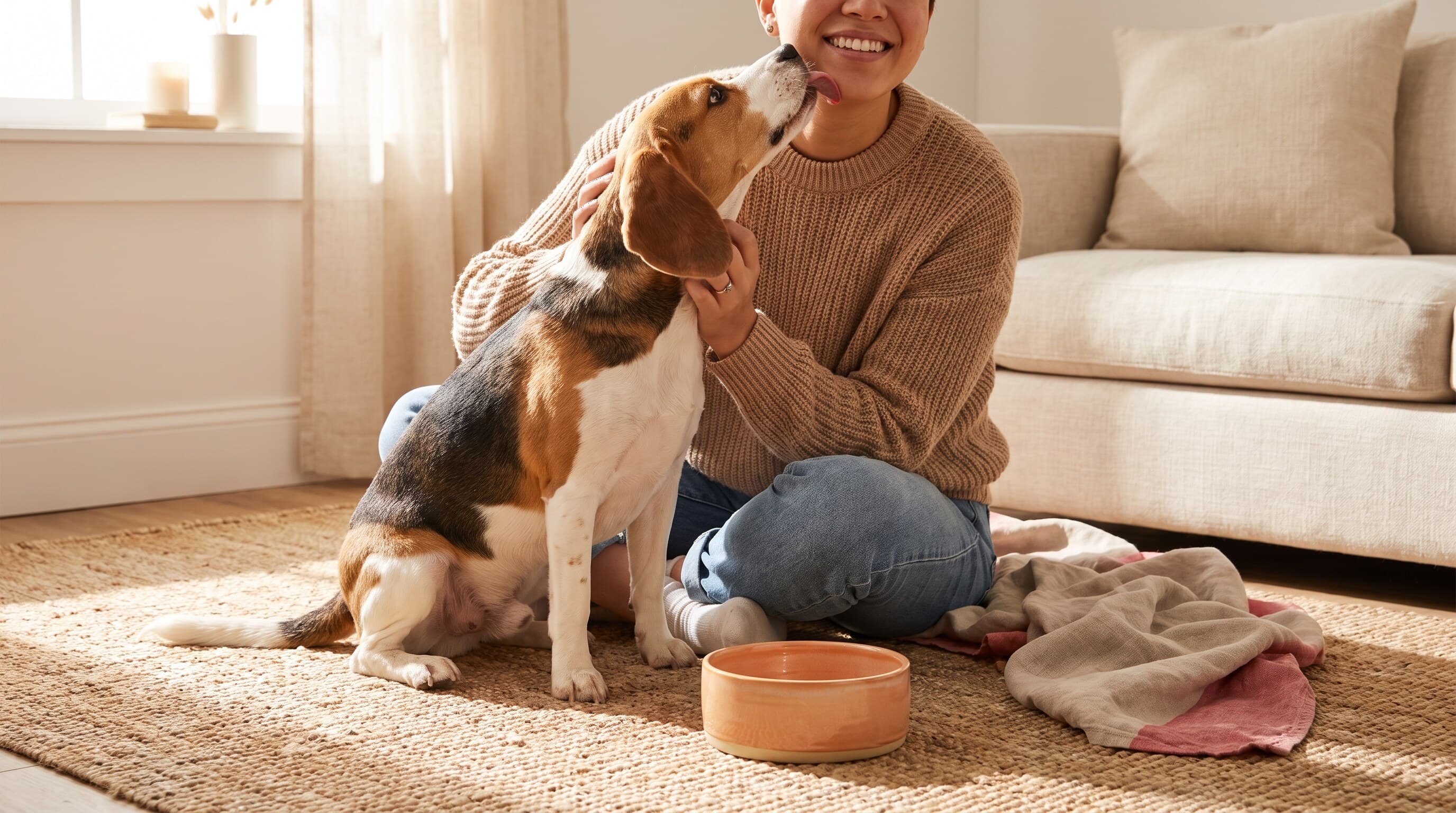
Dogs lick people for several ordinary reasons, including taste, social contact, and a learned response to attention. According to the American Kennel Club, licking can signal affection, work as a learned way to get your attention, or simply be a response to how you taste. The useful question is whether the amount or target of licking has changed, because a sudden or repetitive shift can warrant a closer look.
The everyday reasons dogs lick people
Several ordinary motivations overlap, and your dog may lick for more than one at once.
- Affection and bonding. The AKC notes that licking is a ritualized greeting for many dogs, echoing how a mother licks her puppies and how puppies lick to communicate. A happy face-lick when you come home often just means your dog is glad to see you.
- You taste interesting. Human skin is slightly salty, especially after exercise or a meal, and dogs explore the world with their mouths and noses. Some licking is plain sensory curiosity about the salt, lotion, or food smell on your skin.
- Attention-seeking. Licking reliably gets a reaction. If licking earns petting, talk, or eye contact, a smart dog learns to repeat it. In that sense we often unintentionally train the behavior by responding to it.
- Stress or excitement. VCA Animal Hospitals notes that some dogs lick more when mildly stressed or excited.
- Appeasement. Licking can also appear with lowered posture, turned-away eyes, or other signals used to avoid conflict.
Reading the context
Licking rarely means just one thing, so the surrounding situation tells you which reason is in play. A relaxed dog licking your hand while leaning into a cuddle is affection. A dog licking intently right after you finish a snack is probably chasing taste. A dog that licks, then looks at you, then licks again is often working for a response. None of these need fixing unless the behavior bothers you or the dog.
The red flags: when licking is worth a vet visit
Licking crosses from charming to worth-checking when it becomes excessive, compulsive, or targeted at the dog's own body or the environment rather than at you. The AKC and veterinary sources flag a few patterns to take seriously:
- Constant licking or chewing of one body part, such as a paw, leg, or flank, which can point to itchy skin, allergies, pain, or a wound underneath.
- Compulsive surface licking, like repeatedly licking the floor, walls, or furniture, which can sometimes be linked to nausea or digestive discomfort.
- Licking paired with other changes, such as anxiety, restlessness, drooling, or a shift in appetite or energy.
The AKC also notes that excessive licking can be a sign that a dog is anxious, uncomfortable, or in pain, and recommends consulting your veterinarian if the behavior becomes excessive or you have concerns. PetMD echoes that guidance, adding that when licking looks obsessive or is aimed at the dog's own body, it is worth ruling out an underlying medical or behavioral cause. The key word is change: licking that is new, intense, focused on one spot, or clearly compulsive is the version to mention to a professional.
The bottom line
A dog that licks you a lot is usually just being a dog, greeting, tasting, bonding, or angling for attention. Enjoy it, and shape it if it is too much by managing your own response rather than scolding. Save your concern for licking that turns compulsive or focuses on your dog's own body, which is the kind that deserves a veterinary look. For another everyday behavior owners often ask about, see our guide to why dogs eat grass.