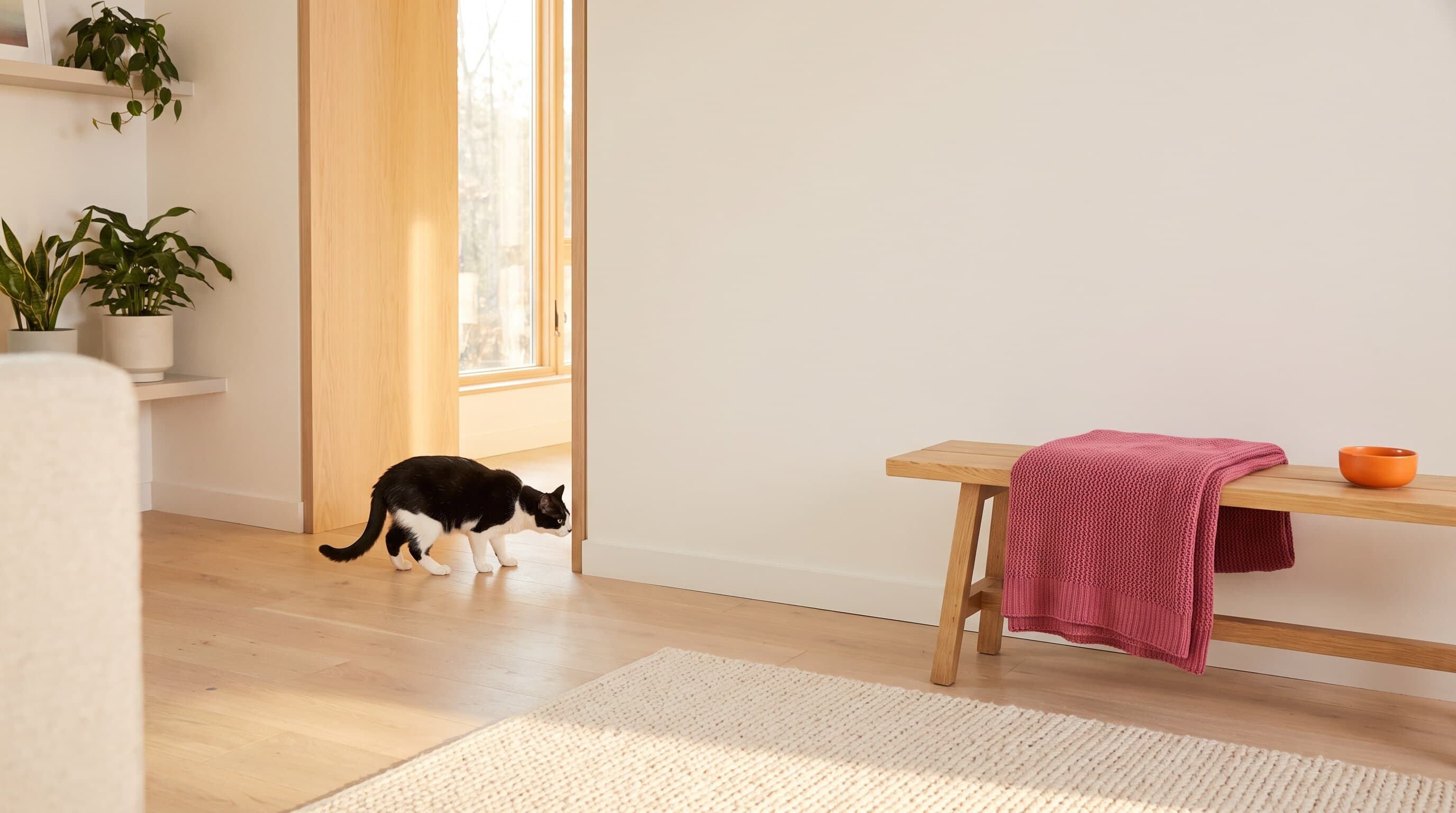
Bringing home a new cat is exciting, but the single biggest mistake owners make is rushing the first meeting. Cats are territorial by nature, and a face-to-face introduction on day one can create tension that takes weeks or months to undo. The far better path is slow, structured, and scent-led. According to International Cat Care, careful introductions give both cats the best chance of accepting each other and building a positive relationship, so the guiding principle is simple: do not be tempted to rush. A patient introduction now saves you a difficult one later.
Start with completely separate spaces
Before your cats ever see each other, set up a dedicated safe room for the newcomer. This should be a space your resident cat does not heavily use, fitted with everything the new cat needs so it never has to venture out: food, water, a litter box, a scratching surface, toys, and cozy hiding spots and perches. International Cat Care describes this transition room as a place where the new cat can settle without any contact with other pets.
Keeping the cats fully separated at first does two things. It lets the new cat decompress and gain confidence in a small, controllable territory, and it lets both cats get used to each other's presence through sound and smell before any visual pressure. Let the new cat relax and explore its room fully before you move to the next step, which may take a few days or longer depending on the cat.
Swap scents before sights
Cats rely heavily on scent, so scent introduction comes before visual introduction. Let each cat investigate the other's scent without direct contact.
- Swap bedding. International Cat Care suggests taking a piece of each cat's bedding and placing it in the other cat's space, so each cat rests on a blanket carrying the other's scent. Over time this blends the two scents into a shared, communal smell.
- Read the reaction. If a cat calmly investigates or ignores the other's bedding, that is a good sign. If a cat actively avoids or hisses at the scented item, that tells you to slow right down, because that cat is signaling it needs more time.
- Switch rooms. Once scent swapping is going well, let the cats trade spaces so each can explore where the other has been and pick up more scent, all without a direct encounter. The AAFP step-by-step guide from the American Association of Feline Practitioners uses this same gradual, resource-rich approach.
Only move forward when both cats seem relaxed at the current step. The pace is set by the more nervous cat, not by your schedule.
Gradual visual and physical meetings
After scents are mingling calmly, introduce sight in a controlled way. A common method is to let the cats see each other through a barrier such as a baby gate or a cracked door, ideally while both are doing something enjoyable like eating or playing. Keep these first sessions short and end them while things are still calm.
The ASPCA's guidance on cats living together reinforces going gradually and watching body language closely. Relaxed postures, blinking, and calm exploration mean you can slowly extend sessions. Stiff bodies, flattened ears, hissing, or fixed staring mean you have moved too fast, so calmly separate and return to an earlier step. Progress from barrier meetings to brief, fully supervised time in the same room, expanding only as both cats stay comfortable. Some pairs bond in a week or two, others take a couple of months, and both are normal.
When to get help
Most introductions succeed with patience, separation, and scent work. Reach out for professional guidance if you see persistent aggression, if one cat stops eating or using the litter box, if either cat is hiding constantly or seems chronically stressed, or if there has been a physical fight. Because stress can also mask or trigger medical issues, a check with your veterinarian is wise if a cat's appetite, litter box habits, or demeanor change, and a qualified feline behavior professional can help with introductions that stall.
For getting your newcomer settled in general, see our new kitten checklist for the first week, and to give each cat satisfying territory of its own, our roundup of the best cat trees and scratching posts and best cat window perches can help.