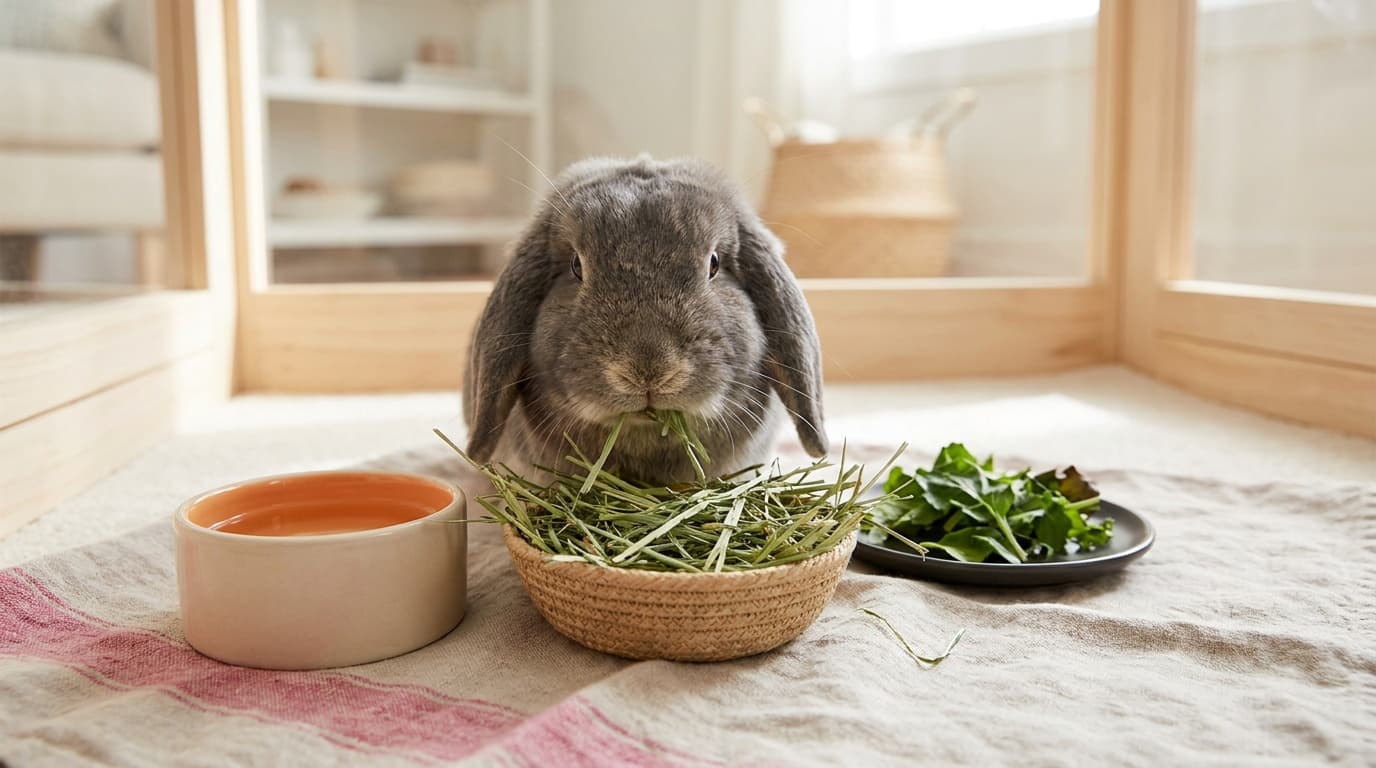
Good-quality hay or grass is the foundation of a rabbit's diet and should remain available throughout the day and night. Fresh water, leafy greens, and a measured amount of species-appropriate pellets complete the usual routine. Fruit and root vegetables are occasional foods.
This structure is consistent across the RSPCA rabbit diet guide and the House Rabbit Society diet guide. Individual portions vary with age, body condition, health, and the specific pellet, so use the product instructions and advice from a rabbit-experienced veterinarian.
Hay and grass come first
Rabbits graze for long periods. Hay and grass provide fiber and abrasive chewing that supports normal digestion and tooth wear. Offer clean, dry, sweet-smelling hay and replace any that becomes damp or soiled.
Put hay where the rabbit spends time, including beside or above a litter tray if that arrangement keeps it clean. A rack, basket, or stuffed cardboard tube can create more than one feeding point for a pair of rabbits.
Add leafy greens and rabbit pellets
Leafy greens add variety and moisture. Introduce one new green gradually and watch eating and droppings before adding another. Rabbit pellets should be uniform nuggets made for rabbits. Measure them according to the product directions rather than continually topping up a bowl.
Muesli-style mixes allow selective feeding and are not recommended by the RSPCA. Fruit and root vegetables such as carrots are higher-sugar foods, so treat them as occasional extras rather than the main meal.
Keep water continuously available
Provide fresh water at all times and check the container at least daily for blockage, leaks, or contamination. Some rabbits use a heavy bowl more readily than a bottle. If you provide both during a transition, you can observe which one the rabbit reliably uses.
When the feeding pattern becomes urgent
A rabbit that stops eating, produces fewer droppings, sits hunched, or becomes markedly less active needs prompt veterinary attention. These are observable changes, not a reason to experiment with home treatment. Contact a rabbit-experienced veterinarian and describe the timing, food intake, water intake, and droppings.