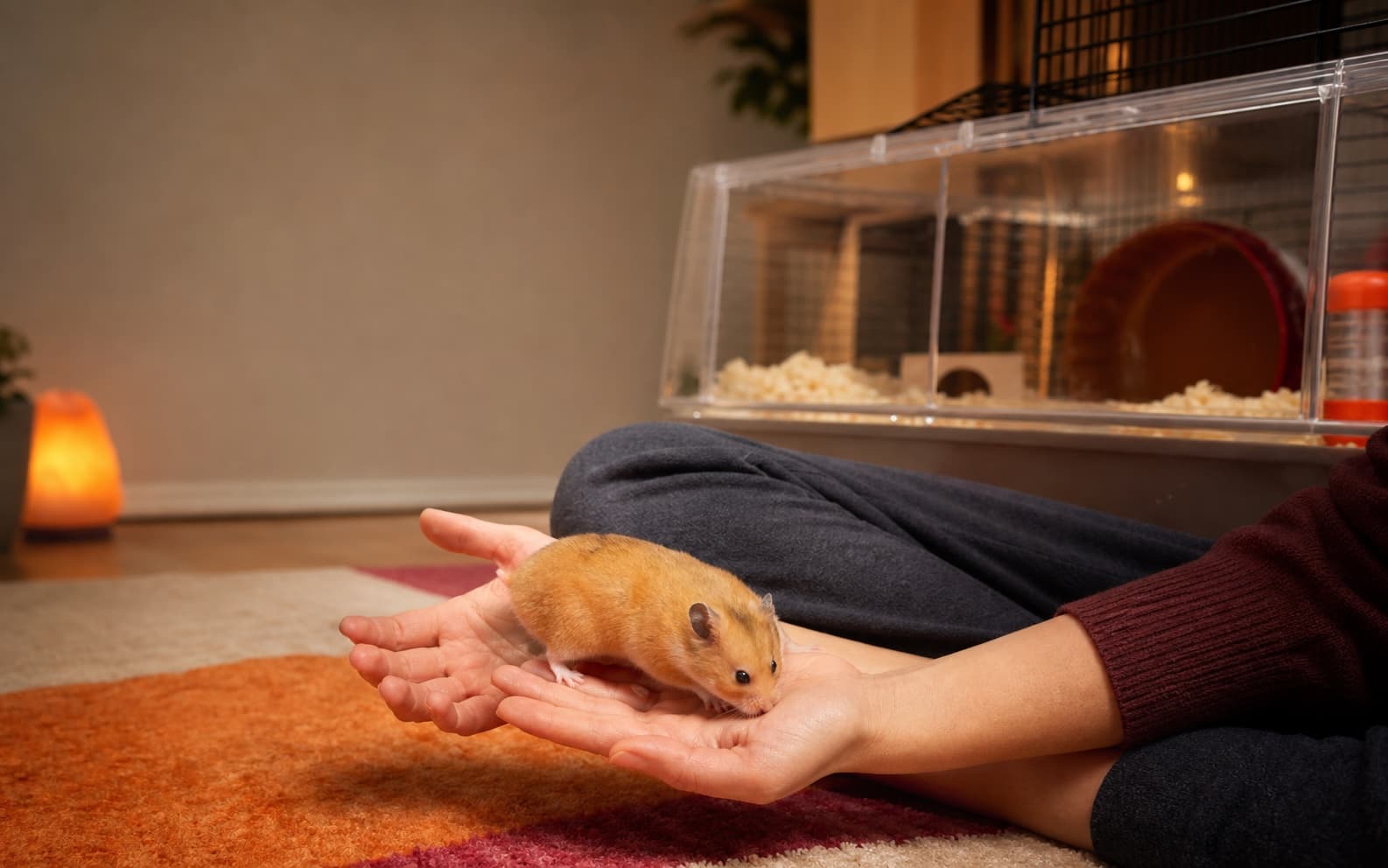
Handle a hamster when it is fully awake, moving normally, and choosing to investigate. Begin with an open hand inside the enclosure, then build toward two hands that form a low, secure platform under the whole animal.
Merck Veterinary Manual recommends gentle handling with the body supported from below and a second hand creating a secure area. The Blue Cross notes that hamsters are less likely to bite when accustomed to sensitive handling and should be fully awake before contact.
Begin with presence, scent, and choice
Spend the first evenings completing routine care while the hamster is awake. Sit nearby, move slowly, and speak quietly. Place a clean open hand low in the enclosure with a familiar piece of the daily food. Keep the hand still while the hamster approaches, sniffs, takes the food, or walks away.
Repeat short sessions. Progress is the hamster remaining relaxed and returning voluntarily, not the number of seconds it can be held.
Turn both hands into a moving floor
Once the hamster comfortably walks onto one hand, place the second hand beside it. Let the hamster step between the palms. Lift only slightly and keep both hands cupped loosely enough to prevent a sudden fall while leaving a clear route from one palm to the other.
Stay seated on the floor or work just above deep bedding in a secure play area. A hamster can move quickly without warning, and even a short fall can injure a small body.
Keep the first holds brief
Return the hamster before it becomes frantic. A calm ending makes the next session easier. Increase duration gradually while the animal continues to explore, groom, take food, and step between hands with normal movement.
Pause when the hamster repeatedly tries to jump, freezes, flattens, vocalizes, turns sharply toward the hand, or attempts to bite. Check the timing, room noise, and approach before the next session. Pain and illness can also change tolerance, so a sudden handling change belongs in a veterinary conversation.
Use a container for necessary transfers
A familiar tunnel, mug-shaped hide, or small carrier can move a hamster between the enclosure and a secure cleaning or play area without chasing. Place the container in front of the hamster, let it enter, cover the opening with a hand, and support the container from below.
This transfer method is especially useful for fast dwarf hamsters, a new arrival, or any animal that is comfortable nearby but not yet ready to be lifted by hand.
Make children's contact structured
An adult should control the environment and remain within reach. Have the child sit on the floor and let the hamster walk across open hands or a lap within a secure area. Daytime sleep, quick movement, and a small body make hamsters a poor match for spontaneous carrying.
Good handling should look almost uneventful: the hamster chooses to step on, the hands stay low and steady, and the animal returns to the enclosure before either side needs to rush.