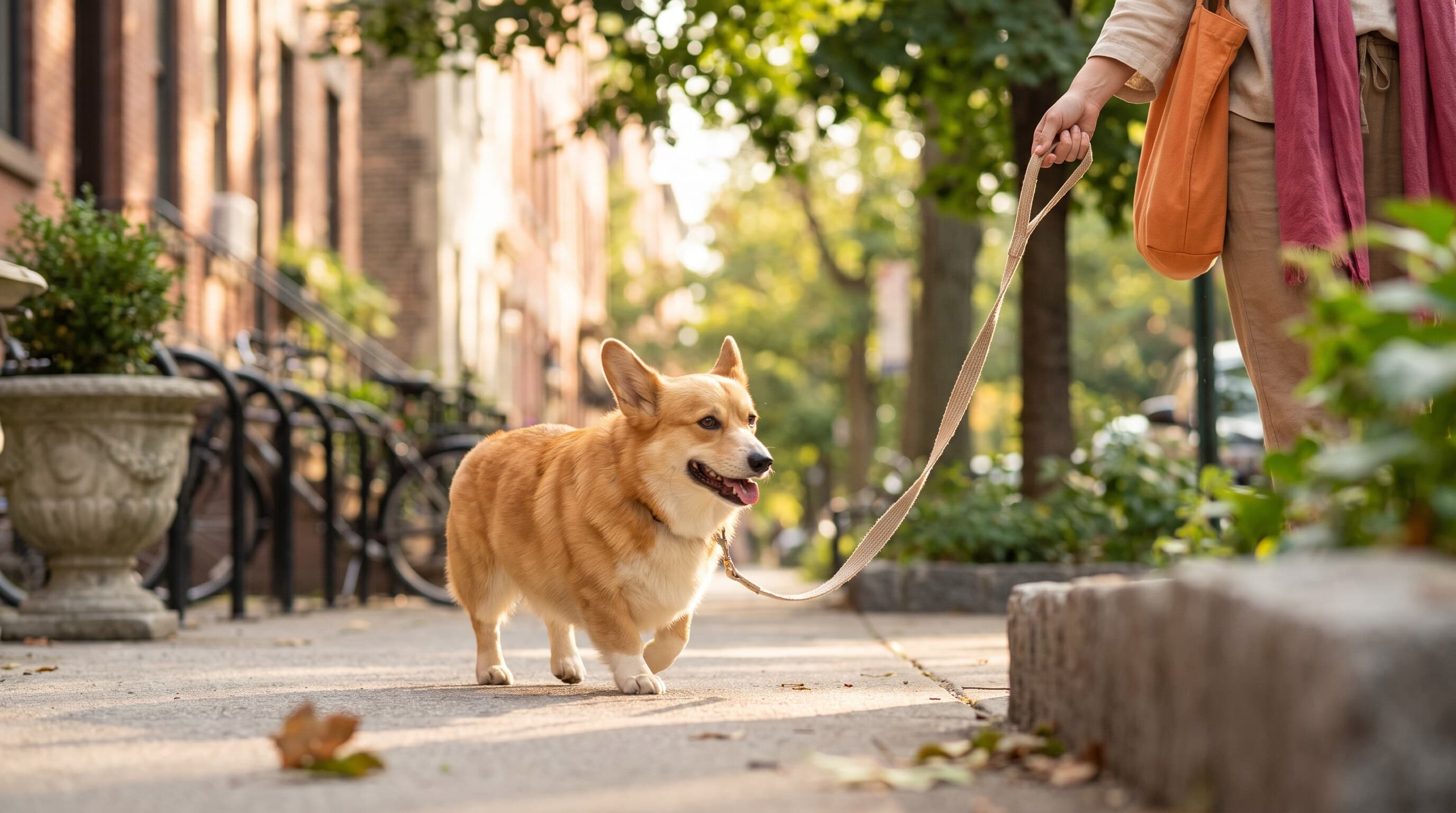
If your walks feel like being towed down the sidewalk, you are far from alone, and the good news is that pulling is a trained habit that can be untrained. Dogs pull for a simple reason: pulling works. When your dog leans into the leash and you keep moving forward, you have just rewarded the pull with the thing your dog wanted most, which is forward motion and new smells. The American Kennel Club frames loose-leash walking as teaching your dog that a slack leash is what earns progress, using positive reinforcement rather than corrections. It takes patience, but the method is straightforward.
Why your dog pulls
Understanding the mechanics makes the fix make sense. A walk is often the most exciting part of a dog's day, packed with scents, sights, and destinations. Dogs also naturally move faster than we do, so matching our pace is genuinely unnatural for them. On top of that, every time pulling gets a dog closer to a sniff spot or a squirrel, the behavior is reinforced. The AKC is blunt about the core mistake: if you let your dog walk while pulling, you are handing over the exact reward it is seeking, which only strengthens the habit. Reversing that equation is the whole game.
The core training steps
Loose-leash walking is built from a few consistent rules, applied the same way every time. The AKC's leash training guidance breaks it down into pieces any owner can practice.
- Reward the position you want. Start in a low-distraction space like your living room or backyard. Whenever your dog is near your side with a loose leash, mark it and reward it. Reward heavily and frequently at first so your dog learns exactly which position pays.
- Stop when the leash goes tight. The moment your dog pulls, stop walking, plant your feet, and wait. Do not yank back. Simply wait for your dog to release the tension or return to you, then reward and move on. This teaches that a tight leash stops the walk and a loose leash starts it again.
- Change direction. Another option is to calmly turn and walk the other way when your dog forges ahead, so your dog learns to pay attention to where you are going rather than pulling toward a target.
- Keep sessions short and upbeat. The AKC advises that your goal is not distance but a loose leash, even if that means only walking to the next house and back at first. Ending on a success keeps both of you motivated.
- Fade the treats gradually. As your dog improves, the AKC suggests slowly replacing food rewards with life rewards, like the chance to go sniff an interesting tree or greet a friend, so the walk itself becomes the payoff.
Gear that helps (and gear to skip)
Training does the real work, but the right equipment makes it easier and keeps everyone comfortable while your dog learns. A well-fitted harness is a popular choice because it takes pressure off the neck and gives you gentle control, and front-clip designs in particular can reduce the leverage a dog has to pull. A standard, fixed-length leash gives you consistent feedback, whereas retractable leashes teach the opposite of what you want by rewarding constant light tension. Our roundups of the best dog harnesses and the best dog leashes walk through fit and features to look for.
A well-fitted front-clip harness is the single most useful tool for taking leverage away from a determined puller, and the 2 Hounds Design Freedom harness is a widely recommended front-clip option.
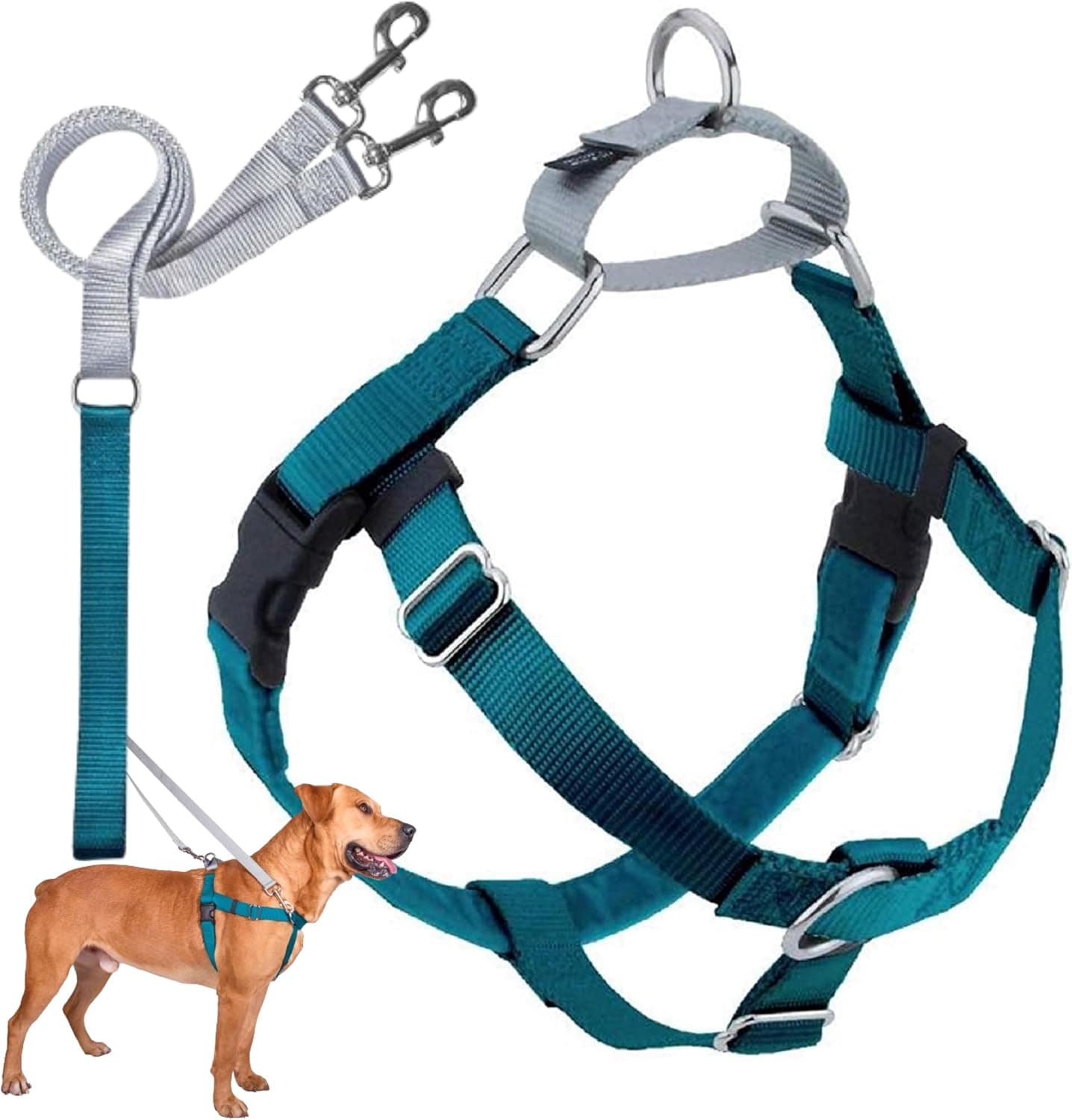
2 HOUNDS DESIGN
Freedom No Pull Harness and Leash Set
- Origin
- Made in USA
- Lining
- Swiss velvet, four adjustment points
- Hardware
- Stainless steel, front and back leash rings
- Warranty
- Chewing replacement warranty
A US-made no-pull harness with Swiss velvet lining and stainless steel hardware, sold with a matching leash. Two connection points (front and back) are intended to give trainers more control, and the harness carries a chewing-replacement warranty.
See more detailSee less detail
Strengths
- Made in USA with stainless steel hardware
- Includes a hassle-free chewing replacement warranty
- Front and back leash rings for training control
Weaknesses
- Higher price than most no-pull harnesses in this category
- Lower average star rating than some competitors despite the premium build
Best for
Owners who want a durable, trainer-recommended harness backed by a replacement warranty
What owners say
What the AKC steers owners away from is aversive equipment and leash corrections. Punishment-based tools can confuse a dog about what is being asked and can add fear or discomfort to an activity that should be enjoyable. Gear should make polite walking easier to reward, not make pulling painful.
Setting yourself up for success
A few practical habits make training stick. Walk when your dog has already burned off some energy, since a wound-up dog pulls harder. Bring high-value treats your dog rarely gets otherwise, so the reward genuinely competes with the environment. Practice in gradually harder settings, moving from the backyard to a quiet street to a busier one only as your dog succeeds. And keep your own energy calm and consistent, because a frustrated tug on your end reads as tension on theirs.
If pulling is tangled up with lunging, barking, or fixating on other dogs or people, that is a sign to slow down and consider help from a positive-reinforcement trainer or a credentialed behavior professional, since reactivity needs a slightly different plan than plain enthusiasm. For a related foundation skill, see our guide to crate training a puppy, which builds the same calm, reward-based habits.