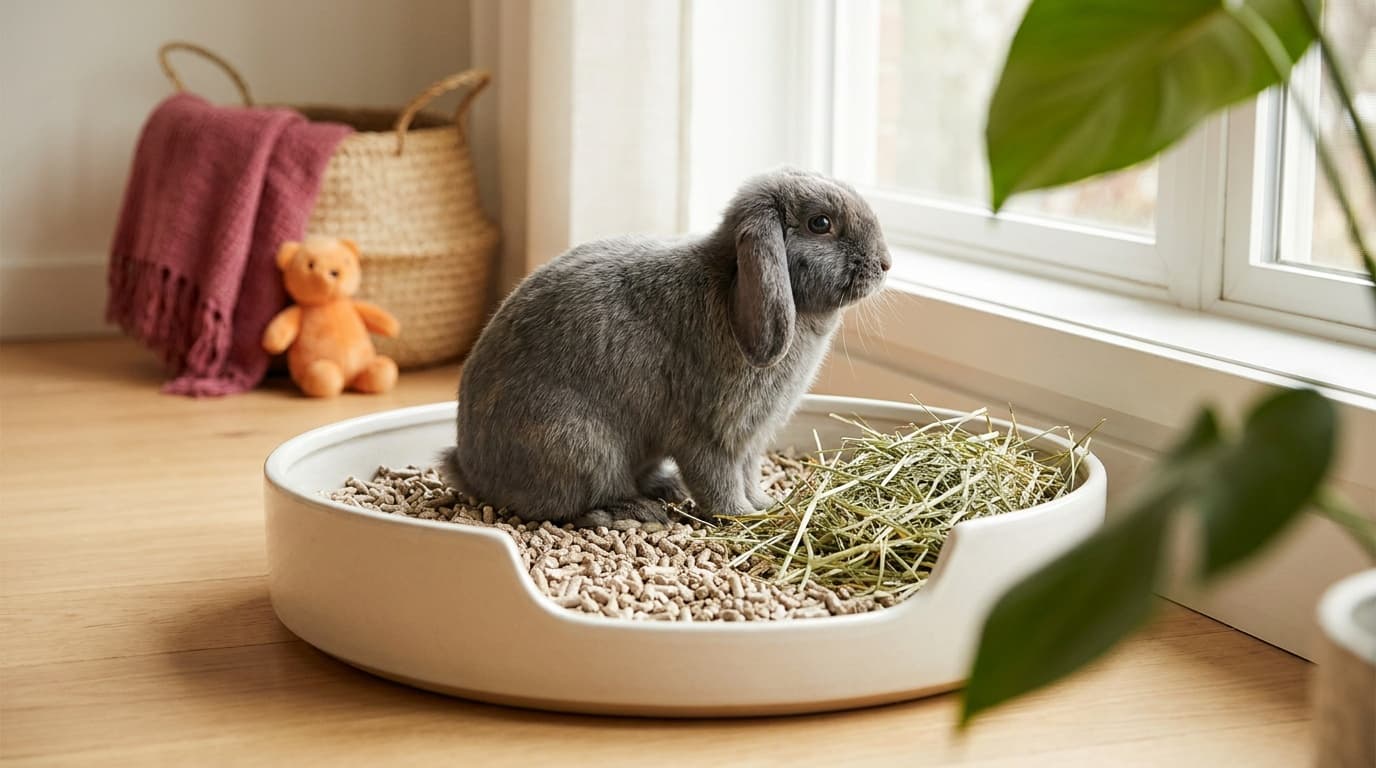
Rabbit litter training works best when the setup follows the rabbit's existing pattern. Many rabbits choose one or two toilet corners. Put the tray in that location first, then make the tray roomy, easy to enter, and connected to clean hay.
The House Rabbit Society litter-training FAQ recommends placing the box where the rabbit already urinates and choosing a tray large enough for the rabbit to turn around and stretch out. Its longer litterbox guide explains why training often improves as a rabbit matures and settles into a stable territory.
Watch before rearranging
Start with a smaller rabbit-proofed home base and observe where urine and most droppings appear. Move the tray to that corner rather than repeatedly carrying the rabbit to a box across the room.
Use a solid plastic tray with enough floor area for the rabbit or bonded pair to sit comfortably. Avoid wire or grated floors. A low entrance can help a small, older, or less mobile rabbit enter without a high step.
Make the box useful
Use rabbit-appropriate litter recommended by a rabbit-experienced veterinarian or rescue. Keep a pile or rack of clean hay at one end of the tray or directly beside it. Rabbits often eat hay while toileting, so this arrangement supports the routine without requiring a separate training trick.
Place a few droppings and a small amount of urine-soiled litter in a freshly prepared tray to preserve the location cue. Clean the surrounding floor thoroughly, then return the tray to the same position.
Expand the room after the habit is steady
Keep the home base predictable while the rabbit begins using the tray. Once use is consistent, open one additional area at a time. Add another tray if the rabbit chooses a second corner or if the route back to the original tray becomes long.
Do not punish accidents. Clean the area, return the tray to the chosen corner, and reduce the open territory temporarily if the larger area made the toilet location unclear.
Read a setback as information
Litter habits can change after a move, a new enclosure, an introduction to another rabbit, changed flooring, a dirty tray, or blocked access. A tray with steep sides, wet litter, no hay, or a narrow approach may stop working even when it worked before.
A sudden change in a previously steady rabbit also warrants a veterinary call, especially when it appears with straining, unusual urine, fewer droppings, reduced eating, altered posture, or reluctance to move.
Litter training is useful household organization, not a reason to shrink the rabbit's living space. The final setup should preserve continuous room to move, forage, hide, rest, and spend time with a compatible rabbit.
When the corner is chosen, use the rabbit litter-box comparison to map the finished tray, hay end, entry, and cleaning route before buying.