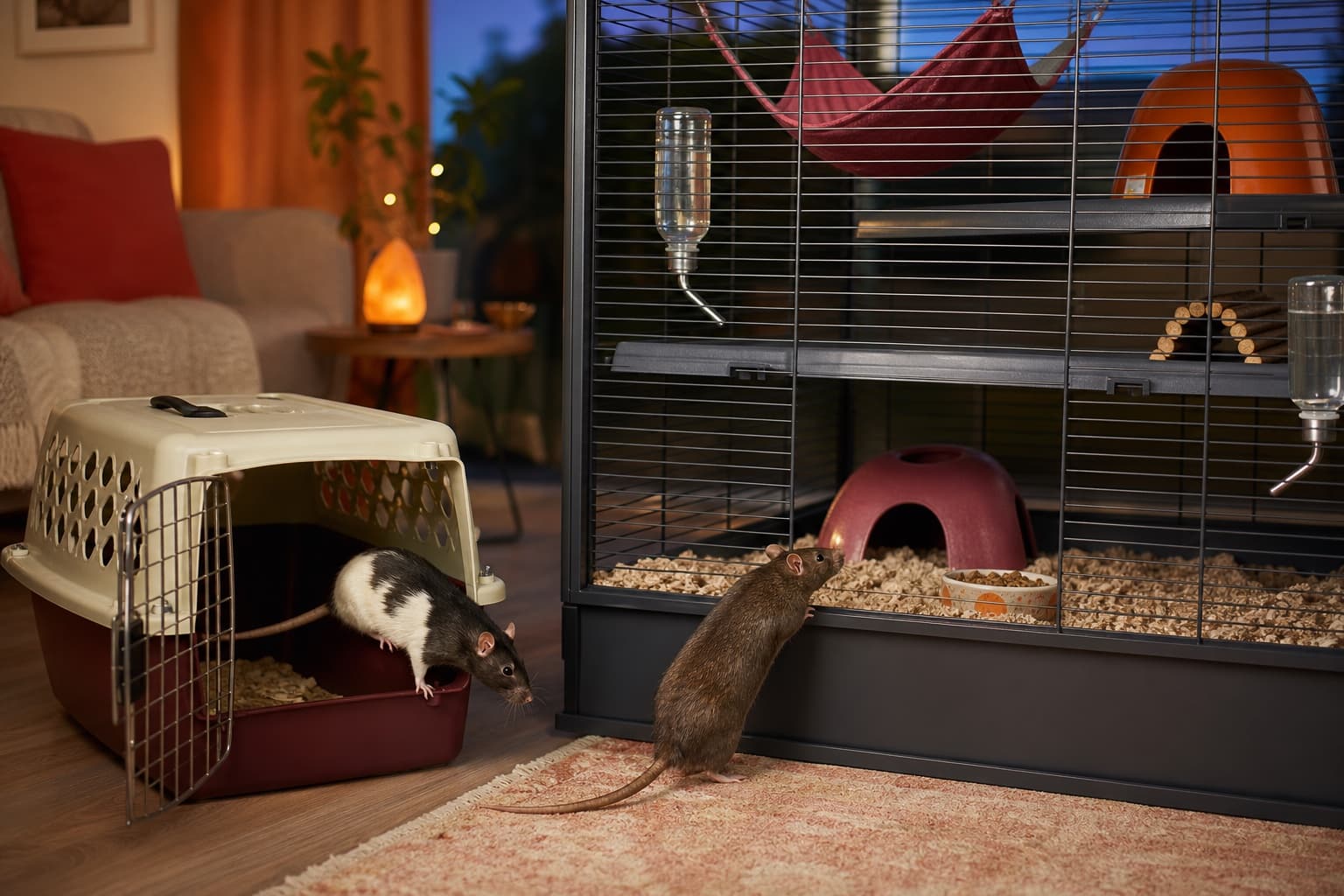
The first week with pet rats starts with a social group and a complete home already waiting. Rats are intelligent, active animals that use height, cover, scent, and company to understand a new place. A calm arrival works best when the cage, familiar food, transport plan, and daily rhythm are settled before the carrier opens.
The RSPCA rat overview describes rats as social animals that need company of their own kind, while the Blue Cross rat care guide recommends keeping compatible rats together rather than relying on human attention alone.
Bring home a compatible group
Begin with a bonded same-sex pair or compatible small group from a responsible rescue or breeder. Ask for written details about sex, approximate age, ordinary food, current bedding, group history, and any veterinary records. Keep the group together during transport unless an experienced professional has given a specific reason to separate them.
Do not combine unfamiliar rats on arrival and hope the cage will settle the relationship. Introductions need neutral space, close observation, and a plan suited to the rats involved. A rescue familiar with rat introductions can help if the rats are not already bonded.
Finish the home before arrival
Use a secure, well-ventilated wire cage with solid floors and enough height and width for the whole group to move, climb, stretch, rest apart, and share space without crowding. The Blue Cross care guide gives 90 cm long by 60 cm deep by 120 cm high as a minimum living-space benchmark for two to five rats.
Prepare:
- Several covered sleeping places and hammocks.
- More than one water point.
- A stable food dish plus places to scatter part of the daily food.
- Dust-extracted paper or cellulose bedding.
- Plain shredded paper for nesting.
- Solid shelves and safe routes between levels.
- Cardboard, ropes, digging material, and objects to investigate.
- An open hard-sided carrier that can become a familiar retreat.
Check bar spacing, latches, shelf stability, water flow, and every route through the cage. Place the cage indoors in a dry, well-ventilated room away from direct sun, smoke, cooking fumes, loud speakers, and constant foot traffic.
Let the first night stay predictable
Set the carrier against an open cage door or inside a secured lower area so the rats can leave voluntarily. Keep the room quiet and the layout steady. Rats may spend the first hours moving between cover, checking edges, climbing, eating, drinking, grooming, and sleeping together.
Observe without repeatedly opening the cage. Confirm that water is available, food has been disturbed, droppings are present, and each rat can reach a covered resting place. Preserve familiar scent by adding a small amount of clean, dry nesting material from the previous home when possible.
Begin contact at rat speed
Sit near the cage and speak quietly. Offer a hand as something to investigate, not something that closes around a rat. A cardboard tube, small box, or open carrier can make the first transfers calmer than reaching from above.
When a rat chooses contact, support the chest and the hindquarters with two hands and stay low over a padded surface. Never lift a rat by the tail. The goal for the first week is reliable, voluntary movement between cage, carrier, and hands.
Build a safe out-of-cage plan
Rats need daily opportunities to explore beyond the cage. Prepare one closed room or secure play area before offering that time. Block gaps, cover cables, move plants and chemicals out of reach, check reclining furniture, and provide an open carrier or hide as a retreat.
The RSPCA environment guidance calls for supervised exercise in a rat-safe room and specifically advises against exercise balls, which restrict normal sensory exploration.
Establish a short daily check
Notice how each rat eats, drinks, moves, breathes, grooms, rests, and interacts with the group. Check the eyes, nose, coat, posture, droppings, water source, and wet areas of bedding without turning the routine into a long restraint session.
Arrange a veterinarian who routinely treats rats before an urgent question appears. A clear change in eating, drinking, droppings, breathing, movement, posture, coat, eyes, or ordinary activity needs prompt veterinary advice.
Once the group has a steady rhythm, use the separate cage, food, company, enrichment, handling, room-proofing, and cleaning guides to refine each part of the home.