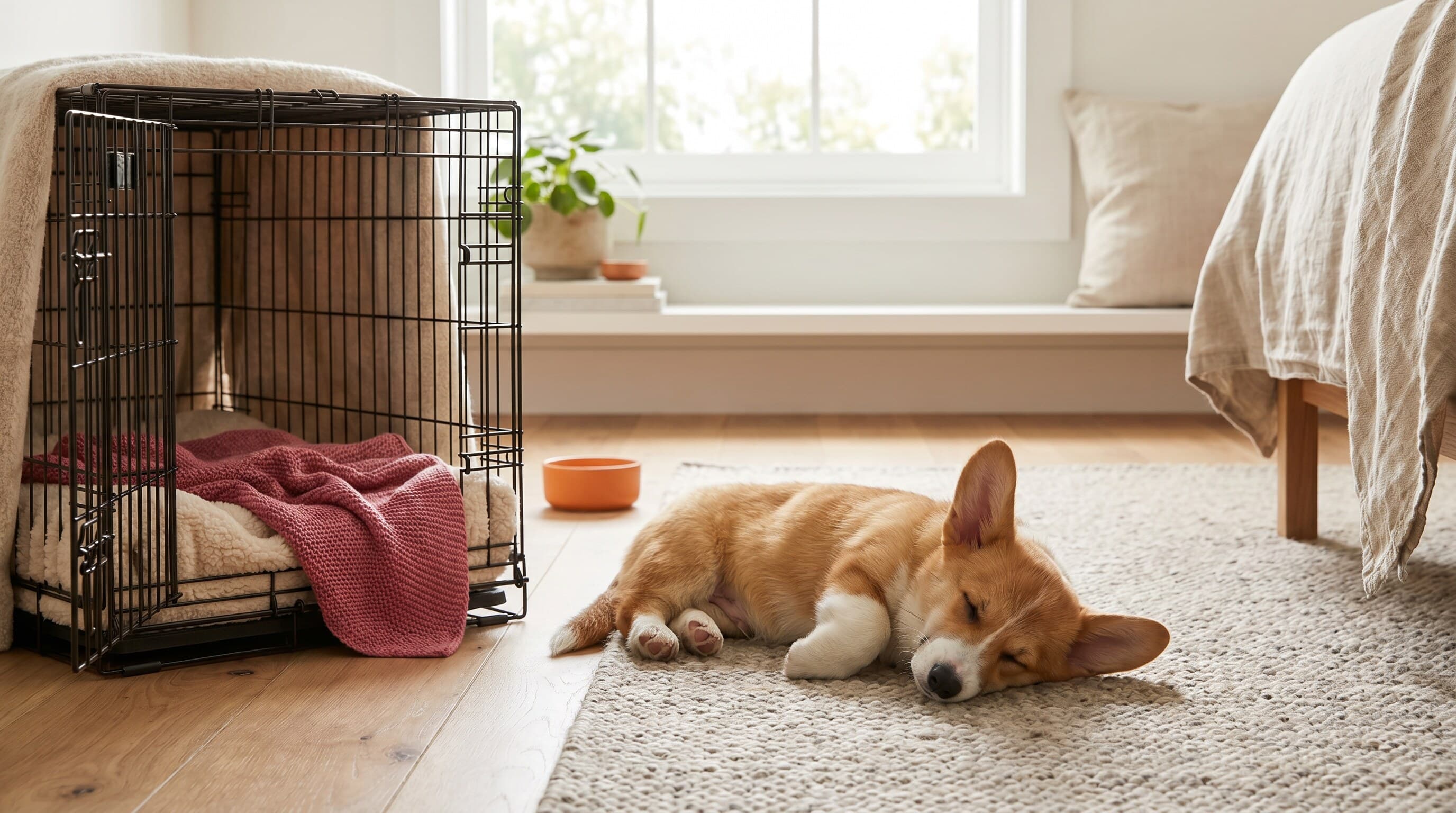
Done well, a crate becomes your puppy's own small den: a safe, cozy place they choose to rest in, not a cage they are shut inside. Dogs are naturally drawn to enclosed, secure spaces, and crate training taps into that instinct to help with house training, calm rest, and safe travel. The single most important principle, emphasized by the American Kennel Club, is that the crate must always be associated with good things and never used as punishment. Go at your puppy's pace and the crate becomes a comfort rather than a fight.
Get the size right
Before any training, the crate has to fit properly. The AKC advises that the crate be just large enough for your puppy to stand up, turn around, and lie down comfortably, and no larger. A crate that is too big undermines house training, because a puppy can use one end as a bathroom and still sleep clean at the other, which defeats the den instinct that makes crates work.
Since puppies grow fast, the practical solution is to buy a crate sized for your dog's adult size and use a divider panel to shrink the usable space now, expanding it as your puppy grows. Line it with comfortable bedding and add a toy or two so it feels like a nice place to be.
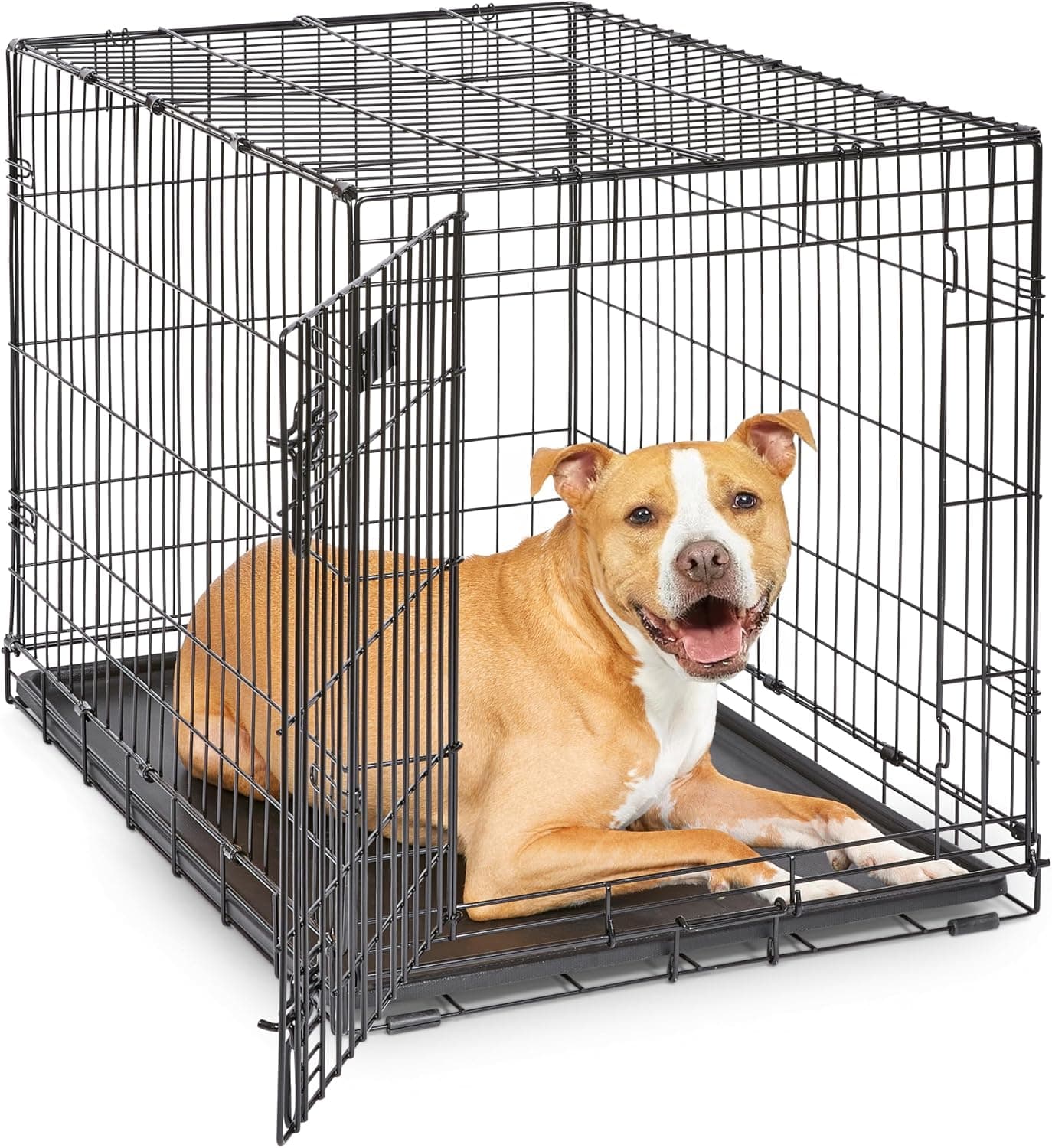
A crate with a divider panel makes that grow-with-your-puppy approach simple, and the MidWest iCrate in the 36-inch size is a common choice for medium breeds.
MIDWEST HOMES FOR PETS
MidWest iCrate 36-Inch Folding Dog Crate
- Dimensions
- 36.5 x 23.25 x 24.75 in
- Dog weight range
- 41-70 lbs
- Divider panel
- Included
- Tray
- Leak-proof removable tray
- Doors
- Single door
A folding wire crate with a black e-coat finish, leak-proof tray, and an included divider panel that lets the crate size adjust as a puppy grows into an adult dog. Assembly is tool-free.
See more detailSee less detail
Strengths
- Massive review base with a strong average rating
- Divider panel lets one crate serve a growing puppy
- Leak-proof tray and rubber feet included
Weaknesses
- Wire construction offers less visual privacy than furniture-style crates
- Single door only, no side access
Best for
Owners crate-training a puppy through to full adult size in one purchase
What owners say
Step by step: building a good association
The goal of each step is to let your puppy form only positive feelings about the crate. Move to the next step only when your puppy is relaxed at the current one.
- Introduce it gently. With the door open, let your puppy explore the crate on their own. Toss treats just inside, then further in, so going in always predicts something good. Never push or force your puppy inside.
- Feed meals inside. Placing your puppy's food bowl in the crate builds a strong, pleasant link. VCA Animal Hospitals recommends associating the crate with as many positive experiences as possible, from treats to chew toys to bedding. Start the bowl near the opening and gradually move it toward the back as your puppy grows comfortable.
- Build up time with the door open, then closed. Once your puppy enters happily, the AKC suggests closing the door only a little at first, then reopening it, and repeating so the door closing is a non-event. Slowly work up to closing it fully for a few seconds, then a few minutes, while you stay nearby.
- Add short absences. When your puppy is calm with the door closed and you present, begin stepping away briefly and returning, gradually lengthening the time. Keep arrivals and departures low-key.
Handling whining and setting a fair schedule
Some whining is normal early on, and how you respond shapes the habit. The AKC's guidance is not to release your puppy the moment they cry, because that teaches them crying opens the door. Instead, wait for a brief pause in the whining, then calmly let them out or reward them inside. That said, you have to distinguish a puppy protesting from a puppy that genuinely needs a bathroom break, which is a real need that should be met.
Time limits matter enormously with puppies. A young puppy has a small bladder and cannot be expected to hold it for long, so crated periods should be short and paired with frequent trips outside, plus plenty of play, feeding, and companionship out of the crate. The crate is a tool for safe rest and house training, not a place to leave a puppy for the whole day.
When to get help
Most puppies take to a crate within days to a few weeks of patient, positive practice. If your puppy shows severe or persistent distress in the crate despite a slow, gentle approach, that can occasionally signal separation-related anxiety, which is worth discussing with your veterinarian or a qualified positive-reinforcement trainer or behaviorist rather than forcing the issue. Real panic is a reason to get guidance, not to crate harder.
Crate training pairs naturally with the other early lessons of puppyhood. For managing those sharp puppy teeth, see how to stop a puppy from biting, and for everything to line up before you start, our new puppy checklist for the first week.