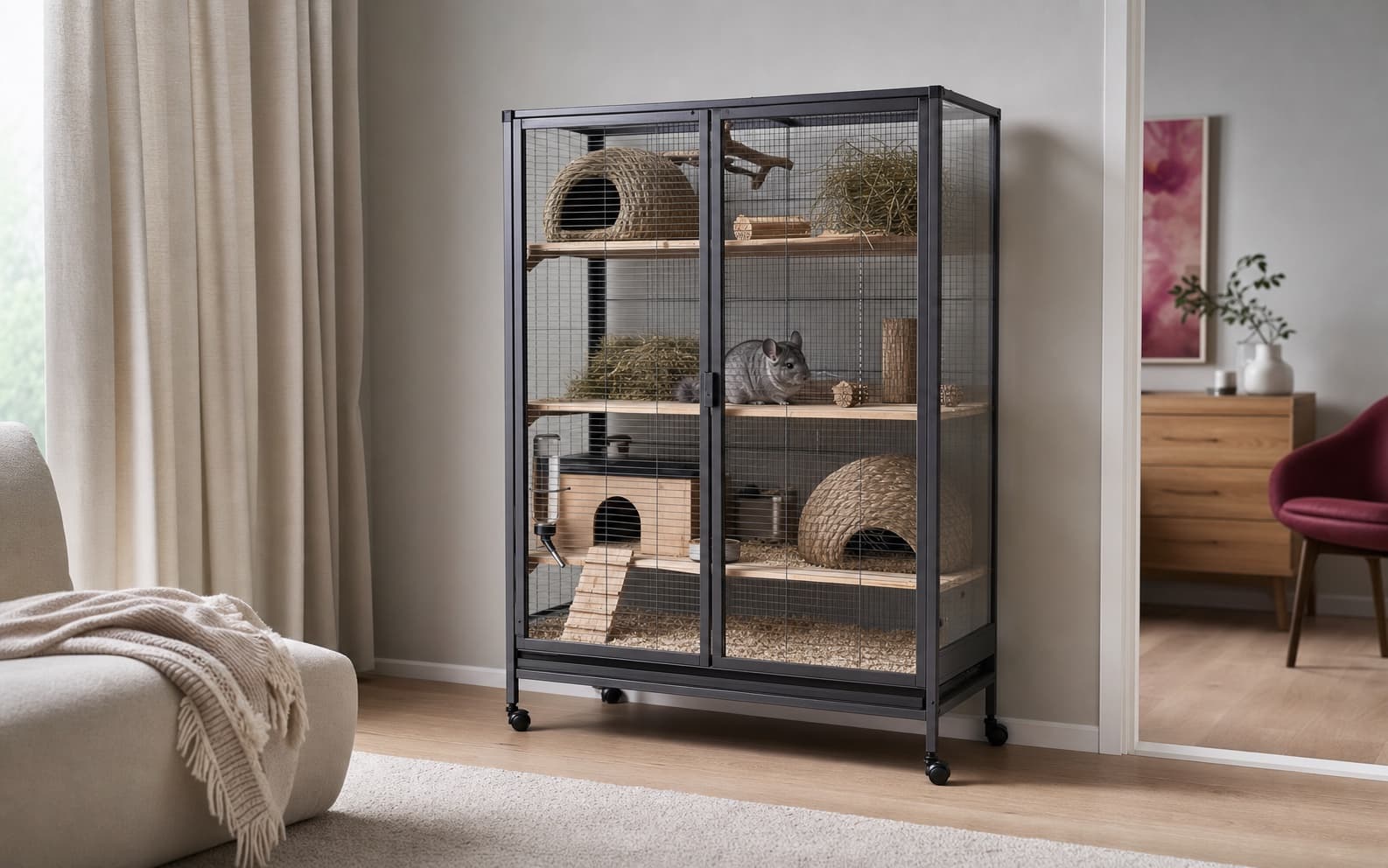
The room is part of the chinchilla enclosure. Dense fur makes a cool, dry environment essential, while the daily routine requires quiet daytime rest, evening access, stable light, and enough clearance for cleaning and observation.
The Blue Cross chinchilla guide gives 10 to 18°C as an ideal temperature range. The RSPCA environment guide also recommends a cool, dry indoor location protected from heat and drafts.
Measure the room at its warmest
Check conditions where the enclosure will actually stand, including the warmest afternoon and the hottest season. Sunlight moving across a room can heat one wall even when the general room feels comfortable in the morning.
Choose a location whose temperature can remain stable without directing a fan or strong vent at the animal. If the room cannot stay in a suitable range through hot weather, select another room and make the environmental plan before the chinchilla arrives.
Move away from heat and humidity
Keep the enclosure out of direct sun and away from radiators, fireplaces, baseboard heaters, ovens, dryers, steamy bathrooms, and humid utility spaces. Do not place it beneath a vent that creates a constant draft.
An interior wall is often easier to manage than a bright window wall. Leave air around the enclosure rather than pressing it into a closed alcove.
Protect sleep without isolating care
Choose a room that stays reasonably quiet during the day and remains accessible in the evening. Avoid television speakers, drums, slamming doors, and surfaces that vibrate. Chinchillas have sensitive hearing and need dark hides even in a calm room.
The enclosure should still be part of daily household observation. A remote corner that no one visits can make food, water, movement, and droppings changes easier to miss.
Build a safe perimeter
Keep dogs, cats, and other animals away from the enclosure. Use a stable stand or locked casters, secure every door, and leave clearance for the largest door to open fully. Protect electrical cords and nearby trim from chewing during any exercise time.
Plan the route from enclosure to carrier and secure exercise area. The person doing the care should be able to move a carrier into place without reaching across a long open drop or chasing the chinchilla around the cage.
Check the environment every day
Notice room temperature, humidity, direct light, airflow, and noise alongside the animal's normal activity. Rapid breathing, weakness, unusual posture, poor balance, collapse, or a sudden change in behavior in warm conditions requires immediate veterinary help. Move the animal away from the heat source while contacting the veterinarian, without attempting an improvised home treatment.
The Animal and Veterinary Service of Singapore advises indoor housing with good ventilation and protection from direct sunlight, heat, drafts, and sudden temperature changes.
Choose the room before buying the cage. The best enclosure still depends on the environment around it.