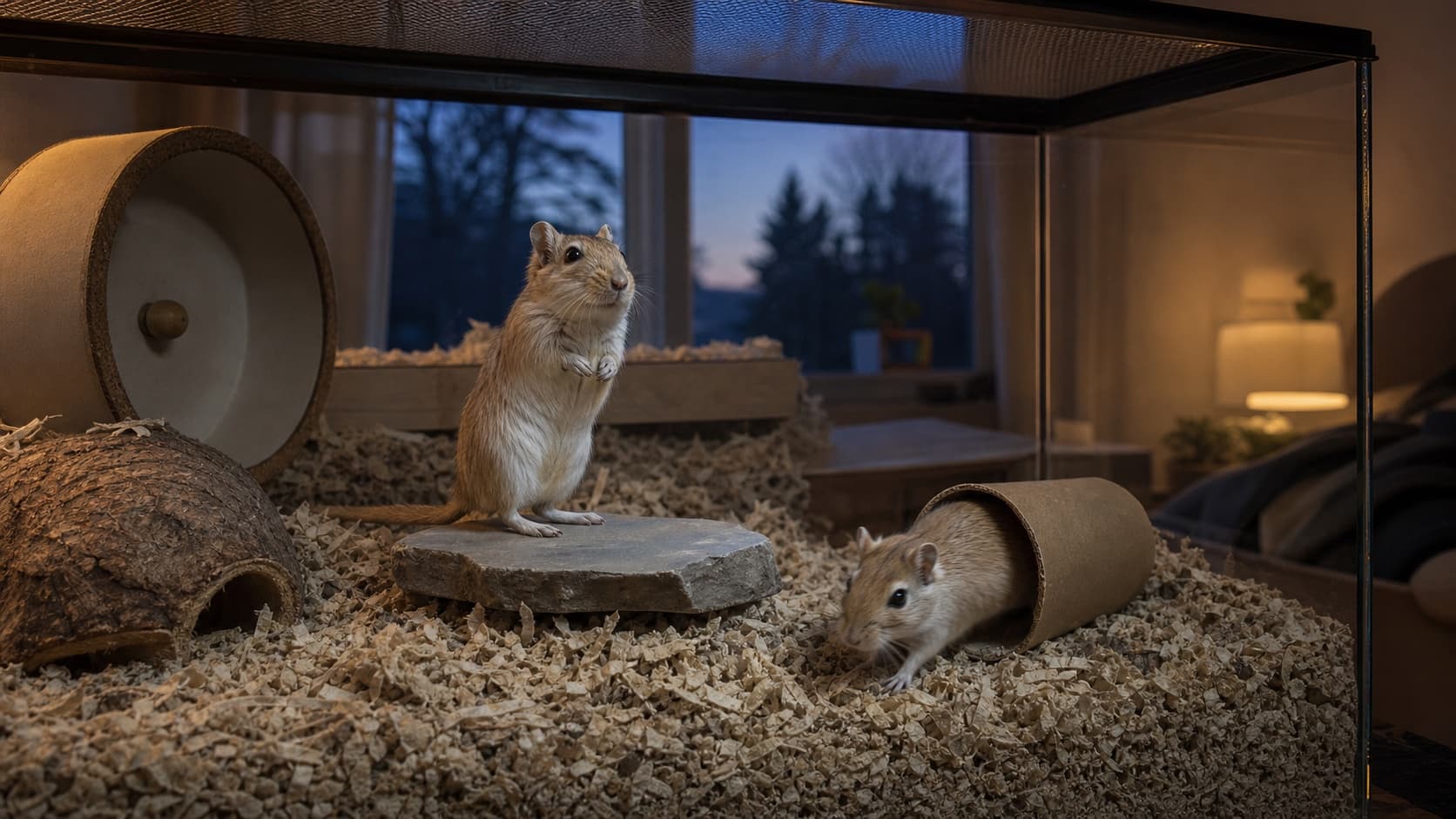
Gerbils move between activity and rest in several cycles. They may dig, run, forage, chew, groom, and rearrange the home during the day, evening, or night, then disappear into the shared nest for another sleep period. Foot thumping is one part of their communication, often linked with alertness, excitement, or social signaling.
The Blue Cross gerbil care guide describes gerbils as generally active during the day while also noting activity in the evening and at night. A bedroom can therefore be a difficult enclosure location for the people sleeping there.
Expect several active windows
Watch the pair for a full week before deciding what their schedule is. Record when they emerge, use the wheel, forage, dig, groom, sleep, and respond to household activity.
The pattern may include:
- A morning surface visit for food and water.
- Midday digging or chewing followed by nest sleep.
- A strong evening activity period.
- Short night sessions on the wheel or in the bedding.
- Shared sleep between active periods.
Keep food, water, and observation routines predictable while allowing the gerbils to choose when they use each part of the habitat.
Give daytime sleep real protection
Place the gerbilarium in a room where the pair can rest without constant vibration, speaker noise, direct sun, or repeated disturbance. Use ordinary daylight and evening dimming to keep a recognizable household rhythm. Keep the lid ventilated and the enclosure uncovered.
Children and visitors can watch from outside the glass while the gerbils sleep. Save handling, major layout changes, and longer care tasks for an active period.
Understand thumping in context
A gerbil can rapidly strike the hind feet against a surface. The sound may alert a companion, respond to a sudden noise or movement, or appear during excited social behavior. One thump by itself is less informative than the complete scene.
Look at:
- What happened immediately before the thumping.
- Whether the companion becomes alert or hides.
- The gerbil's posture, ears, eyes, and movement.
- Whether the sound ends after the room becomes quiet.
- Whether the behavior repeats around one object, person, or household event.
Make the night equipment quiet and stable
A solid wheel should turn smoothly without wobbling or striking the enclosure. Cardboard, hay, and bedding will make ordinary rustling sounds. Secure the mesh lid and water bottle so activity does not turn into repeated rattling.
Keep the habitat outside a bedroom when normal gerbil movement disturbs sleep. Moving the home is a large environmental change, so choose a suitable room before the pair arrives whenever possible.
Track a meaningful change
The useful question is whether the pair's activity differs from its established baseline. A sudden loss of activity, persistent hiding, repeated disturbance through ordinary sleep periods, a change in gait, a new posture, or reduced interest in food and water needs prompt veterinary advice.
Record the time, duration, context, and any accompanying changes. A short video from outside the enclosure can help a gerbil-experienced veterinarian understand a behavior that does not occur during the appointment.
Let enrichment follow the rhythm
Add cardboard, forage parcels, and small layout changes shortly before a normal active period. Keep the nest and most of the burrow intact. The pair can investigate when ready and retreat without being awakened for the activity.