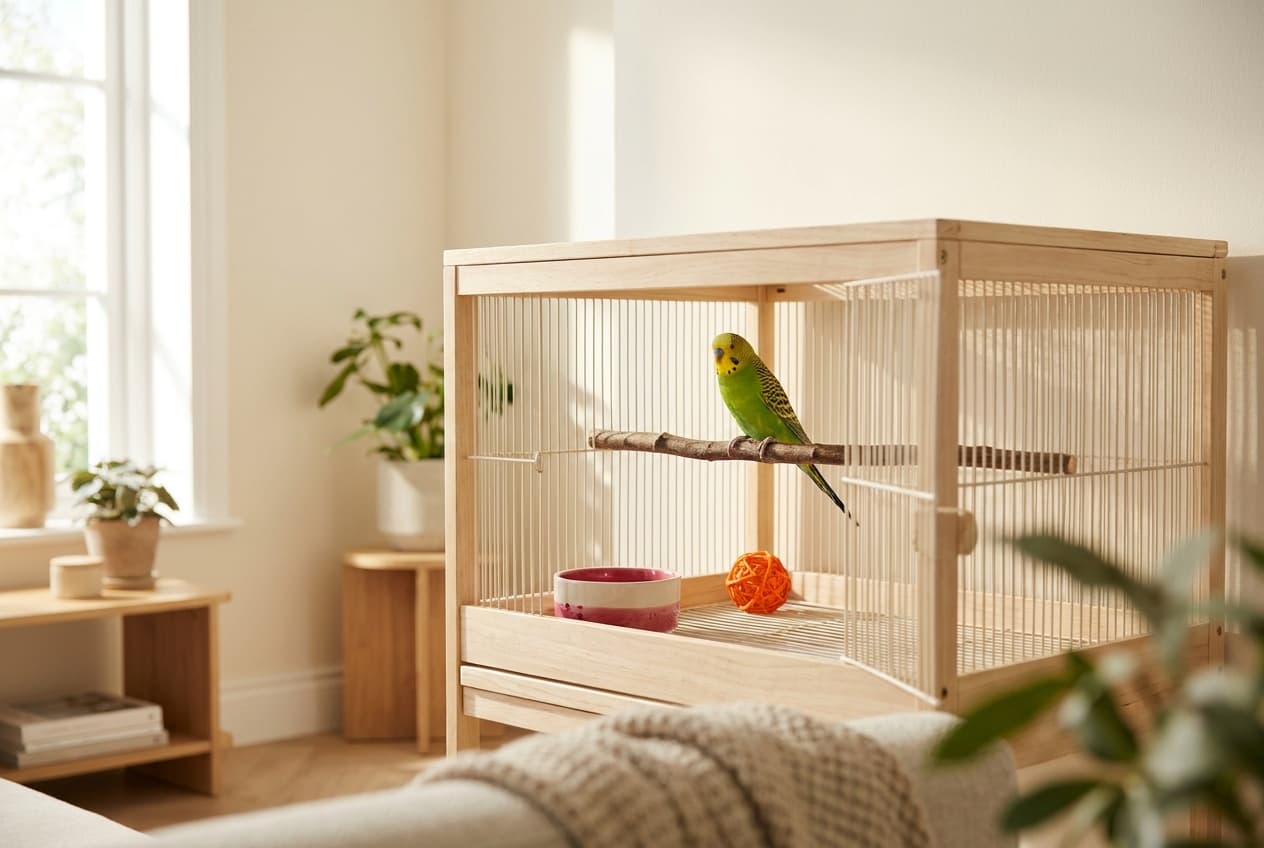
The first week with a budgie works best when the home is finished before the bird arrives. Budgies are small flock parrots that read a new room through sightlines, sounds, light, and routine. A wide cage in a calm position, familiar food, and a predictable day give a new budgie the fastest path to settling.
The RSPCA pet bird guidance treats environment, diet, and company as the foundations of bird welfare, and the Royal Veterinary College budgie fact sheet describes the budgerigar as one of the most popular pet birds in the world, with care needs that are specific rather than generic.
Finish the cage before arrival
Set up the largest cage the room allows, prioritizing width so the budgie can move wing-first between perches. The RSPCA environment guidance is direct: every bird needs room to fly. Fit several natural wood perches of varying thickness, food and water stations away from the space directly below favorite perches, and one or two simple toys rather than a crowded interior.
Place the cage against a wall at roughly chest height in a lived-in room, out of direct sun, away from drafts, and never in the kitchen. The MSD Veterinary Manual household hazards page lists cooking fumes, including fumes from overheated nonstick cookware, among the airborne hazards that make kitchens unsuitable for birds.
Keep the first food familiar
Ask what the budgie currently eats and offer the same food at first, even while planning a better long-term diet. A new home and a new diet on the same day is a common reason a small bird stops eating. Provide fresh water daily, per the AVS pet bird guidance, and confirm each day that food is actually being eaten, not just present.
Protect the light rhythm
Budgies settle fastest on a consistent day. Aim for a regular light-on and light-off time, with a quiet, darker sleeping period of about ten to twelve hours. Many owners cover the cage in the evening to create that reliable dark period. Keep televisions and speakers away from the sleeping area.
Let trust start at a distance
For the first days, be present without pressure. Sit near the cage, talk quietly, and move slowly. Do not chase, grab, or force perching. The RSPCA training guidance frames handling as something a bird is trained to accept step by step, and that training starts after the bird eats, moves, and vocalizes normally around you.
Book the first veterinary contact early
Find a veterinarian who routinely sees birds before there is an urgent question. A clear change in eating, drinking, droppings, breathing, posture, feather condition, or ordinary activity needs prompt veterinary advice. Nothing in this guide replaces that.
Once the first week feels steady, use the cage setup, feeding, companionship, taming, sleep, room-safety, and bathing guides to refine each part of the routine.