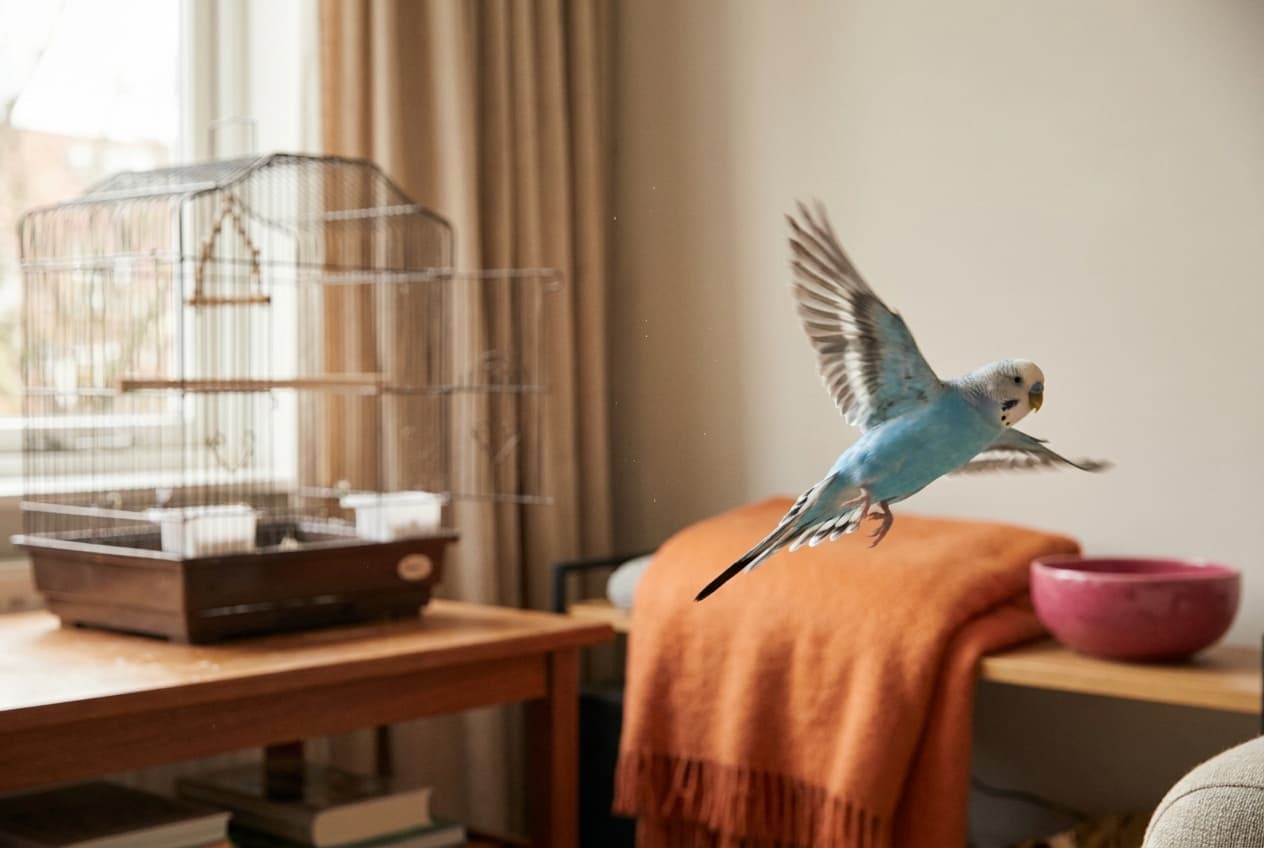
Daily out-of-cage time is what makes a caged budgie a healthy one, and it is only as good as the room it happens in. The RSPCA environment guidance makes flight a baseline need, and the MSD Veterinary Manual household hazards page reads like a map of an ordinary home: windows, water, fumes, other animals, and open doors. Prepare one room properly and repeat it daily rather than improvising across the whole house.
Seal the exits
Close the door, close every window, and check the gaps a panicked flier can find: behind bookcases, under low furniture, into open drawers or bags. Screen or close chimney and vent openings in the flight room. Everyone in the home learns one rule: knock before opening the door during bird time.
Make glass visible
A budgie does not understand glass. Draw curtains or lower blinds over windows during flight time, and mark or cover large mirrors until the bird has learned the room. Most first-day collisions involve a clear pane with daylight behind it.
Remove open water and hot surfaces
Cover or empty anything a small bird can land in: glasses, vases, sinks, pots, aquariums, toilets with open lids. Keep the bird out of the kitchen entirely; stovetops, hot oil, and steam are immediate hazards, and fumes from overheated nonstick cookware are dangerous to birds even from another room with poor airflow, per the MSD household hazards guidance.
Keep the air clean
No aerosols, scented candles, incense, essential-oil diffusers, or smoking anywhere near the flight room. A bird's respiratory system is far more sensitive than ours, which is the same reason the kitchen stays off-limits.
Manage the rest of the household
Dogs and cats leave the room during flight time, every time, regardless of temperament. Ceiling fans stay off, standing fans get unplugged, and cables get routed where a chewing beak cannot reach them. Houseplants in the flight room should be verified bird-safe with a veterinarian or removed; when in doubt, out.
Supervise, then build duration
Stay in the room for every early session. Start with short outings and extend as the budgie learns the landmarks and the return routine. A bird that ends sessions calmly on its own cage is ready for longer daily flight.
A budgie that will not fly, lands badly, or seems weak in flight needs an avian-experienced veterinarian; flight quality is health information.